Sermorelin
also Sermorelina · Sermoreline · Sermorelinum · Groliberin · hGHRH(1-29)NH2
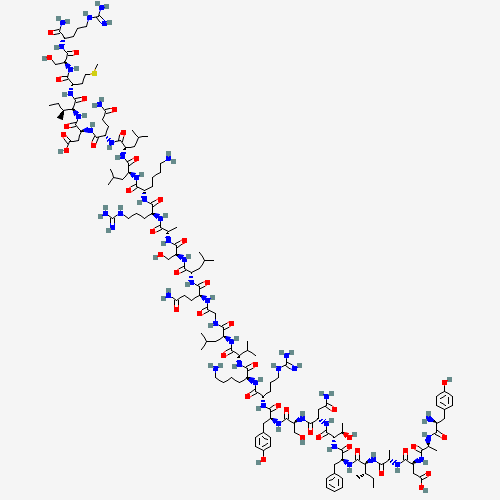
Sermorelin is GHRH(1-29), the shortest fragment of growth hormone-releasing hormone that keeps full activity, and it is the parent of every GHRH analogue including tesamorelin and CJC-1295. It was a licensed medicine: a diagnostic injection for pituitary function and, briefly, a treatment for short stature in children. It reliably releases growth hormone [1], but as a treatment it lost to recombinant growth hormone in head-to-head comparisons — children on daily growth hormone grew faster than children on GHRH(1-29) [2], and in a randomised comparison only the growth hormone group gained height relative to bone age [3]. Its half-life is about four minutes [4]. It is no longer marketed in the US, and there is no trial of it in healthy adults for any purpose.
The original GHRH analogue and a legitimate diagnostic agent, but as a treatment it was beaten by growth hormone itself in children and has never been tested in healthy adults at all.
- meta-analysis
- RCT
- trial
- observational
- preclinical / case
- review / patent / other
- retracted
- + Releases growth hormone dose-dependently by vein, injection or nose
- + Works through the pituitary, so secretion stays pulsatile and feedback stays intact
- + Was a licensed medicine with an established safety record in children
- + Improved height velocity in most treated children with hypothalamic growth hormone deficiency
- − Half-life of about four minutes, so the effect is brief
- − Grew children more slowly than recombinant growth hormone in direct comparisons
- − The response fades over months of continuous dosing, with antibodies in some children
- − No study in healthy adults for muscle, fat, sleep or ageing
Overview
GHRH is a 44-amino-acid hypothalamic hormone; its first 29 residues carry the full biological activity, and that fragment, amidated, is sermorelin. Everything else in this group — tesamorelin, CJC-1295, the various "modified GRF(1-29)" products — is a chemically stabilised version of this molecule.
Acute pharmacology. In 30 healthy men, an intravenous dose as low as 0.25 ug/kg released significant growth hormone, with the maximum response at 1-2 ug/kg. Although the peptide itself was cleared within minutes, growth hormone stayed elevated for about three hours [1]. An earlier dose-response study of the closely related [Nle27]GHRH(1-29) compared routes directly: growth hormone rose within 5 minutes intravenously and 10 minutes subcutaneously or nasally, peaked by 30 minutes and was back near baseline at 2 hours. A tenfold higher subcutaneous dose, and a thirtyfold higher nasal dose, were needed to approach the intravenous effect [5].
As a treatment for short stature. Forty-three prepubertal children with growth hormone deficiency of hypothalamic origin were randomised to GHRH(1-29) 30 ug/kg/day, 60 ug/kg/day, or recombinant growth hormone for six months. Height velocity rose by at least 2 cm/year in all but two children. The high-dose GHRH group matched the growth hormone group on height velocity, but only the growth hormone group gained height relative to bone age [3]. A smaller German study was blunter: in seven children, six months of 4-6 ug/kg twice daily failed to improve growth rate in five of them, and switching to daily growth hormone improved it in all, to a mean of 8.5 cm/year. Its authors concluded GHRH could not be recommended for routine treatment [2].
Nasal and continuous dosing. A nasal formulation given three times daily to eight children produced clear growth hormone peaks on day 1, but the peaks shrank by six weeks and further by six months, three children developed GHRH antibodies, and most reported sneezing, runny nose and mucosal burning; the conclusion was that it was unsuitable in that form [6]. Continuous subcutaneous infusion in six children produced a biphasic pattern: 24-hour growth hormone output roughly doubled early, then fell below baseline by six months, with one child's secretion suppressed completely [7].
Sermorelin was withdrawn from the US market, and no trial has studied it in healthy adults — for muscle, fat, sleep, ageing or anything else.
Mechanism
Sermorelin binds the GHRH receptor on pituitary somatotrophs, which raises cAMP and releases stored growth hormone. Because the signal enters the axis at its physiological point, secretion remains pulsatile and IGF-1 feedback and somatostatin tone still operate. Its practical weakness is that dipeptidyl peptidase-IV cleaves it within minutes [8], giving a half-life of about 4.3 minutes [4]. Every subsequent GHRH analogue is an attempt to fix that: a D-Ala2 substitution alone nearly halves metabolic clearance [4], and albumin conjugation stretches the half-life to days [9].
GHRH signalling is also tied to sleep. Pulsatile GHRH increases slow-wave sleep, and blocking endogenous GHRH receptors with an antagonist in healthy men suppressed nocturnal growth hormone — but left slow-wave sleep intact, which dissociates the two [10]. That is worth knowing before assuming a GHRH analogue will improve deep sleep.
- GHRH receptor (pituitary)activatesGHRH(1-29) is the minimum active fragment of GHRH and releases growth hormone dose-dependently; 0.25 ug/kg intravenously was already enough to produce a significant rise in healthy men, with the maximum at 1-2 ug/kg [1]strong
- Growth hormoneactivatesstrong
- Height velocity (children)activatesheight velocity rose by at least 2 cm/year in all but two of 43 children over 6 months, but only the recombinant growth hormone group gained height relative to bone age [3]moderate
- Pituitary responsiveness with continuous dosingblockscontinuous subcutaneous infusion raised 24-hour growth hormone output at first, then drove it below baseline by 6 months, with one child losing growth hormone secretion entirely [7]moderate
Formulation
how the form changes blood levelsSermorelin acetate is GHRH(1-29)-NH2, a 29-residue amidated peptide. Studied by intravenous, subcutaneous and nasal routes; nasal bioavailability is about 3-5% [1]. It is not currently marketed in the United States, so material sold under the name comes from compounding pharmacies or unregulated suppliers [11].
Dosing
as studied or commonly reported; not a recommendationDoses below are what studies used or, where marked, what is commonly reported. None is a recommendation.
Intravenous
- 0.25-2 ug/kg
Subcutaneous injection
- 30 ug/kg/dayprepubertal children with hypothalamic growth hormone deficiency (low-dose arm)three divided doses daily · 6 monthshuman study[3]
- 60 ug/kg/daythe same trial's high-dose arm, which matched growth hormone on height velocity but not on height for bone agethree divided doses daily · 6 monthshuman study[3]
- 4-6 ug/kgseven children with hypothalamic growth hormone deficiency; did not improve growth rate in five of themtwice daily · at least 6 monthshuman study[2]
- continuous infusionsix children with partial growth hormone deficiency; 24-hour growth hormone profilescontinuous by pump · 6 monthshuman study[7]
Nasal
- 50 ug/kgeight short prepubertal children; effect faded and local reactions were commonthree times daily · 6 monthshuman study[6]
- Form
- Injection and nasal spray have both been studied; nasal absorption is about 3-5% [1].
- Time to effect
- Growth hormone within minutes [5]. Growth responses in children were assessed over 6 months [3].
- Notes
- Every human dose in the literature is either a diagnostic injection or a treatment dose in children with growth hormone deficiency. No dose has been studied in healthy adults for any purpose.
Pharmacokinetics
what the body does with it| Half-life | About 4.3 minutes for GHRH(1-29)-NH2 by intravenous infusion in healthy men; a D-Ala2 substitution extends it to 6.7 minutes by cutting metabolic clearance roughly in half [4] |
|---|---|
| Onset | Growth hormone rises within 5 minutes intravenously and 10 minutes subcutaneously or nasally [5] |
| Time to peak | Peak growth hormone within 30 minutes by any route, back to near baseline by 2 hours [5] |
| Bioavailability | Nasal absorption is poor, about 3-5%; a nasal dose of 50 ug/kg was roughly equivalent to 1 ug/kg intravenously [1]. A tenfold higher subcutaneous and thirtyfold higher nasal dose were needed to approach intravenous effect in an earlier study [5] |
| Metabolism | Cleaved rapidly in plasma by dipeptidyl peptidase-IV, which is what the later analogues were engineered to resist [8] |
Safety
risks and cautions, not medical adviceSermorelin was a licensed drug, and the paediatric studies report it as generally well tolerated by injection [3]. The nasal formulation was not: most children had sneezing, rhinorrhoea and mucosal burning, and treatment was stopped in two of eight [6].
The notable pharmacological problems are loss of effect and immunogenicity with sustained use. Nasal dosing produced shrinking growth hormone peaks over six months and GHRH antibodies in three of eight children [6]; continuous subcutaneous infusion drove 24-hour growth hormone output below baseline by six months [7]. There is no safety data at all in healthy adults, and none for long-term use outside growth hormone deficiency.
Interactions
documented pairs only, not exhaustiveGHRH and the ghrelin-receptor peptides are strongly synergistic on growth hormone release, and that synergy requires an intact hypothalamus [12]. Low-dose GHRH with a GH-releasing peptide is sensitive enough to serve as a diagnostic test for adult growth hormone deficiency [13]. No interactions with other compounds on this site have been documented.
FAQ
- Is sermorelin the same as GHRH?
- It is the first 29 of GHRH's 44 amino acids, which is the part that carries the activity [1].
- Why did it lose to growth hormone in children?
- In direct comparisons, daily growth hormone produced faster growth; GHRH matched it on height velocity at the higher dose but not on height relative to bone age, and failed entirely in a smaller study [2][3].
- Does it work for anti-ageing in adults?
- No published trial has given sermorelin to healthy adults for any outcome.
References
entry last reviewed 2026-09-19- [1]Pharmacokinetics of growth hormone-releasing hormone(1-29)-NH2 and stimulation of growth hormone secretion in healthy subjects after intravenous or intranasal administration.Wilton P, Chardet Y, Danielson K et al.Acta Paediatr Suppl 1993RCT · humanPMID 8329825◌ unreviewed
- [2]Comparison of growth hormone releasing hormone therapy and growth hormone therapy in growth hormone deficiency.Butenandt O, Staudt BEur J Pediatr 1989other · humanPMID 2537727◌ unreviewed
- [3]Growth response to growth hormone-releasing hormone(1-29)-NH2 compared with growth hormone.Neyzi O, Yordam N, Ocal G et al.Acta Paediatr Suppl 1993RCT · humanPMID 8329826◌ unreviewed
- [4]Incorporation of D-Ala2 in growth hormone-releasing hormone-(1-29)-NH2 increases the half-life and decreases metabolic clearance in normal men.Soule S, King JA, Millar RPJ Clin Endocrinol Metab 1994other · humanPMID 7962295◌ unreviewed
- [5]The effect of intravenous, subcutaneous, and intranasal GH-RH analog, [Nle27]GHRH(1-29)-NH2, on growth hormone secretion in normal men: dose-response relationships.Vance ML, Evans WS, Kaiser DL et al.Clin Pharmacol Ther 1986other · humanPMID 3096623◌ unreviewed
- [6]Intranasal administration of growth hormone-releasing hormone(1-29)-NH2 in children with growth hormone deficiency: effects on growth hormone secretion and growth.Hümmelink R, Sippell WG, Benoit KG et al.Acta Paediatr Suppl 1993clinical trial · humanPMID 8329828◌ unreviewed
- [7]Growth hormone (GH) profiles in response to continuous subcutaneous infusion of GH-releasing hormone(1-29)-NH2 in children with GH deficiency.Tauber MT, Pienkowski C, Pigeon P et al.Acta Paediatr Suppl 1993clinical trial · humanPMID 8329829◌ unreviewed
- [8]Human growth hormone-releasing factor (hGRF)1-29-albumin bioconjugates activate the GRF receptor on the anterior pituitary in rats: identification of CJC-1295 as a long-lasting GRF analog.Jetté L, Léger R, Thibaudeau K et al.Endocrinology 2005other · humanPMID 15817669◌ unreviewed
- [9]Prolonged stimulation of growth hormone (GH) and insulin-like growth factor I secretion by CJC-1295, a long-acting analog of GH-releasing hormone, in healthy adults.Teichman SL, Neale A, Lawrence B et al.J Clin Endocrinol Metab 2006RCT · humanPMID 16352683◌ unreviewed
- [10]Blockade of endogenous growth hormone-releasing hormone receptors dissociates nocturnal growth hormone secretion and slow-wave sleep.Jessup SK, Malow BA, Symons KV et al.Eur J Endocrinol 2004RCT · humanPMID 15538933◌ unreviewed
- [11]The emerging landscape of performance-enhancing peptides modulating GH-IGF1 axis: bridging the gap between clinical evidence and patient self-administration.Dominikowski A, Rękoś Z, Olejarz M et al.Front Endocrinol (Lausanne) 2026reviewPMID 42395176◌ unreviewed
- [12]Blocked growth hormone-releasing peptide (GHRP-6)-induced GH secretion and absence of the synergic action of GHRP-6 plus GH-releasing hormone in patients with hypothalamopituitary disconnection: evidence that GHRP-6 main action is exerted at the hypothalamic level.Popovic V, Damjanovic S, Micic D et al.J Clin Endocrinol Metab 1995other · humanPMID 7883854◌ unreviewed
- [13]Low dose hexarelin and growth hormone (GH)-releasing hormone as a diagnostic tool for the diagnosis of GH deficiency in adults: comparison with insulin-induced hypoglycemia test.Gasperi M, Aimaretti G, Scarcello G et al.J Clin Endocrinol Metab 1999other · humanPMID 10443652◌ unreviewed