TAK-653
also Osavampator · NBI-1065845 · TAK653
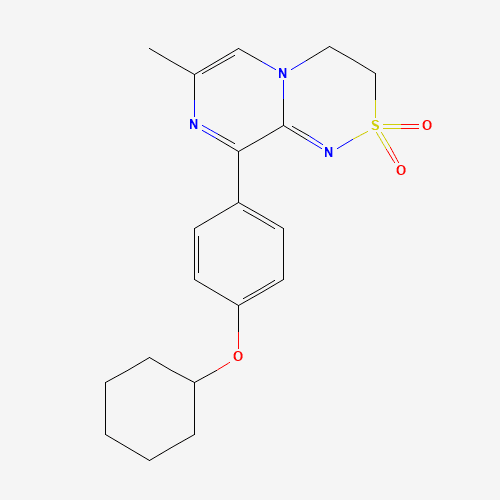
TAK-653 (osavampator, NBI-1065845) is an AMPA receptor positive allosteric modulator designed to amplify glutamate signalling only where glutamate is already being released — it binds the receptor's ligand-binding domain in a glutamate-dependent way and has virtually no agonist activity of its own, which in rats bought a 419-fold exposure margin against convulsions [1]. In 24 healthy volunteers a single 6 mg dose raised motor-cortex excitability on TMS and produced a mild psychostimulant profile without euphoria or subjective drug effects [2][3]. A phase 2 trial in depression reported a positive MADRS result, but only in a company press release; two phase 3 trials began in 2025 [4].
The most convincing AMPA potentiator yet built — clean target engagement in humans and a wide seizure margin in rats — but its only efficacy result sits in an unpublished press release.
- meta-analysis
- RCT
- trial
- observational
- preclinical / case
- review / patent / other
- retracted
- + Demonstrated target engagement in humans, with 6 mg raising motor-evoked potential amplitude on single-pulse TMS
- + A psychostimulant-like profile on eye-movement and tracking tests, without euphoria or subjective drug effects
- + Improved recognition memory, working memory and social interaction across several rodent and monkey tasks, over a broad dose range rather than a narrow bell-shaped one
- + A far wider exposure margin against seizures than earlier AMPA potentiators, which is what killed most of them
- − The only depression efficacy result is a press release; nothing has been peer-reviewed or published
- − Human dosing has been characterised only in phase 1 and a single-dose pharmacodynamic study, with the top dose capped by seizure concerns rather than by observed effects
- − No human cognitive benefit has been shown; the Stroop result in healthy volunteers went the wrong way at the low dose
- − It is an unapproved investigational drug, available nowhere legally for personal use
Overview
Ketamine works, and the reason it works appears to involve AMPA receptors. Blocking NMDA receptors on inhibitory interneurons releases a burst of glutamate onto pyramidal cells, that glutamate hits AMPA receptors, and the resulting signal drives BDNF release, mTOR activation and new synaptic connections [4][5]. If the AMPA step is what matters, then acting there directly should give the antidepressant effect without the dissociation, the abuse potential or the clinic visit.
That idea is decades old and has a graveyard attached to it. Drugs that agonise AMPA receptors outright cause seizures, because they activate receptors everywhere including ones that no neuron is currently signalling through. Positive allosteric modulators were the fix, but most of them retained enough intrinsic agonist activity to keep the seizure risk and — more surprisingly — to produce narrow, bell-shaped dose-response curves where a higher dose worked worse than a lower one [1]. Farampator's depression trial was stopped early over adverse events in a separate study, and Servier's tulrampator failed a 414-patient phase 2 as an SSRI adjunct [4].
TAK-653 was Takeda's attempt to strip out the agonism completely. It binds the AMPA receptor's ligand-binding domain only when glutamate is already there, and in cells it produces essentially no response without an agonist present [1]. The payoff was measurable: in rats, the exposure margin between the dose that improved recognition memory and the dose that caused convulsions was 419-fold on peak concentration and 1017-fold on exposure, against 42-fold and 122-fold for the comparator potentiator LY451646 and roughly 4-fold for AMPA itself [1].
In humans it has been through phase 1 and a pair of linked pharmacodynamic studies in the same 24 volunteers. A single 6 mg dose significantly increased motor-evoked potential amplitude to single-pulse transcranial magnetic stimulation — direct evidence that the drug reaches the brain and does what it is supposed to do there [2]. On a battery of psychomotor tests the profile looked like a mild stimulant: faster saccades, better smooth pursuit and adaptive tracking, and no change in body sway, alertness ratings, mood ratings or "feeling high" [3]. Compared with the reference drugs, the saccadic effect was larger than caffeine 60 mg or dexamphetamine 20 mg and smaller than modafinil 200 mg, while the tracking improvement was comparable to all three [3].
Then the file goes quiet in an unsatisfying way. Neurocrine licensed the compound and ran a phase 2 trial in major depressive disorder. According to the review that summarises it, osavampator taken orally once a day significantly improved MADRS scores against placebo at day 28 and at day 56 — but those results exist only in a company press release, and whether the day 7 outcome was positive, which would determine if it counts as a rapid-acting antidepressant at all, was not mentioned [4]. Two phase 3 trials as adjunctive treatment in treatment-resistant depression started in January and March 2025 [4].
Mechanism
The whole design rests on not being an agonist. TAK-653 binds the ligand-binding domain of recombinant AMPA receptors in a glutamate-dependent manner, and in GluA1-expressing cells it increases calcium influx only when glutamate is present, with an EC50 of 3.3 µM [1]. The structural explanation is steric: the compound's cyclohexyl ring clashes with Ser743 in GluA1 (Ser750 in GluA2) in the channel-closed state, so it cannot stabilise the receptor's active conformation on its own. Mutating that serine to alanine removes the clash and restores a large agonist-like response, which is about as direct a demonstration of a design hypothesis as medicinal chemistry produces [1].
In rat primary hippocampal neurons it augmented AMPA-elicited currents with an EC50 of 4.4 µM while showing little agonistic effect of its own [1]. The interesting comparison is at the synapse. In prefrontal cortical slices, with GABA-A, GABA-B and NMDA receptors pharmacologically blocked, 10 µM TAK-653 enhanced the suprathreshold response to stimulation of glutamatergic afferents more than either AMPA or LY451646 did [1]. A drug with no agonism outperformed drugs with agonism at amplifying real synaptic transmission — which is the paper's central claim, and the reason it argues that tonic activation of resting receptors actively interferes with phasic signalling rather than adding to it.
Downstream it runs the ketamine cascade. In rat primary cortical neurons TAK-653 increased phosphorylated mTOR and p70S6 kinase along with Akt and ERK, and raised BDNF protein [6]. In rat hippocampal neurons it increased BDNF protein in the presence of a low AMPA concentration, and in mice it raised hippocampal BDNF mRNA at 3 and 10 mg/kg orally [1][7]. The link to ketamine was made explicitly in the same paper: ketamine at 30 mg/kg intraperitoneally produced an antidepressant-like effect in the rat reduction of submissive behaviour model, and pretreatment with the AMPA antagonist NBQX abolished it — so AMPA activation is necessary for ketamine's effect in that model, and TAK-653 given sub-chronically for six days produced the same behavioural effect directly, without the hyperlocomotion that tracks ketamine's psychotomimetic properties [6].
The cognitive profile is broader than the comparators and not bell-shaped. In rats, TAK-653 improved novel object recognition at 0.03, 0.1 and 0.3 mg/kg orally, and reversed an MK-801-induced working memory deficit in the radial arm maze across 0.1, 0.3, 3 and 10 mg/kg — a hundred-fold dose range. LY451646 improved recognition memory but not working memory, and AMPA improved neither [1]. In monkeys, a single 0.06 mg/kg oral dose improved delayed match-to-sample accuracy at a 16-second delay, with the effect gone by 48 hours [1]. Attention in the rat five-choice serial reaction time task did not improve in the population as a whole [1].
Repeated dosing did not blunt the response. Downregulation or desensitisation after chronic stimulation is a standing worry for any receptor activator. After 14 days at 0.3 mg/kg orally in mice, the hippocampal BDNF and Gadd45b response to an AMPA challenge was preserved [1].
In humans, target engagement is confirmed and nothing more. Single-pulse TMS of the motor cortex is a crude but honest readout of cortical excitability, and 6 mg raised motor-evoked potential amplitude against placebo at 2.5 hours, with the low 0.5 mg dose doing nothing [2]. The same doses in rats had tracked plasma concentrations: no effect at 0.1 mg/kg, an increase at 0.3 mg/kg and above, corresponding to 5.32 ng/mL or higher [2]. That is a clean translational bridge, and the authors are careful to note what it does not show — the motor cortex is not where mood is regulated, so an effect on corticospinal excitability says the drug engages its target, not that it will treat depression [2].
- AMPA receptor ligand-binding domainmodulatesbinds the recombinant AMPA receptor ligand-binding domain only in the presence of glutamate, and potentiates glutamate-induced calcium influx with an EC50 of 3.3 µM in GluA1-expressing cells; the selectivity comes from steric interference at Ser743 in GluA1 [1]strong
- Synaptic AMPA receptor currentsactivatesaugmented AMPA-elicited currents in rat primary hippocampal neurons with an EC50 of 4.4 µM, and enhanced electrically evoked AMPA-receptor-mediated EPSPs in prefrontal cortical slices more strongly than either AMPA itself or the agonistic potentiator LY451646 [1]strong
- Intrinsic agonist activity at resting receptorsno bindingessentially absent, which is the design point — without glutamate bound, resting AMPA receptors are not activated, and this is what separates TAK-653 from the earlier potentiators that carried seizure risk [1]strong
- BDNF expressionactivatesmoderate
- Akt/mTOR/p70S6K and ERK signallingactivatesincreased phosphorylation of mTOR and p70S6 kinase along with their upstream regulators Akt and ERK in rat primary cortical neurons — the same cascade proposed to underlie ketamine's antidepressant action [6]moderate
- Corticospinal excitabilityactivates6 mg significantly increased motor-evoked potential amplitude to single-pulse TMS in healthy humans at 2.5 h post-dose, with no change in resting motor threshold and no effect on paired-pulse inhibition measures [2]moderate
- AMPA receptor desensitisation on repeated dosingno bindingafter 14 days at 0.3 mg/kg orally in mice, the AMPA-induced BDNF and Gadd45b transcriptional response was preserved, arguing against tolerance or receptor downregulation [1]weak
Dosing
as studied or commonly reported; not a recommendationDoses below are what studies used or, where marked, what is commonly reported. None is a recommendation.
Oral
- 0.5 mg and 6 mg
- 0.3–18 mg
- 0.3–9 mg
- Timing and food
- Once daily in every human study reported here. Pharmacodynamic assessments were timed to the expected peak at around 2.5 to 4 hours after dosing [3].
- Notes
- These are investigational doses from phase 1 and early phase 2 work, not a recommendation, and osavampator is not approved anywhere. The 6 mg ceiling in the crossover study was not chosen because higher doses did nothing. It was chosen because both AMPA receptor potentiation and transcranial magnetic stimulation carry a theoretical convulsion risk, and 6 mg was expected to produce a mean peak concentration well below levels at which partial seizures were seen in primates; the authors state plainly that this precluded a full dose-response characterisation [3]. The drug-interaction study used "the maximum daily dose under evaluation" in the phase 2 SAVITRI trial without naming the milligram figure, reporting instead a steady-state geometric mean Cmax of 18 ng/mL [8]. The dose taken forward into phase 3 has not been published.
Pharmacokinetics
what the body does with it| Half-life | Terminal half-life of 33.1 to 47.8 hours in the initial healthy volunteer studies, long enough that plasma levels stay roughly flat for several hours after Tmax [3]. |
|---|---|
| Time to peak | Median 1 to 5 hours after single oral doses of 0.3 to 18 mg; the crossover study assumed and confirmed a peak around 2.5 hours [3][8]. |
| Peak level | 4.19 ng/mL at 2.5 h after 0.5 mg and 45.99 ng/mL after 6 mg; across the phase 1 dose range of 0.3 to 18 mg, mean Cmax was 4 to 126 ng/mL [2][8]. |
| Steady state | Roughly three- to four-fold accumulation in Cmax and AUC by day 14 of once-daily dosing compared with day 5 [8]. |
| Metabolism | In vitro it raised CYP2B6 and CYP3A4 messenger RNA, but a dedicated phase 1 study found it did not meet the criteria for a CYP3A inducer: midazolam, ethinyl estradiol and levonorgestrel exposures were essentially unchanged at steady state [8]. |
Safety
risks and cautions, not medical adviceAcross the two healthy-volunteer studies reported here, TAK-653 was well tolerated. All drug-related adverse events were mild, there were no serious adverse events and no withdrawals for an adverse event. Treatment-emergent events occurred in 37.5% of participants at 0.5 mg and 50.0% at 6 mg against 29.2% on placebo, and the most frequent were somnolence (12.5% at each dose), headache (4.2% and 16.7%) and nasopharyngitis; somnolence and headache also occurred on placebo [2]. There were no clinically significant changes in vital signs, ECGs or laboratory measurements [3]. In the nine-day repeat-dose interaction study, all adverse events were mild or moderate, somnolence was reported by half the participants in one arm, headache by about a third in another, and the two discontinuations were for COVID-19 and tonsillitis, both judged unrelated [8].
Seizure risk is the defining safety question for this drug class, and it has been taken seriously. No seizures, convulsions, dissociative effects or euphoria were observed in the human studies, including in participants who also received transcranial magnetic stimulation, which itself carries a small convulsion risk [2][3]. In rats, convulsions appeared in a single animal at 100 mg/kg orally, giving exposure margins over the cognition-improving dose of 419-fold on plasma Cmax and 1017-fold on AUC — roughly ten times the margin of LY451646 and a hundred times that of AMPA itself [1]. The 6 mg ceiling in the human crossover study was nonetheless set to keep peak concentrations well below those at which partial seizures were seen in primates [3].
Drug interactions look unremarkable. In vitro data suggested the compound might induce CYP3A4, but a dedicated phase 1 study found it did not meet the regulatory definition of a CYP3A inducer: exposures of midazolam, ethinyl estradiol and levonorgestrel were essentially unchanged, so combined oral contraceptives and other CYP3A substrates — including SSRIs and statins — can be given alongside it without dose modification [8].
None of this is long-term safety. The longest human exposure described in these references is a couple of weeks, and the phase 2 and phase 3 safety datasets have not been published.
- Somnolence, the most common drug-related event: 12.5% at both 0.5 mg and 6 mg against 8.3% on placebo in the crossover study, and 50% in one arm of the repeat-dose interaction study [2][8]
- Headache, in 4.2% at 0.5 mg and 16.7% at 6 mg against 8.3% on placebo [2]
- Nasopharyngitis, oropharyngeal pain and diarrhoea at low single-digit rates [2]
- No seizures, dissociative effects or euphoria were reported in any published human study [3]
- AMPA receptor potentiation carries a theoretical convulsion risk; the human dose ceiling was set by that risk rather than by observed effects [3]
- Osavampator is an investigational drug with no marketing authorisation in any country
- The roughly three- to four-fold accumulation over repeated daily dosing means a single-dose experience does not predict steady state [8]
- Volunteers with a personal or family history of epilepsy, seizures or convulsions were excluded from the human studies [2][8]
- The only depression efficacy result exists in a company press release rather than a published trial, and the day 7 outcome — the one that would establish it as rapid-acting — was not reported [4]
- No cognitive benefit has been demonstrated in any human study [3]
- The human dose-response was deliberately truncated at 6 mg for seizure safety, so the upper end of the human pharmacology is uncharacterised [3]
- Both published human pharmacodynamic papers report the same 24 volunteers, 23 of whom were male [2][3]
- The efficacy and mechanism work in animals was done by the compound's developer [1][6]
- The primate antidepressant study used three monkeys with no control group and a single dose level [9]
- Long-term human safety data have not been published; the longest exposure described here is around two weeks [8]
- The dose being carried into phase 3 has not been disclosed in any published paper [8]
Interactions
documented pairs only, not exhaustive- any glutamatergiccautionno combination has been studied in humans; stacking two compounds that amplify glutamatergic transmission is the specific scenario the seizure margin exists to protect against [1]
- any stimulantcautionTAK-653 produced a psychostimulant-like pharmacodynamic profile on its own, and no combination study with any stimulant exists [3]
- Modafinilcautionboth produced similar-sized effects on saccadic peak velocity and adaptive tracking in the same test battery, but they were never given together [3]
- Caffeinecautionno interaction study exists; the healthy volunteer studies required participants to abstain from caffeine for 24 hours before each dose [3]
- Aniracetamcautionaniracetam is also described as an AMPA modulator, so the combination would double up on the same receptor with no data behind it
History
TAK-653 came out of a Takeda medicinal chemistry programme that had already produced TAK-137, an AMPA potentiator with lower agonist activity than the standard comparator LY451646. The explicit question for the next molecule was whether pushing agonism down to essentially zero would widen the seizure margin further or simply lose the benefit; the answer, published in 2021, was that it widened the margin and improved cognition across more domains [1]. A companion paper the same year established the antidepressant-like profile in rats and its mechanistic overlap with ketamine [6]. The human TMS and NeuroCart work followed in 2021 and 2022 [2][3].
Neurocrine Biosciences licensed the compound, renamed it NBI-1065845 and ran the phase 2 SAVITRI study in major depressive disorder; the drug-interaction study published in 2024 was run to support that programme [8]. It has since received the international non-proprietary name osavampator. Two phase 3 trials as adjunctive treatment in treatment-resistant depression started in January and March 2025 [4].
Reputation
how it is regarded elsewhere, not this wiki's readingIn nootropics discussion TAK-653 is usually presented as a safe ampakine — a way to get the cognitive effects of the old AMPA modulators without the seizure risk. The first half of that is supported: the seizure margin in rats genuinely is an order of magnitude better than the comparator, and no seizures have been seen in humans [1][2]. The second half is not. No cognitive benefit has been demonstrated in a human. The healthy-volunteer study that people cite measured eye movements, postural sway and visuomotor tracking, which are psychomotor measures, not cognition, and the one genuine cognitive test in it — the Stroop — got worse at 0.5 mg and was unchanged at 6 mg, which the authors themselves read as a likely false positive [3]. The cognitive results are all in rats and monkeys [1].
The comparison to modafinil and caffeine that circulates comes from a table in that same paper, and it is fair as far as it goes: the saccadic peak velocity increase was larger than caffeine 60 mg or dexamphetamine 20 mg, the adaptive tracking improvement was comparable to modafinil 200 mg, and unlike dexamphetamine there was no subjective "feeling high" [3]. But the authors describe the overall profile as "generally more subtle" than clinical doses of known psychostimulants, and it was a single acute dose in rested volunteers [3].
The 2025 monkey study circulating as evidence for antidepressant effects is worth reading carefully. It used three cynomolgus monkeys, no control group and no dose-ranging — the authors say the ethics-driven minimum sample size prevented both — and treated them for two weeks after twelve weeks of chronic unpredictable mild stress. Food motivation, huddling and movement improved, cortisol and IL-6 fell and BDNF rose [9]. With n=3 and no controls, that is a case series in monkeys.
FAQ
- Is TAK-653 the same thing as osavampator?
- Yes. TAK-653 is the Takeda development code, NBI-1065845 the Neurocrine code, and osavampator the international non-proprietary name. All three refer to this molecule.
- Does it work for depression?
- A phase 2 trial reported a significant MADRS improvement at day 28 and day 56, but only in a press release; no peer-reviewed publication of that trial exists, and the day 7 result was not disclosed [4]. Phase 3 trials started in 2025.
- Does it improve cognition in people?
- Not demonstrated. The cognitive improvements are in rats and monkeys [1]. The one cognitive test in healthy volunteers, the Stroop, showed no benefit [3].
- Can it cause seizures?
- No seizures have been reported in published human studies [2][3]. In rats, convulsions appeared at 100 mg/kg, 419-fold above the effective peak exposure [1]. The human dose was nonetheless capped for that reason.
- Why is a drug with no agonist activity better than one with some?
- Because agonism activates resting receptors that no synapse is currently using, which raises seizure risk and, in the developer's experiments, actively interferes with phasic synaptic signalling. TAK-653 enhanced evoked synaptic responses more than either AMPA or an agonistic potentiator did [1].
- Does it interact with antidepressants or the contraceptive pill?
- A dedicated phase 1 study found it is not a CYP3A inducer and does not meaningfully change midazolam, ethinyl estradiol or levonorgestrel exposure, so CYP3A substrates including SSRIs and statins need no dose change [8].
References
entry last reviewed 2026-09-20- [1]Strictly regulated agonist-dependent activation of AMPA-R is the key characteristic of TAK-653 for robust synaptic responses and cognitive improvement.Suzuki A, Kunugi A, Tajima Y et al.Sci Rep 2021other · humanPMID 34267258◌ unreviewed
- [2]Transcranial magnetic stimulation as a translational biomarker for AMPA receptor modulation.O'Donnell P, Dijkstra FM, Damar U et al.Transl Psychiatry 2021RCT · humanPMID 34045439◌ unreviewed
- [3]Central nervous system effects of TAK-653, an investigational alpha-amino-3-hydroxy-5-methyl-4-isoxazole receptor (AMPAR) positive allosteric modulator in healthy volunteers.Dijkstra F, O'Donnell P, Klaassen E et al.Transl Psychiatry 2022RCT · humanPMID 36153330◌ unreviewed
- [4]All roads lead to glutamate: NMDA and AMPA receptors as targets for rapid-acting antidepressants.Freudenberg F, Reif-Leonhard C, Dawson GR et al.Pharmacol Res 2025reviewPMID 40840695◌ unreviewed
- [5]Role of the AMPA receptor in antidepressant effects of ketamine and potential of AMPA receptor potentiators as a novel antidepressant.Suzuki A, Hara H, Kimura HNeuropharmacology 2023reviewPMID 36341809◌ unreviewed
- [6]TAK-653, an AMPA receptor potentiator with minimal agonistic activity, produces an antidepressant-like effect with a favorable safety profile in rats.Hara H, Suzuki A, Kunugi A et al.Pharmacol Biochem Behav 2021other · humanPMID 34655652◌ unreviewed
- [7]Author Correction: Strictly regulated agonist-dependent activation of AMPA-R is the key characteristic of TAK-653 for robust synaptic responses and cognitive improvement.Suzuki A, Kunugi A, Tajima Y et al.Sci Rep 2021otherPMID 34290388◌ unreviewed
- [8]Effects of the selective AMPA modulator NBI-1065845 on the pharmacokinetics of midazolam or ethinyl estradiol-levonorgestrel in healthy adults.Lin S, Ionescu A, Maynard-Scott J et al.Clin Transl Sci 2024RCT · humanPMID 38700236◌ unreviewed
- [9]TAK-653 Reverses Core Depressive Symptoms in Chronic Stress-Induced Monkey Model.Li L, Zhang Z, Liu X et al.Biomedicines 2025otherPMID 40564108◌ unreviewed