Mitochonic Acid 5
also MA-5 · Mitochonic acid-5 · Mitochonic-Acid 5
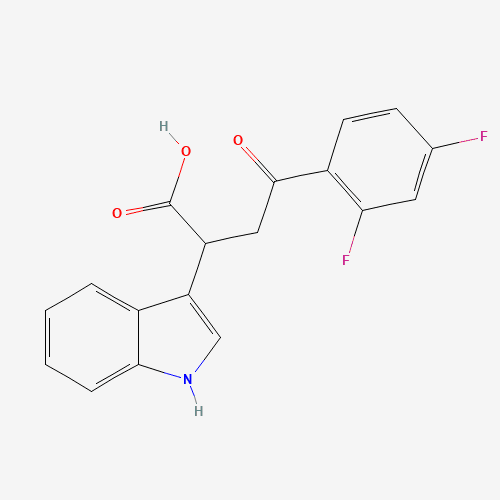
Mitochonic Acid 5 (MA-5) is a synthetic indole compound studied for mitochondrial disease. It binds mitofilin/MIC60, a protein involved in organising the inner mitochondrial membrane [1]. Human development has reached phase I safety testing; clinical benefit remains unproven [2].
Early human safety data and substantial laboratory research; no demonstrated clinical benefit, with dose-dependent harm in some preclinical models.
- meta-analysis
- RCT
- trial
- observational
- preclinical / case
- review / patent / other
- retracted
- + Improved ATP production and survival in mitochondrial disease cells
- + Reduced kidney injury in mouse models
- + Completed a short phase I safety study
- − Human efficacy remains unproven
- − Higher doses damaged cochlear cells in a mouse study
- − Long-term human safety is unresolved
MA-5 was identified by screening indole-3-acetic-acid derivatives for increased cellular ATP. Its 2015 discovery paper tested cells from patients with Leigh syndrome, MELAS, Leber hereditary optic neuropathy and Kearns–Sayre syndrome [3].
A 2017 study found protection against experimentally induced oxidative stress in fibroblasts from 24 of 25 patients. The remaining cell line resisted the stressor itself, so the rescue assay could not assess benefit there. These were cultured cells, not 25 people treated with MA-5 [4].
Animal and disease-model findings
- In a 2026 mitochondrial DNA deletion study, seven symptomatic mice received MA-5 and seven received vehicle. Kidney findings included lower creatinine and improved tissue structure. Resting lactate did not differ significantly between disease groups; the lactate benefit appeared after glucose loading. Cardiac respiratory histochemistry also showed no significant between-group difference [5].
- A 2025 Barth syndrome study found improved ATP production and mitochondrial morphology in patient-derived cells, and improved movement and heart rate in flies. The abnormal monolysocardiolipin/cardiolipin ratio was unchanged [6].
- A September 2026 ALS study reported improved movement and survival in flies and ATP production in patient-derived motor neurons. Its exploratory mouse comparison had only one animal per group and could not support statistical inference [7].
Clinical development
The evidence tier reflects completed phase I testing, not demonstrated treatment efficacy [2]. As checked on 1 October 2026, phase II trial jRCT2031250505 is listed as recruiting 15 people with mitochondrial disease and hearing loss. The blinded, placebo-controlled protocol lasts 12 weeks and measures hearing, disease markers and safety; it has no posted efficacy results [8].
Mitofilin/MIC60 helps organise cristae, the folds of the inner mitochondrial membrane. MA-5 binding was supported by affinity purification and binding assays, with assay-dependent affinity estimates. These experiments support a target hypothesis rather than demonstrating human target engagement [1].
MA-5 promoted ATP synthase oligomerisation and larger protein complexes in the 2017 experiments. The proposed mechanism is more efficient ATP production through local membrane organisation. In the tested fibroblasts, ATP increased without a corresponding rise in oxygen consumption or a change in whole-mitochondrial membrane potential [4].
Reduced oxidative stress in some models should not be interpreted as universal direct radical scavenging. The discovery study found no reduction in cellular ROS in its peroxide-stress experiment and no replenishment of glutathione [3].
A 2026 biochemical study also found reversible, non-competitive inhibition of the carnitine/acylcarnitine carrier. Reported IC50 values were approximately 73 µM for native rat protein and 58 µM for recombinant protein. These are isolated transport assays, not evidence of clinical fat loss or a demonstrated drug interaction [9].
- Mitofilin / MIC60 (IMMT)modulatesBinding was demonstrated biochemically; the proposed consequence is improved organisation of mitochondrial cristae [1].moderate
- Carnitine/acylcarnitine carrier (SLC25A20)blocksInhibited transport in reconstituted protein assays; relevance at human exposure is unknown [9].moderate
- ATP synthase oligomerisationmodulatesPromoted ATP synthase dimers and larger complexes in laboratory experiments [4].moderate
Dosing
as studied or commonly reported; not a recommendationDoses below are what studies used or, where marked, what is commonly reported. None is a recommendation.
Oral
- 5 mg or 10 mg (single-capsule cohorts)
- 10 mg (one-capsule cohort)
- 50 mg/kgMice with symptomatic mitochondrial DNA deletion disease; seven treated and seven disease controlsonce daily by gavage · 27 daysanimal study[5]
- 2 or 4 mg/kg/dayFemale Cdk5rap1-knockout mice with early hearing loss; the higher dose increased outer hair-cell lossin drinking water · 8 weeksanimal study[10]
- Time to effect
- ATP increases were measured after three hours in cultured mitochondrial disease fibroblasts; that is a laboratory endpoint, not a human onset of benefit [4].
- Notes
- Phase I also lists two- and four-capsule cohorts with ambiguous English dose wording. Only unambiguous doses are tabulated; the registry is not peer reviewed [2].
Pharmacokinetics
what the body does with it| Half-life | Not quantified in the public phase I results [2]. |
|---|---|
| Time to peak | About 1 hour in mice after oral doses of 25, 50 or 150 mg/kg; this is not a human estimate [1]. |
| Bioavailability | Oral absorption was demonstrated in mice, without an absolute bioavailability percentage [1]. |
| Steady state | Phase I reported linear exposure and unchanged PK after seven days; steady-state timing was not given [2]. |
Safety
risks and cautions, not medical adviceAmong 58 healthy men, including placebo recipients, phase I reported seven with grade 1 adverse events, no drug-attributed reactions, serious events or discontinuations. Event types are undisclosed. These registry results do not establish long-term safety [2].
The 2025 hearing-loss experiment found a dose-dependent adverse signal. At 2 mg/kg/day, several hearing measures improved. At 4 mg/kg/day, outer hair-cell loss increased and otoacoustic emissions worsened at some frequencies. This small mouse study does not define a human toxicity threshold [10].
The 2026 ALS paper likewise reported a limited concentration window: 100 nM improved ATP in motor neurons, while 10 µM or more appeared ineffective or potentially harmful. Sporadic-ALS fibroblasts also showed less benefit or possible harm at 30 µM [7].
- Cell rescue, ATP changes and animal outcomes do not establish improvements in human symptoms [3][6][7].
- The early mouse lifespan observation involved just one control and two treated mice; the authors could not perform a survival analysis [1].
- The 2026 mitochondrial disease experiment was small, and the benefit was clearer in kidneys than in the heart [5].
Interactions
documented pairs only, not exhaustiveClinical combination safety has not been established by the cited MA-5 studies. The carrier inhibition result is a biochemical finding and does not demonstrate an interaction with carnitine supplements [9].
- Is MA-5 a peptide?
- No. It is a synthetic indole small molecule derived from indole-3-acetic acid [3].
- Does MA-5 repair mitochondrial DNA?
- The mouse study found tissue improvements despite a persistent high burden of deleted mitochondrial DNA; it did not demonstrate genetic correction [5].
- Has MA-5 been shown to treat ALS?
- The cited ALS work tested flies, cultured patient-derived cells and an exploratory mouse pair. It did not treat people with ALS [7].
References
entry last reviewed 2026-10-01- [1]Mitochonic Acid 5 Binds Mitochondria and Ameliorates Renal Tubular and Cardiac Myocyte Damage.Suzuki T, Yamaguchi H, Kikusato M et al.J Am Soc Nephrol 2016preclinical · animalPMID 26609120◌ unreviewed
- [2]Physician-Initiated Phase I Study of MA-5 for the Treatment of Mitochondrial Disease -A Phase I Study of MA-5 for the Treatment of Mitochondrial Disease in Healthy AdultsJapan Registry of Clinical Trials — registry results, not peer reviewed 2024other · human◌ unreviewed
- [3]Mitochonic Acid 5 (MA-5), a Derivative of the Plant Hormone Indole-3-Acetic Acid, Improves Survival of Fibroblasts from Patients with Mitochondrial Diseases.Suzuki T, Yamaguchi H, Kikusato M et al.Tohoku J Exp Med 2015preclinical · cellPMID 26118651◌ unreviewed
- [4]Mitochonic Acid 5 (MA-5) Facilitates ATP Synthase Oligomerization and Cell Survival in Various Mitochondrial Diseases.Matsuhashi T, Sato T, Kanno SI et al.EBioMedicine 2017preclinical · animalPMID 28579242◌ unreviewed
- [5]Effects of an indole chemical, mitochonic acid 5, in a mouse model of mitochondrial disease onset.Ogasawara E, Tani H, Suzuki C et al.Sci Rep 2026preclinical · animalPMID 42270754◌ unreviewed
- [6]Mitochondria-Homing Drug Mitochonic Acid 5 Improves Barth Syndrome Myopathy in a Human-Induced Pluripotent Stem Cell Model and Barth Syndrome Drosophila Model.Tongu Y, Kasahara T, Matsuhashi T et al.FASEB J 2025preclinical · animalPMID 40542649◌ unreviewed
- [7]Mitochonic acid 5 alleviates amyotrophic lateral sclerosis phenotypes via mitochondrial augmentation.Oikawa Y, Luo Y, Suzuki N et al.JCI Insight 2026preclinical · animalPMID 42770300◌ unreviewed
- [8]Investigator-Initiated Phase II Clinical Trial of MA-5 for Mitochondrial Disease An Exploratory, Investigator-Initiated Phase II Study to Evaluate the Efficacy, Safety, and Pharmacokinetics of MA-5 in Patients with Mitochondrial Disease and Hearing LossNIPH Clinical Trials Search — registry protocol, not peer reviewed 2025other◌ unreviewed
- [9]Therapeutic potential of mitochonic acid (MA-5) in modulating mitochondrial function and inflammatory responses: A focus on carnitine/acylcarnitine carrier (SLC25A20) transport activity.Giangregorio N, Console L, Lentini G et al.Biochem Pharmacol 2026preclinical · cellPMID 42217682◌ unreviewed
- [10]Mitochonic acid 5 mitigates age-related hearing loss progression by targeting defective 2-methylthiolation in mitochondrial transfer RNAs.Kouga T, Miwa T, Wei FY et al.Front Cell Neurosci 2025preclinical · animalPMID 40260078◌ unreviewed