Indolepropionamide
also IPAM · Indole-3-propionamide · 3-(1H-indol-3-yl)propanamide · 1H-Indole-3-propanamide · 3-(3-Indolyl)propionamide
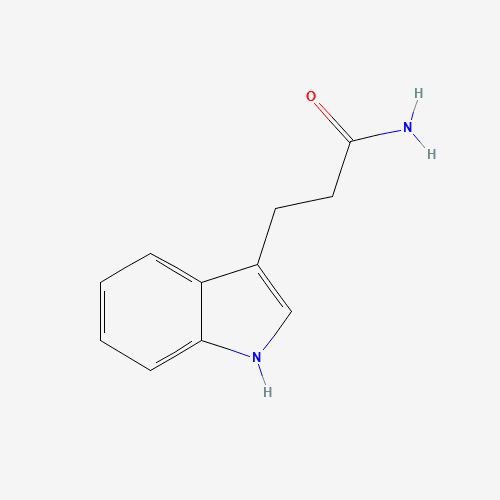
Indolepropionamide (IPAM) is the amide of indole-3-propionic acid, a small indole related in structure to melatonin. Its inventors made it to get an antioxidant indole into the brain more easily, then reported finding a matching trace compound in rat brain [1]. In their one published study it protected isolated rodent brain mitochondria at 10 nM and more than tripled the lifespan of a rotifer [1]. That 2010 paper and the same authors' abandoned patent application are the whole evidence base [1][2]: no other laboratory has published an experiment with IPAM, and it has never been tested in a mammalian disease model or in people.
A striking single-laboratory result in rotifers and isolated mitochondria that nobody has repeated or taken into a living mammal beyond one injection, let alone into a person.
- meta-analysis
- RCT
- trial
- observational
- preclinical / case
- review / patent / other
- retracted
- + More than tripled mean lifespan in one rotifer species at 30 µM, with larger body size and more offspring
- + Raised membrane potential in brain mitochondria from young and old rats at 10 nM, and blunted the collapse caused by three mitochondrial toxins
- + Reached the rat brain after injection at a dose where melatonin and indole-3-propionic acid were not detectably raised
- + Did not generate extra hydroxyl radicals in an assay where serotonin and 6-hydroxymelatonin did
- − One paper and one patent application, both from the same two inventors; no independent replication
- − No human data of any kind, and no mammal has been given more than a single injection
- − No toxicology, half-life, oral absorption or metabolism data in any species
- − The inventors' own earlier rotifer experiments, reported in the patent, found a far smaller effect
- − The complex I binding experiments are described but the data were not shown
IPAM is 3-(1H-indol-3-yl)propanamide: indole-3-propionic acid (IPA) with its carboxylic acid turned into a primary amide. IPA is made from tryptophan by gut bacteria and is found in human plasma and cerebrospinal fluid. In 1999 the group that later made IPAM reported that IPA scavenged hydroxyl radicals at least twice as efficiently as melatonin, did so without the pro-oxidant side reactions they measured for vitamin C, trolox and glutathione, and at 1 µM protected cultured neurons from amyloid-β [3]. IPA was then put forward as an Alzheimer's drug candidate under the name OXIGON [4].
The inventors' objection to IPA was that its acid group is charged at body pH, so little of it enters the brain. Converting the acid to an uncharged amide was their fix [1][2].
What the 2010 paper did [1]
- Brain uptake. One-month-old male rats (6 per group) given 0.5 mg/kg into the abdomen had brain IPAM of 691, 562 and 361 pg per mg protein at 2, 4 and 8 hours. The same dose of melatonin or IPA did not raise brain levels of those indoles at these time points.
- Isolated mitochondria. At 10 nM, IPAM raised the membrane potential of brain mitochondria from 1-month-old and 20-month-old rats, by more than melatonin or IPA at the same concentration. It prevented most of the loss of potential caused by 500 nM doxorubicin, antimycin A or the uncoupler FCCP. In mouse brain mitochondria, 10 nM increased complex I and complex IV activity in young and old animals.
- Radical scavenging. In rat forebrain homogenate exposed to a hydroxyl-radical-generating mixture, the concentration that halved oxidative DNA damage (8-hydroxydeoxyguanosine) was 0.18 µM for IPAM, 1.4 µM for melatonin and 7.46 µM for IPA.
- Rotifers. In the bdelloid rotifer Philodina acuticornis, 11 animals per group, mean lifespan rose from 24.6 days to 58.5, 81.1 and 90.5 days at 10, 20 and 30 µM. At 30 µM the animals were also longer on day 15 (575 against 390 µm), produced 55 offspring against 16, and stayed fertile for 18 days against 5.
The rotifer result in context
The patent application, first filed in December 2003, more than six years before the paper, reports an earlier rotifer series by the same inventors with much smaller effects. Median lifespan was 31.8 days against 23.4 at 0.5 µM, 36.3 against 25.9 at 5 µM, and 28.8 against 25.0 at 50 µM: a gain of 40% at best, shrinking to 15% at the highest concentration. Melatonin and IPA at 5 µM did about as well (33.5 and 33.8 days) [2]. The paper reports gains of 138% to 268% at 10–30 µM and does not mention the earlier series [1].
The same group, using the same rotifer, had earlier reported a 150% lifespan extension with a different antioxidant, the nitrone LPBNAH, so very large effects are a feature of this laboratory's model and not only of IPAM [5].
No one has repeated the experiment. A different laboratory screened antioxidants in another rotifer, Brachionus manjavacas, and found no life extension from its indole compound alone. That study's methods and discussion name the compound as indole-3-propionic acid bought from a chemical supplier, at 20 µM: the parent acid, not the amide [6]. Two later papers from that laboratory describe the same test as having been of IPAM [5][7]. On the published record, then, the only attempt in a second species was negative, and it is not clear that IPAM itself was ever in the dish.
Is it really made in the body?
The paper's title calls IPAM endogenous. The evidence is a peak in rat brain extracts that leaves an HPLC column at the same time as synthetic IPAM and grows when synthetic IPAM is added to the sample. Baseline peaks were "inconsistent" and estimated at under 100 pg per mg protein; a reproducible reading (346 pg per mg protein) was obtained only one hour after loading the rats with 300 mg/kg of L-tryptophan. The paper reports no mass-spectrometric confirmation of the peak's identity and examined no human samples [1]. The patent states that significant endogenous IPAM "could not be detected" in rat brain, while asserting, without data, that the inventors had seen it in rodent bile, gut, brain and cerebrospinal fluid [2].
The authors propose two actions, on different concentration scales [1].
Electron donation to radicals. The electron-rich indole ring can give an electron to a hydroxyl radical. For the parent acid, the resulting indolyl radical was shown to end up as a stable kynuric acid instead of a reactive intermediate, which is why IPA did not drive further radical formation in the presence of iron [3]. IPAM behaved the same way in the 2010 assay: with hydrogen peroxide, iron and EDTA it lowered hydroxyl radical formation, where serotonin, 6-hydroxymelatonin and 5-methoxyindoleacetic acid raised it [1]. One oddity: in the 2010 DNA-damage assay IPA was the weakest of the three indoles, about five times less potent than melatonin, although the 1999 paper had ranked IPA above melatonin using different assays [1][3].
A direct effect on the respiratory chain. The mitochondrial effects appeared at 10 nM, well below the 0.18 µM needed to halve radical damage. From this the authors argue that IPAM is more than a scavenger: that it binds complex I at its rate-limiting step and acts as a "recyclable electron and proton carrier", reducing electron leak and so the production of reactive oxygen species at source. The support is the rise in complex I and complex IV activity, a second complex I assay based on reduction of nitroblue tetrazolium at iron-sulfur cluster N2, and displacement of radiolabelled dopamine and 2-iodomelatonin from mitochondrial binding sites. The displacement results are stated as "data not shown", as is the lack of change in complex II–III [1].
What made the rotifers live longer is not established. The paper says the mechanisms behind the lifespan, size and fertility effects "remain to be determined", and it did not measure mitochondrial function or oxidative damage in the rotifers themselves [1].
Despite the resemblance to melatonin, the paper reports no test of IPAM at melatonin receptors and no experiment on sleep or body-clock timing [1].
The patent adds one further claim: in a thioflavin T fluorescence assay, IPAM inhibited aggregation of the amyloid peptide Aβ1–40 at a 1:1 molar ratio, as melatonin and IPA did. This is the inventors' filing; the result is presented as a single figure and has not appeared in a journal [2].
- Hydroxyl radical (direct scavenging)blockshalved hydroxyl-radical damage to DNA in rat forebrain homogenate at 0.18 µM, against 1.4 µM for melatonin and 7.46 µM for indole-3-propionic acid, and did not act as a pro-oxidant in an iron and hydrogen peroxide assay [1]moderate
- Mitochondrial complex I (NADH dehydrogenase)activates10 nM raised complex I activity in brain mitochondria from young and old mice, confirmed with a second assay at iron-sulfur cluster N2. Binding was inferred from displacement of radiolabelled dopamine and iodomelatonin, which the paper describes but does not show [1]unclear
- Mitochondrial complex IV (cytochrome c oxidase)activates10 nM raised complex IV activity in the same mouse brain preparations; complex II–III activity did not change (data not shown) [1]unclear
- Amyloid-β aggregationblocksthe patent application describes inhibition of Aβ1–40 aggregation in a thioflavin T assay at a 1:1 molar ratio with 250 µM peptide, shown only as a figure; this is the inventors' filing, not a peer-reviewed result [2]unclear
- Mitochondrial membrane potentialactivates10 nM raised the membrane potential of isolated rat brain mitochondria at 1 and 20 months of age, more than melatonin or indole-3-propionic acid, and countered 500 nM doxorubicin, antimycin A and FCCP [1]unclear
Dosing
as studied or commonly reported; not a recommendationDoses below are what studies used or, where marked, what is commonly reported. None is a recommendation.No peer-reviewed human dosing data. The doses below come from animal studies or company filings; animal doses do not translate directly to people.
Intraperitoneal (animals)
- 0.5 mg/kg (human equivalent ≈0.08 mg/kg)
- Notes
- No human dose has been studied, by any route. The single injected rat dose above is the only time IPAM has been given to a mammal in the published record, and it was a brain-uptake measurement, not a test of any effect [1]. The human equivalent is a body-surface-area scaling estimate, not a dose anyone has taken [8]. The other figures are concentrations, not doses: 10 nM added to isolated mitochondria and 10, 20 or 30 µM in the rotifers' culture medium [1]. The patent application proposes "about 0.01 mg to about 10 g per dose" and unit forms of 0.5 to 500 mg; that range is drafting language with no experiment behind it [2].
Pharmacokinetics
what the body does with it| Half-life | Not measured in any species. The discovery paper calls it long without giving a figure. Its only time course is in rat brain after 0.5 mg/kg injected into the abdomen: 691 pg per mg protein at 2 hours, 562 at 4 hours and 361 at 8 hours, so brain levels roughly halved between 2 and 8 hours [1]. There are no plasma data and no human data. |
|---|---|
| Time to peak | In rat brain, about 2 hours after intraperitoneal injection: the patent's earlier series (4 rats per time point) found levels still rising at 30, 60 and 120 minutes (480, 520 and 570 pg per mg protein), and the paper's series fell from 2 hours onward [1][2]. |
| Peak level | 691 pg per mg protein in rat brain 2 hours after 0.5 mg/kg intraperitoneally; blood levels were not reported [1]. |
| Bioavailability | Oral absorption has not been measured. After injection it reached the brain where the same dose of melatonin or indole-3-propionic acid did not raise brain levels of those indoles at 2 to 8 hours [1]. |
| Metabolism | Not studied; the authors name it as a topic for later work [1]. |
Safety
risks and cautions, not medical adviceThere is nothing to go on. No toxicology study of IPAM has been published in any species: no lethal-dose estimate, no repeated dosing, no reproductive or genetic toxicity testing, and no human exposure.
What the two sources do record is limited. Rats received a single 0.5 mg/kg injection and were killed 30 minutes to 8 hours later for brain measurements; neither source describes how the animals behaved or any other health observation [1][2]. Rotifers kept in 10–30 µM IPAM for life lived longer, grew larger and reproduced more [1]. In the patent's earlier series the benefit at 50 µM was much smaller than at 5 µM, which the filing does not comment on, though it calls IPAM "devoid of toxicity" in these animals [2].
The parent acid showed no measurable toxicity to cultured neurons in the 1999 study [3], but that says little about the amide in a whole animal. The absence of pro-oxidant activity in a test tube [1] is a statement about one chemical reaction, not a safety finding.
- No toxicology or human exposure data exist, so no adverse effect profile can be described; that is an absence of evidence, not evidence of safety.
- It is not interchangeable with indole-3-propionic acid: the amide was made precisely because it distributes differently, reaching the rat brain where the acid did not [1].
- Everything known about IPAM comes from one research group, in one paper and that group's own patent application [1][2].
- The rotifer result has not been reproduced, the groups were small (11 animals each), and the inventors' earlier series in the patent found a gain of 40% at most [1][2].
- There is no lifespan, disease-model, behavioural or cognitive study in any vertebrate; the mitochondrial findings are from organelles isolated from rodent brain and treated in a tube [1].
- Key supporting data, including the complex I binding experiments, are described as "data not shown" [1].
- The identification of IPAM as a natural brain compound rests on HPLC retention time alone [1].
Interactions
documented pairs only, not exhaustiveNo interaction study exists. The patent reports rotifer experiments combining 5 µM IPAM with 100 µM ascorbate and 100 µM trolox, in which median lifespan was 50.4 days against 28.8 days with the two vitamins alone [2]. That is a co-treatment in an invertebrate from the inventors' own filing, not evidence about combining IPAM with anything in people.
The bare structure predates the claims made for it. In 2001 an Ankara group synthesised a set of indole-3-propionamide derivatives as melatonin-related compounds and studied how they oxidise at an electrode [9]; the patent cites that work and concedes the structure was already known [2].
Miguel Pappolla and Burkhard Poeggeler filed a US provisional application in December 2003 and the full application a year later. It was published in May 2007 as US 2007/0105937, claiming IPAM and its derivatives for an extremely broad list of uses, from Alzheimer's disease and stroke to food preservation, on the strength of five short examples. Google Patents lists the application as abandoned [2].
The journal paper followed in 2010 [1]. It said that further radical-scavenging data "will be presented elsewhere". A PubMed search on 1 October 2026 finds no later experimental paper on IPAM itself from any group.
- Has IPAM been tested in humans?
- No. The published record contains no clinical trial, pharmacokinetic study or case report. The only mammals ever dosed were young rats given one injection to measure brain levels [1].
- Did it really triple lifespan?
- In one experiment, in one species of rotifer, with 11 animals per group: mean lifespan went from 24.6 to 90.5 days at 30 µM [1]. The same inventors' earlier experiments, reported in their patent, found at most a 40% gain [2], and no other laboratory has published a test of IPAM.
- Is IPAM the same thing as indole-3-propionic acid (IPA)?
- No. IPA is the acid, a gut-bacterial tryptophan metabolite found in human blood [3]. IPAM is its amide, made by the inventors to cross into the brain more readily [1]. Results for one do not carry over to the other.
- Does it work like melatonin for sleep?
- Nothing suggests so. The paper compared IPAM with melatonin as an antioxidant and in mitochondrial assays; it did not test melatonin receptors, sleep or circadian timing [1].
- Is it a natural compound in the body?
- The discovery paper says so, on the basis of an HPLC peak in rat brain that became measurable after a large dose of tryptophan [1]. The same authors' patent says endogenous IPAM could not be detected in rat brain [2]. It has not been confirmed by an independent group.
References
entry last reviewed 2026-10-01- [1]A novel endogenous indole protects rodent mitochondria and extends rotifer lifespan.Poeggeler B, Sambamurti K, Siedlak SL et al.PLoS One 2010preclinical · animalPMID 20421998◌ unreviewed
- [2]Indole-3-propionamide and derivatives thereofMiguel Pappolla, Burkhard PoeggelerPatent US20070105937A1 · Individual 2007patentnot peer reviewed◌ unreviewed
- [3]Potent neuroprotective properties against the Alzheimer beta-amyloid by an endogenous melatonin-related indole structure, indole-3-propionic acid.Chyan YJ, Poeggeler B, Omar RA et al.J Biol Chem 1999preclinical · cellPMID 10419516◌ unreviewed
- [4]Development of indole-3-propionic acid (OXIGON) for Alzheimer's disease.Bendheim PE, Poeggeler B, Neria E et al.J Mol Neurosci 2002reviewPMID 12212784◌ unreviewed
- [5]Rotifers as models for the biology of aging.Snell TWInt Rev Hydrobiol 2014reviewPMID 24791148◌ unreviewed
- [6]Antioxidants can extend lifespan of Brachionus manjavacas (Rotifera), but only in a few combinations.Snell TW, Fields AM, Johnston RKBiogerontology 2012preclinical · animalPMID 22270335◌ unreviewed
- [7]Lifespan extension of rotifers by treatment with red algal extracts.Snare DJ, Fields AM, Snell TW et al.Exp Gerontol 2013preclinical · animalPMID 24120568◌ unreviewed
- [8]A simple practice guide for dose conversion between animals and human.Nair AB, Jacob SJ Basic Clin Pharm 2016reviewPMID 27057123◌ unreviewed
- [9]Synthesis and analytical evaluation by voltammetric studies of some new indole-3-propionamide derivatives.Süzen S, Ateş-Alagöz Z, Demircigil BT et al.Farmaco 2001otherPMID 11765035◌ unreviewed