JBSNF-000088
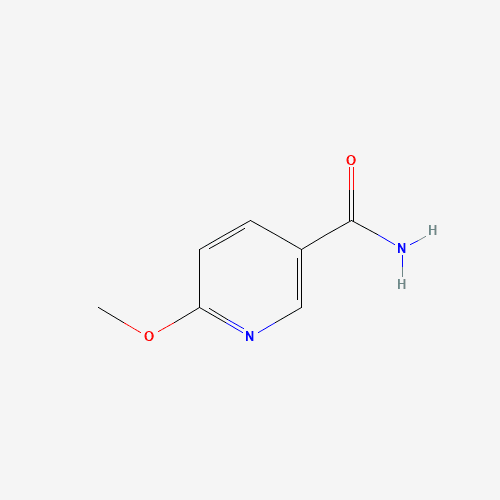
also 6-methoxynicotinamide · 6-methoxypyridine-3-carboxamide
JBSNF-000088 (6-methoxynicotinamide) is an experimental inhibitor of nicotinamide N-methyltransferase (NNMT) [1]. Oral treatment reduced weight gain and improved glucose handling in diet-induced obese mice, but it did not reduce weight in two genetic obesity models [1]. Its published evidence is preclinical; no human dose, efficacy or safety has been established.
Metabolic effects in one mouse study, with weaker results in genetic obesity models and no human data.
- meta-analysis
- RCT
- trial
- observational
- preclinical / case
- review / patent / other
- retracted
- + Less weight gain and better glucose tolerance in diet-induced obese mice
- + Lower plasma and liver triglycerides in diet-induced obese mice
- + Reduced endometriotic lesion burden in a small mouse experiment
- − No human efficacy or safety data
- − No weight benefit in ob/ob or db/db mice
- − Short plasma half-life in mice
JBSNF-000088 is the research code for 6-methoxynicotinamide. It was selected from a screening campaign for inhibitors of NNMT, an enzyme that methylates nicotinamide [1]. JBSNF-000028 is a different, later tricyclic inhibitor from the same programme; its results and safety assays should not be attributed to JBSNF-000088 [2].
Metabolic study. Mice made obese by a high-fat diet received 50 mg/kg by mouth twice daily for 30 days. They gained less weight than vehicle controls despite similar food intake. Their oral glucose tolerance, fasting insulin and HOMA-IR improved, and plasma and liver triglycerides fell [1]. The study did not include a weight-matched control, so improved glucose handling may have followed the difference in body weight [1].
Less responsive models. The same regimen did not reduce weight in ob/ob or db/db mice. Glucose tolerance improved in ob/ob mice, but not significantly in db/db mice; the db/db group also had no HOMA-IR improvement [1]. In high-fat-fed NNMT-knockout mice the compound gave no further glucose benefit, supporting an NNMT-dependent effect in that experiment. The knockout experiment produced relatively little obesity or glucose intolerance, which limits how much it can establish [1].
Other experimental work. In a small mouse model of endometriosis, five oral doses reduced the number and weight of lesions [3]. Gallbladder-cancer xenografts showed less tumor development after treatment [4]. In lung-cancer cells resistant to an EGFR inhibitor, JBSNF-000088 enhanced the inhibitor's effect in culture; it did not inhibit growth of non-resistant cells by itself [5]. These are exploratory models, not evidence that the compound treats any of these conditions in people.
NNMT transfers a methyl group from S-adenosylmethionine to nicotinamide, producing 1-methylnicotinamide (MNA) [1]. JBSNF-000088 is a nicotinamide-like molecule that competes at NNMT's substrate site. It inhibited purified human, monkey and mouse NNMT at 1.8, 2.8 and 5.0 µM, respectively. Human and mouse cell assays showed reduced MNA production at micromolar concentrations [1].
Crystal structures contained the N-methylated form of JBSNF-000088 bound to NNMT. That product was also detected at low levels in treated mouse plasma, but it inhibited NNMT poorly. The authors therefore proposed that the parent compound is a slowly converted substrate analog [1]. A single oral dose lowered plasma MNA for up to four hours in mice [1]. This work did not show that JBSNF-000088 raises tissue NAD+ in humans.
- NNMT (nicotinamide N-methyltransferase)blocksInhibited purified human NNMT with an IC50 of 1.8 µM; inhibition was also seen in human and mouse cells [1]moderate
- 1-methylnicotinamide (MNA)blocksLowered the NNMT product MNA in mouse plasma for up to four hours after an oral dose [1]moderate
Dosing
as studied or commonly reported; not a recommendationDoses below are what studies used or, where marked, what is commonly reported. None is a recommendation.No peer-reviewed human dosing data. The doses below come from animal studies or company filings; animal doses do not translate directly to people.
Oral
- 50 mg/kg
- 50 mg/kghigh-fat-fed wild-type and NNMT-knockout mice in the target-specificity studytwice daily · 4 weeksanimal study[1]
- 10 mg/kg
- Notes
- All doses listed are animal experiments. No human dose has been studied.
Pharmacokinetics
what the body does with it| Half-life | In mice, about 0.5 hours after intravenous dosing and 0.4 hours after oral dosing [1] |
|---|---|
| Time to peak | 0.5 hours after 10 mg/kg by mouth in mice [1] |
| Peak level | 3,568 ng/mL after 10 mg/kg by mouth in mice [1] |
| Bioavailability | About 40% by mouth in mice [1] |
| Metabolism | NNMT slowly methylates the molecule; the methylated product was found in mouse plasma and was a weak NNMT inhibitor [1] |
Safety
risks and cautions, not medical adviceHuman adverse effects and long-term safety have not been measured. The 2018 study described four weeks of 50 mg/kg twice-daily oral treatment as well tolerated in mice, without a food-intake change [1]. In laboratory tests the compound was negative in Ames and micronucleus assays, did not reduce HepG2 cell viability at up to 100 µM, and showed no activity in a 34-target screen at 10 µM [1]. These screens do not establish safety in people or exclude interactions at clinical exposures, which have never been defined.
- No human adverse-event data
- Experimental compound with no established human dose or safety profile
- No controlled human studies or human pharmacokinetic measurements
- The main metabolic efficacy findings come from one preclinical paper [1]
- No weight loss in ob/ob or db/db mice; db/db glucose tolerance did not improve significantly [1]
- The metabolic study lacked a weight-matched control, leaving the glucose mechanism uncertain [1]
- Has JBSNF-000088 been tested in people?
- No human trial was found in the published studies reviewed here; the reported outcomes come from cells and mice [1][3][5].
- Is JBSNF-000088 the same as JBSNF-000028?
- No. JBSNF-000088 is 6-methoxynicotinamide [1]; JBSNF-000028 is a distinct tricyclic NNMT inhibitor [2].
- Did it reduce weight in every mouse model?
- No. Weight changed in diet-induced obese mice, but not in ob/ob or db/db mice given the same regimen [1].
References
entry last reviewed 2026-09-24- [1]A small molecule inhibitor of Nicotinamide N-methyltransferase for the treatment of metabolic disorders.Kannt A, Rajagopal S, Kadnur SV et al.Sci Rep 2018preclinical · animalPMID 29483571◌ unreviewed
- [2]Novel tricyclic small molecule inhibitors of Nicotinamide N-methyltransferase for the treatment of metabolic disorders.Ruf S, Rajagopal S, Kadnur SV et al.Sci Rep 2022preclinical · animalPMID 36104373◌ unreviewed
- [3]Overexpressed nicotinamide N‑methyltransferase in endometrial stromal cells induced by macrophages and estradiol contributes to cell proliferation in endometriosis.Hou S, Xu H, Lei S et al.Cell Death Discov 2024preclinical · animalPMID 39489776◌ unreviewed
- [4]Nicotinamide N -methyltransferase promotes M2 macrophage polarization by IL6 and MDSC conversion by GM-CSF in gallbladder carcinoma.Li Y, Yang B, Miao H et al.Hepatology 2023preclinical · animalPMID 36633260◌ unreviewed
- [5]Nicotinamide N-methyltransferase promotes drug resistance in lung cancer, as revealed by nascent proteomic profiling.Hou Z, Wang Z, Yang F et al.Mol Oncol 2026preclinical · cellPMID 40679940◌ unreviewed