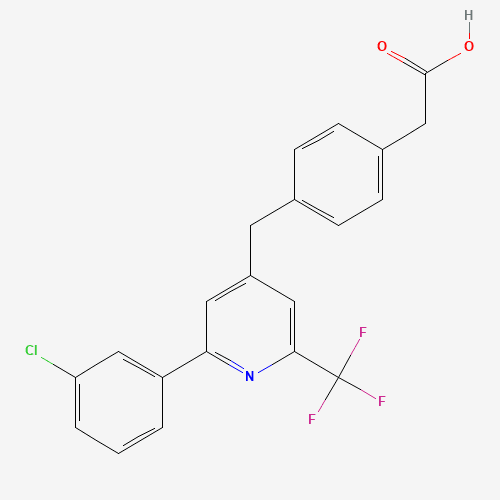
BPN14770
also Zatolmilast · BPN-14770 · BPN 14770
BPN14770, now named zatolmilast, is an oral drug candidate from Tetra Therapeutics, a Shionogi subsidiary [1]. It is an allosteric inhibitor of phosphodiesterase-4D (PDE4D), built to raise cAMP signalling in neurons without the vomiting that has stalled other PDE4 inhibitors [2][3]. In mice carrying the human form of the enzyme it improved memory at oral doses of 0.01–0.03 mg/kg [3], and a 30-man crossover trial in fragile X syndrome reported gains in language-related cognition [4]. The larger trials have not confirmed it. A 255-patient phase 2 trial in early Alzheimer's disease found no difference from placebo [5], and in May 2026 Shionogi reported that both phase 3 trials in fragile X syndrome had missed their primary endpoints [6].
A carefully engineered PDE4D inhibitor that is well tolerated and works at tiny doses in humanised mice, but its one positive human trial was small and the three larger ones missed their primary endpoints.
- meta-analysis
- RCT
- trial
- observational
- preclinical / case
- review / patent / other
- retracted
- + In mice carrying the human form of PDE4D it improved working and long-term memory at 0.01–0.03 mg/kg by mouth, about 100 times less than ordinary mice needed
- + Reversed scopolamine- and amyloid-β-induced memory deficits in those mice, effects that a PKA inhibitor blocked
- + Normalised hyperactivity, social behaviour, nesting and marble burying in fragile X mice, with benefit still present two weeks after dosing stopped
- + A phase 2 trial in 30 men with fragile X syndrome reported gains on language-related cognitive tests and caregiver ratings
- + No vomiting in ferrets or monkeys at high doses, and few gastrointestinal complaints in the human trials
- − Both phase 3 trials in fragile X syndrome missed their primary endpoints
- − A 255-patient trial in early Alzheimer's disease showed no difference from placebo on any measure
- − The positive phase 2 result rests on 15 men against 15, because carryover in the crossover limited the analysis to the first period, and it was not corrected for multiple comparisons
- − Nausea and diarrhoea were more common on the drug than on placebo in the Alzheimer's trial
- − Phase 1 results, including a scopolamine-challenge study in 38 volunteers, were never published
- − An independent laboratory measured oral bioavailability in mice at under 4%, against the developer's 70–100%
BPN14770 was designed at Tetra Discovery Partners in Grand Rapids, Michigan, later Tetra Therapeutics and now a wholly owned subsidiary of Shionogi, and has since been given the name zatolmilast [1][7]. It addresses a long-standing problem. Inhibitors of PDE4, the main enzyme that breaks down cAMP in neurons, improve memory in animals, but nausea and vomiting stop the dose being raised far enough to test the idea properly in people [2][3]. BPN14770 inhibits only the PDE4D subtype, only partly, and mainly when the enzyme has been switched on by cAMP signalling [2].
The mouse pharmacology needed a special mouse. The pocket the drug uses differs by one amino acid between primates and every other mammal, so the group changed a single codon in mice to give them the human version [3]. In those animals one oral dose of 0.01–0.03 mg/kg improved Y-maze alternation and 24-hour object recognition, about 100 times less than ordinary littermates needed, and 0.03 mg/kg reversed scopolamine-induced amnesia [3]. The same laboratory then showed that 14 days at 0.01–0.03 mg/kg prevented the memory loss, dendrite loss and synaptic-protein loss caused by injecting amyloid-β into the hippocampus [7], and reported a further scopolamine study [8]. It had no effect in tests of antidepressant-like or anxiolytic-like behaviour [3]. All three papers come from one laboratory at the University at Buffalo, with a Tetra employee as co-author.
Fragile X syndrome became the lead indication because cAMP production is low in patients' cells and in fly and mouse models of the disorder [9][10]. In adult fmr1-knockout mice, 0.3 mg/kg a day for two weeks brought open-field hyperactivity, social sniffing, nesting and marble burying back to the level of normal mice, left normal mice unchanged, and shortened the over-long dendritic spines of cortical layer 3 neurons by about 10%; the behavioural benefit was still there two weeks after the last dose [9]. A National Institute of Mental Health group, again with Tetra's co-authorship, fed it to knockout mice from weaning. Sleep and social behaviour increased in knockout and normal mice alike and open-field hyperactivity normalised at the lower doses, but activity in the elevated plus maze did not change and effects on brain protein synthesis were unclear [11].
Independent groups have used it as a tool. In ordinary mice, 0.1 mg/kg given twice during sleep deprivation prevented the resulting deficits in spatial pattern separation and object-location memory, with no effect in rested mice [12][13]. A Korean laboratory found none of the anti-inflammatory action of the non-selective PDE4 inhibitor roflumilast [14].
The human record is one small positive trial and three larger negative ones.
Phase 2, fragile X syndrome. Thirty men at a single centre took 25 mg twice daily and placebo for 12 weeks each, with no washout in between [4]. The benefit persisted after the switch to placebo, and low drug levels were still measurable 12 weeks after the last dose, so under a rule written into the analysis plan the efficacy results rest on the first period alone, 15 men against 15 [4]. In that comparison the NIH Toolbox crystallised cognition composite favoured the drug by 5.3 points (P = 0.0018), as did its two components, picture vocabulary and oral reading, and caregivers' ratings of language and of daily functioning each favoured it by 14 points on a 100-point scale [4]. Part of the cognitive gap came from a fall in the placebo group, −3.1 against +2.2, which the authors acknowledge [4]. Most other measures did not reach significance: memory and processing-speed tests, six of seven attention-test scores, caregiver ratings of anxiety and irritability, a behaviour checklist, a mood scale, adaptive behaviour, which was numerically slightly worse on the drug, and clinicians' global ratings. No correction was made for the number of comparisons [4]. The figures posted on the registry, which count all 30 men under each treatment, show much smaller gaps: a composite change of +0.1 against −0.9, and caregiver ratings less than 3 points apart [15].
Phase 2, early Alzheimer's disease. In 255 people on a cholinesterase inhibitor, 10 or 25 mg twice daily for 13 weeks gave the same result as placebo. Delayed memory scores rose by 10.1, 9.9 and 9.7 points in the three groups, and the secondary cognitive, functional and global scores were just as close. The registry posts the group means without a statistical comparison [5].
Phase 3, fragile X syndrome. A 13-week trial in 171 men missed its primary endpoint, the same NIH Toolbox composite. The companion trial in 163 boys aged 9–17 missed its primary endpoints, caregiver ratings of language and daily function, and its key secondary endpoint [6][16][17]. Shionogi reports significant differences on the caregiver ratings in the adult trial, a secondary measure there, and calls them suggestive of a signal but not conclusive. It has released no numbers [6].
PDE4D has a lid, and the drug holds it shut. The PDE4 enzymes carry two regulatory regions upstream of the catalytic site. One, UCR1, lets the long forms of the enzyme pair into dimers and is where PKA phosphorylates and activates them; the other, UCR2, is a helix that swings over the active site and controls access by cAMP [2][3]. Classical inhibitors such as apremilast sit in the active site, which is identical in all four PDE4 subtypes, so they cannot tell the subtypes apart [2]. BPN14770 also sits in the active site but completes a surface that lets UCR2 close down on top of it [3][18]. UCR2 carries a phenylalanine in PDE4D where PDE4A, B and C have a tyrosine, and the drug is shaped to accommodate the first and clash with the second [2][3].
Three kinds of selectivity follow. It inhibits activated long-form PDE4D at 7–8 nM, about 260 times more potently than PDE4B. It is 16 times weaker against a short, monomeric form of PDE4D that lacks the dimerising region, and about 130 times weaker against the long form before PKA has activated it [3]. So it acts chiefly where cAMP signalling is already under way, which the developers argue preserves the timing and location of the signal instead of flooding the cell [2].
Inhibition is deliberately incomplete. In the dimer, closing one active site slows the other without shutting it, so inhibition levels off at about 90% where apremilast reaches 100% [2][18].
The species difference is real and large. That phenylalanine exists only in primates. The mouse enzyme is inhibited at 133 nM; swapping in the human residue brings that to 2.9 nM and creates a high-affinity binding site in mouse brain that was not there before [3]. This is why results in ordinary rodents understate the drug, and why its low-dose data all come from one engineered mouse line.
Downstream it follows the textbook memory pathway. In humanised mice it raised brain cAMP, let a weak stimulus produce long-lasting potentiation in hippocampal slices at 100 nM, and after two weeks raised CREB phosphorylation, BDNF, phosphorylated synapsin and PSD95 in the hippocampus [3]. A PKA inhibitor infused into the brain abolished the memory benefit [3][7]. One paper adds SIRT1 and Akt as necessary intermediates [8].
Why vomiting should be less of a problem. Mice cannot vomit, so the group used a stand-in, the shortening of ketamine–xylazine anaesthesia. In humanised mice that began at 3 mg/kg, against memory effects at 0.01–0.03 mg/kg, a 40- to 100-fold gap in plasma exposure [3]. Ferrets did not vomit at up to 30 mg/kg, nor monkeys at up to 50 mg/kg [2]. The authors' explanation is that the brainstem's vomiting centre mostly expresses short PDE4D forms the drug binds poorly [3].
Human genetics supplied the rationale. Rare missense mutations in PDE4D cause acrodysostosis with intellectual disability, and common variants over the exons encoding the long forms are associated with cognitive performance in genome-wide studies [3][19][20][21].
In people, target engagement is partly shown. A single 50 mg dose reduced binding of a PDE4D PET tracer in the brain, by roughly 40%, though tracer metabolites made the figure unreliable [22]. In the fragile X trial its effect on the auditory N1 response, a marker of cortical over-excitability in the syndrome, was a non-significant trend [4]. A later analysis found that men with higher blood levels at the end of the first period had smaller N1 responses, and a machine-learning reanalysis picked out a rise in peak alpha frequency on the drug [1][23]. Both come from 12 to 23 participants and both sets of authors ask for replication.
- PDE4D long forms (dimeric, PKA-activated)blocksstrong
- PDE4D short form (monomeric PDE4D2)blocksIC50 127 nM, 16-fold weaker than against the dimer; the authors suggest this is why emetic effects are low, since short forms predominate in the brainstem's vomiting centre [3]weak
- PDE4Bblocksweak
- cAMP → PKA → CREB signallingactivatesstrong
- BDNF and synaptic proteinsactivatesmoderate
- SIRT1 / Akt / Bcl-2 pathwayactivatesrestored hippocampal SIRT1, phosphorylated Akt and the Bcl-2/Bax ratio in scopolamine-treated humanised mice, and inhibitors of SIRT1 or Akt blocked its memory effect; one laboratory's finding [8]weak
- Microglial inflammatory cytokinesno bindingunlike roflumilast, it did not reduce nitric oxide or TNF-α in stimulated microglial cells, or TNF-α, IL-1β and IL-6 in the plasma and brain of mice given 10 mg/kg for four days before lipopolysaccharide [14]unclear
- Cardiac phospholamban / SERCA2aactivatesin mice with high-fat-diet cardiomyopathy, 0.03 mg/kg a day for four weeks restored PKA phosphorylation of phospholamban and improved diastolic function [24]weak
Formulation
how the form changes blood levelsBPN14770 is a 406 Da pyridine bearing a phenylacetic acid arm. It was reached from an earlier amide lead whose half-life in mice was under half an hour: the amide was replaced with a carboxylic acid and a trifluoromethyl group was added to block oxidation of the ring's side chain [2]. Carboxylic acids had been inactive in the project's earlier chemical series, so its potency came as a surprise to its makers [2]. It dissolves to 95 µM at pH 7.4, crosses cell monolayers without being pumped back by P-glycoprotein, and is 99.5–99.8% bound to plasma proteins [2][14].
The phase 2 trial used 25 mg capsules, and the adolescent phase 3 trial gave 15 or 25 mg twice daily [15][17]. Animal studies have used a suspension in 0.5% methylcellulose, a Solutol solution, medicated chow, and a solvent mix of N-methylpyrrolidone and polyethylene glycol [8][9][11][14].
How well it is absorbed is not settled. The developer reports oral bioavailability of 70–82% in mice, 100% from the methylcellulose suspension, and 80–100% in rats and dogs [2][3][9]. The one independent measurement, in mice with the solvent mix, was 3.7%, and that group concluded brain penetration was poor [14]. The two have not been reconciled.
Dosing
as studied or commonly reported; not a recommendationDoses below are what studies used or, where marked, what is commonly reported. None is a recommendation.
Oral
- 25 mg
- 25 mg in adults; 15 or 25 mg in adolescents
- 10 or 25 mg255 people aged 55–85 with early Alzheimer's disease, added to a cholinesterase inhibitor; no difference from placebotwice daily · 13 weekshuman study[5]
- 50 mghealthy volunteers, PET measurement of how much brain PDE4D the drug occupiessingle dosehuman study[22]
- 0.01–0.03 mg/kg (human equivalent ≈0.0008–0.0024 mg/kg)
- 0.003–0.03 mg/kg (human equivalent ≈0.0002–0.0024 mg/kg)
- 0.3–1 mg/kg (human equivalent ≈0.024–0.081 mg/kg)
- 0.3 mg/kg (human equivalent ≈0.024 mg/kg)
- ≈0.3–3 mg/kg/day in chow (human equivalent ≈0.024–0.24 mg/kg/day)
- 0.1 mg/kg (human equivalent ≈0.008 mg/kg)
- 0.03 mg/kg (human equivalent ≈0.0024 mg/kg)
- 10 mg/kg (human equivalent ≈0.81 mg/kg)
- Form
- Not approved anywhere. The phase 2 trial used 25 mg capsules, and the adolescent phase 3 trial 15 or 25 mg doses [15][17]. Academic groups buy it from chemical suppliers and give it by gavage as a methylcellulose or carboxymethylcellulose suspension [12][24].
- Timing and food
- Twice daily in every patient trial [4][5][16]. In the phase 2 fragile X trial one capsule was taken in the morning and one at night, at least 6 hours apart and at least 30 minutes before or an hour after a meal; people who could not swallow a capsule could sprinkle its contents on apple sauce [4]. In mice it was dosed an hour before training or testing [3].
- Time to effect
- In mice a single dose improved memory within an hour, while the rises in CREB phosphorylation and BDNF needed repeated dosing [3]. The fragile X trial assessed outcomes at 6 and 12 weeks, and in the men who then switched to placebo the gains in language and daily functioning were maintained or grew over the following 12 weeks [4].
- Notes
- The only regimens tested for benefit in people are 10–25 mg twice daily, and of those only 25 mg twice daily in the 30-man fragile X trial was followed by a reported improvement [4]. That dose was picked to hold trough plasma levels near 100 ng/mL while staying under the peak of about 1,500 ng/mL at which nausea and vomiting appeared in phase 1; the authors wrote that higher doses could be explored [4]. Phase 1 covered single and two-week repeated doses in healthy young and elderly volunteers. Its results reached the literature only as a press release, relayed in a review: good tolerability, and a post hoc finding of better working memory in elderly volunteers at 10 and 20 mg twice daily [26][27]. A crossover study of single 10 and 50 mg doses against scopolamine-induced impairment in 38 volunteers finished in 2017 and has posted no results [28]. The mouse doses that look so small were given to animals engineered to carry the human enzyme; ordinary mice needed about 100 times more [3]. Human equivalents are body-surface-area arithmetic and were not tested in anyone.
Pharmacokinetics
what the body does with it| Half-life | No human half-life is reported in the papers read for this entry. In the fragile X trial, men who switched from the drug to placebo still had measurable plasma levels, 0.5–18 ng/mL, up to 12 weeks after their last dose [4]. A follow-up paper on that trial gives 8–10 hours but cites the mouse study for it [1][3]. In mice the developer reports 8–12 hours in plasma and brain [2][3][9]. An independent laboratory measured 6.4 hours after intravenous and about 20 hours after oral dosing [14]. |
|---|---|
| Time to peak | About 2 hours after 10 mg/kg by mouth in mice [14]. Not reported for people in the sources available. |
| Peak level | Not reported for people as a peak. The phase 2 dose was chosen to keep peaks below about 1,500 ng/mL, the level at which nausea and vomiting appeared in phase 1 [4]. In mice, 35 ng/mL one hour after 0.03 mg/kg and 153 ng/mL after 0.3 mg/kg in the developer's studies [2][3]; 2.53 µg/mL after 10 mg/kg in an independent one [14]. |
| Bioavailability | Disputed in mice. The developer reports 70–82% by mouth, and 80–100% in rats and dogs [2][3]; an independent Korean laboratory, using a different vehicle, measured 3.7% [14]. Brain levels are 22–45% of plasma levels in mice, and the unbound brain-to-plasma ratio was 0.18 [2][3][11][14]. Plasma protein binding is 99.5–99.8% [2]. In people, a single 50 mg dose occupied roughly 40% of brain PDE4D on PET, an estimate the authors call unreliable [22]. |
| Steady state | On 25 mg twice daily, plasma levels at week 12 averaged 535 ng/mL (standard error 74) in men with fragile X syndrome; the dose was chosen to hold trough levels near 100 ng/mL [4]. |
| Metabolism | Built to resist metabolism: 88–100% remained after 30 minutes with human, rat, mouse and dog liver microsomes. It is a weak inhibitor of CYP3A4 (IC50 15 µM) and CYP2C19 (43 µM) in vitro [2]. Human metabolites are not described in the sources available. |
Safety
risks and cautions, not medical adviceTolerability in trials has been good, with a mild gastrointestinal signal. In the Alzheimer's trial, the largest with posted data, serious adverse events occurred in two people in each of the three arms and nobody died. Nausea affected 4 of 80 on 10 mg and 5 of 85 on 25 mg against none of 86 on placebo, and diarrhoea 5, 6 and 3 [5]. The serious events on the drug were cholecystitis, rhabdomyolysis, presyncope and a hip fracture, one each [5]. In the fragile X phase 2 trial all 30 men completed both periods, most of them while staying on their usual medicines, which included SSRIs, methylphenidate and antipsychotics. Eleven had an adverse event while on the drug and 8 while on placebo, and vomiting occurred in 3 and 2. The investigator judged no event to be related to treatment, including the one serious event, a septic elbow bursitis that came with a transient rise in liver enzymes. ECGs did not change [4][15]. Shionogi describes the phase 3 trials as generally well tolerated with no new safety concerns, without figures [6].
The dose is capped by nausea. The phase 1 dose-escalation studies in healthy volunteers found the threshold for nausea and vomiting at a peak plasma level of about 1,500 ng/mL, and the 25 mg twice-daily regimen was chosen to stay under it [4]. Headache was the most frequent complaint in elderly volunteers on the highest phase 1 dose [26].
Animal toxicology is reported in summary. Rats showed no central nervous system or lung effects at up to 60 mg/kg and dogs no cardiovascular effect at up to 100 mg/kg. At 100 mg/kg rats lost appetite and weight, and dogs vomited, trembled and lost weight [2]. Studies of 28 and 90 days in rats and dogs found no vascular toxicity, the lesion that non-selective PDE4 inhibitors cause in animals, and no other microscopic change [2]. It did not block the hERG channel below 10 µM and was not mutagenic in bacteria [2].
What is missing. The phase 3 safety data and the long-term extension have not been published. The fragile X trials enrolled only males [15][16][17].
- Nausea in 4 of 80 people on 10 mg and 5 of 85 on 25 mg twice daily, against none of 86 on placebo, in the Alzheimer's trial [5]
- Diarrhoea in 5 of 80 and 6 of 85 on the drug against 3 of 86 on placebo in the same trial [5]
- Vomiting in 3 of 30 men while on the drug and 2 of 30 while on placebo in the fragile X trial, where no event was judged related to treatment [4][15]
- Headache was the most frequent complaint among elderly volunteers on the highest phase 1 dose [26]
- Serious events on the drug in the Alzheimer's trial were cholecystitis, rhabdomyolysis, presyncope and a hip fracture, one each; two people on placebo also had serious events [5]
- At 100 mg/kg, dogs vomited, trembled and lost weight, and rats lost appetite and weight [2]
- PDE4 inhibitors as a class cause nausea, vomiting and diarrhoea, and in animals vascular inflammation; BPN14770 showed neither vomiting in ferrets and monkeys nor vascular lesions in 90-day studies, but the gastrointestinal signal is visible in its trial data [2][5]
- Nausea and vomiting appeared in phase 1 once peak plasma levels reached about 1,500 ng/mL, roughly three times the average level measured at week 12 on 25 mg twice daily [4]
- Low drug levels were still measurable 12 weeks after the last dose, and its benefit in the phase 2 trial outlasted dosing by as long [4]
- At 3 mg/kg and above it shortened ketamine–xylazine anaesthesia in humanised mice, the rodent marker of emetic potential [3]
- It is more than 99% bound to plasma proteins and weakly inhibits CYP3A4 and CYP2C19 in vitro [2]
- PDE4D is active in heart muscle, where the drug changed calcium-handling proteins in mice; a cardiovascular study in dogs at up to 100 mg/kg found no effect [2][24]
- Both phase 3 fragile X trials missed their primary endpoints, and the results are public only as a company letter without numbers [6][16]
- The Alzheimer's trial was negative on every measure, and its results were posted to the registry five years after it ended [5]
- The positive phase 2 trial was single-centre, in 30 men, and carryover across its crossover limited the efficacy analysis to the first period, 15 against 15 [4]
- Its primary outcome was safety; the cognitive results were secondary measures [4]
- It made no correction for the many outcomes tested, and a fall in the placebo group's scores contributed to the cognitive difference [4]
- The low-dose memory data all come from one engineered mouse line in one laboratory, with the developer as co-author [3][7][8]
- It had no antidepressant-like or anxiolytic-like effect in mice and no anti-inflammatory effect [3][14]
- Oral bioavailability in mice is 70–100% according to the developer and 3.7% according to an independent laboratory [2][14]
- Phase 1 results, including the scopolamine-challenge study, were never published or posted [26][28]
- Human pharmacokinetics amount to plasma levels from the phase 2 trial; no half-life, absorption or metabolism data appear in the papers read for this entry [4]
Interactions
documented pairs only, not exhaustive- any pde4 inhibitorcaution
The approach dates to 2010, when a group at deCODE that included Mark Gurney, later of Tetra, published crystal structures showing PDE4's regulatory helix closed over the active site and used them to design PDE4D allosteric modulators that inhibited the enzyme only partly. Their lead compound reversed scopolamine-induced amnesia in mice and was 100 to 3,000 times less emetic than rolipram in shrews, dogs and monkeys [18]. Tetra's chemists carried the idea through triazine, cyclopentylpyridine and pyrimidine series to BPN14770, compound 28 of the paper that describes it [2].
Phase 1 dosing in healthy young and elderly volunteers ran in 2016, followed by the scopolamine-challenge study in 2017 [26][27][28]. The fragile X mouse study appeared the same year with authors from the FRAXA Research Foundation, and the foundation paid the direct clinical costs of the phase 2 trial that followed [4][9]. The Alzheimer's trial ran from April 2019 to February 2020, and its results were posted on the registry in February 2025 [5]. The phase 2 fragile X paper was published in 2021 [4].
The two phase 3 trials began in 2022, and Shionogi reported their results to the fragile X community in a letter dated 13 May 2026, saying it would run further exploratory analyses and continue the open-label extension [6][16][17].
- Is BPN14770 the same as zatolmilast?
- Yes. BPN14770 is the development code and zatolmilast the later generic name [1].
- Did it work in fragile X syndrome?
- In a 30-man phase 2 trial, analysed on its first 12-week period because of carryover, language-related cognition and caregiver ratings of language and daily functioning improved against placebo [4]. The two phase 3 trials, in 171 men and 163 boys, both missed their primary endpoints, though the adult trial showed differences on a secondary caregiver rating [6][16][17].
- Did it work in Alzheimer's disease?
- No. In a 13-week trial in 255 people with early Alzheimer's disease, 10 and 25 mg twice daily were no better than placebo on memory, daily function or global ratings [5].
- Why are the mouse doses so small?
- The drug depends on an amino acid found in primate PDE4D and not in the mouse enzyme. The key memory studies used mice engineered to carry the human residue, in which it is about 100 times more potent; ordinary mice needed around 1 mg/kg [3].
- Does it cause nausea like other PDE4 inhibitors?
- Much less in animals: ferrets and monkeys did not vomit at high doses [2]. In the Alzheimer's trial nausea still occurred in about 5–6% of people on the drug and nobody on placebo [5].
- Is it approved anywhere?
- No. After the phase 3 results Shionogi said it would continue the open-label extension and further analyses and keep talking to the FDA [6].
References
entry last reviewed 2026-10-11- [1]Auditory N1 event-related potential amplitude is predictive of serum concentration of BPN14770 in fragile X syndrome.Norris JE, Berry-Kravis EM, Harnett MD et al.Mol Autism 2024clinical trial · humanPMID 39488698◌ unreviewed
- [2]Design and Synthesis of Selective Phosphodiesterase 4D (PDE4D) Allosteric Inhibitors for the Treatment of Fragile X Syndrome and Other Brain Disorders.Gurney ME, Nugent RA, Mo X et al.J Med Chem 2019preclinical · animalPMID 31013090◌ unreviewed
- [3]Memory enhancing effects of BPN14770, an allosteric inhibitor of phosphodiesterase-4D, in wild-type and humanized mice.Zhang C, Xu Y, Chowdhary A et al.Neuropsychopharmacology 2018preclinical · animalPMID 30131563◌ unreviewed
- [4]Inhibition of phosphodiesterase-4D in adults with fragile X syndrome: a randomized, placebo-controlled, phase 2 clinical trial.Berry-Kravis EM, Harnett MD, Reines SA et al.Nat Med 2021RCT · humanPMID 33927413◌ unreviewed
- [5]A Randomized, Double Blind, Placebo Controlled, 3-Arm Parallel Design Study to Evaluate the Effects of BPN14770 in Patients With Early Stage Alzheimer's DiseaseTetra Discovery PartnersClinicalTrials.gov registry record NCT03817684 — registry results, not peer reviewed 2025other · human◌ unreviewed
- [6]Letter to the U.S. Fragile X Syndrome Community: results of the EXPERIENCE-301 (adult) and EXPERIENCE-204 (adolescent) studies of zatolmilastShionogi Inc.Shionogi community letter, 13 May 2026, hosted by the FRAXA Research Foundation — company statement, not peer reviewed 2026other · human◌ unreviewed
- [7]Protection from Amyloid β Peptide-Induced Memory, Biochemical, and Morphological Deficits by a Phosphodiesterase-4D Allosteric Inhibitor.Cui SY, Yang MX, Zhang YH et al.J Pharmacol Exp Ther 2019preclinical · animalPMID 31488603◌ unreviewed
- [8]A Novel PDE4D Inhibitor BPN14770 Reverses Scopolamine-Induced Cognitive Deficits via cAMP/SIRT1/Akt/Bcl-2 Pathway.Wang Y, Gao S, Zheng V et al.Front Cell Dev Biol 2020preclinical · animalPMID 33363155◌ unreviewed
- [9]Multiple Behavior Phenotypes of the Fragile-X Syndrome Mouse Model Respond to Chronic Inhibition of Phosphodiesterase-4D (PDE4D).Gurney ME, Cogram P, Deacon RM et al.Sci Rep 2017preclinical · animalPMID 29116166◌ unreviewed
- [10]The Emerging Role of Phosphodiesterase Inhibitors in Fragile X Syndrome and Autism Spectrum Disorder.Thomas SD, Mohammed HA, Hamad MIK et al.Pharmaceuticals (Basel) 2025reviewPMID 41155624◌ unreviewed
- [11]Effects of chronic inhibition of phosphodiesterase-4D on behavior and regional rates of cerebral protein synthesis in a mouse model of fragile X syndrome.Rosenheck M, Sheeler C, Saré RM et al.Neurobiol Dis 2021preclinical · animalPMID 34411704◌ unreviewed
- [12]Treatment with the selective PDE4B inhibitor A-33 or PDE4D inhibitor zatolmilast prevents sleep deprivation-induced deficits in spatial pattern separation.Zhao H, Blokland A, Prickaerts J et al.Behav Brain Res 2024preclinical · animalPMID 38056709◌ unreviewed
- [13]Individual contribution of PDE4B and PDE4D subfamilies to the prevention of object location memory impairments induced by sleep deprivation.Zhao H, Blokland A, Prickaerts J et al.Learn Mem 2025preclinical · animalPMID 40490297◌ unreviewed
- [14]Differential effects of two phosphodiesterase 4 inhibitors against lipopolysaccharide-induced neuroinflammation in mice.Kang DH, Ahn S, Chae JW et al.BMC Neurosci 2023preclinical · animalPMID 37525115◌ unreviewed
- [15]A Randomized, Double-blind, Placebo-controlled, 2-period Crossover Study of BPN14770 in Adult Males With Fragile X SyndromeTetra Discovery PartnersClinicalTrials.gov registry record NCT03569631 — registry results, not peer reviewed 2024other · human◌ unreviewed
- [16]A Randomized, Double-blind, Placebo-controlled, Parallel Group Study of BPN14770 in Male Adults (Aged 18 to 45) With Fragile X SyndromeTetra Discovery PartnersClinicalTrials.gov registry record NCT05358886 2022other◌ unreviewed
- [17]A Randomized, Double-blind, Placebo-controlled, Two-Part Study of BPN14770 in Male Adolescents (Aged 9 to < 18 Years) With Fragile X SyndromeTetra Discovery PartnersClinicalTrials.gov registry record NCT05163808 2021other◌ unreviewed
- [18]Design of phosphodiesterase 4D (PDE4D) allosteric modulators for enhancing cognition with improved safety.Burgin AB, Magnusson OT, Singh J et al.Nat Biotechnol 2010preclinical · animalPMID 20037581◌ unreviewed
- [19]Phosphodiesterase-4 (PDE4) molecular pharmacology and Alzheimer's disease.Gurney ME, D'Amato EC, Burgin ABNeurotherapeutics 2015reviewPMID 25371167◌ unreviewed
- [20]Genetic Association of Phosphodiesterases With Human Cognitive Performance.Gurney MEFront Mol Neurosci 2019reviewPMID 30800055◌ unreviewed
- [21]The promise of cyclic AMP modulation to restore cognitive function in neurodevelopmental disorders.Bhattacharya A, Turkalj L, Manzini MCCurr Opin Neurobiol 2025reviewPMID 39740265◌ unreviewed
- [22]Discovery, Radiolabeling, and Evaluation of Subtype-Selective Inhibitors for Positron Emission Tomography Imaging of Brain Phosphodiesterase-4D.Wakabayashi Y, Telu S, Dick RM et al.ACS Chem Neurosci 2020other · humanPMID 32212718◌ unreviewed
- [23]ROC Analysis of Biomarker Combinations in Fragile X Syndrome-Specific Clinical Trials: Evaluating Treatment Efficacy via Exploratory Biomarkers.Norris JE, Berry-Kravis EM, Harnett MD et al.Transl Psychiatry 2025clinical trial · humanPMID 40877251◌ unreviewed
- [24]Inhibition of the upregulated phosphodiesterase 4D isoforms improves SERCA2a function in diabetic cardiomyopathy.Zhu Z, Guan Q, Xu B et al.Br J Pharmacol 2025preclinical · animalPMID 39662482◌ unreviewed
- [25]A simple practice guide for dose conversion between animals and human.Nair AB, Jacob SJ Basic Clin Pharm 2016reviewPMID 27057123◌ unreviewed
- [26]Investigational phosphodiesterase inhibitors in phase I and phase II clinical trials for Alzheimer's disease.Prickaerts J, Heckman PRA, Blokland AExpert Opin Investig Drugs 2017reviewPMID 28772081◌ unreviewed
- [27]A Randomized, Double-blind, Placebo-controlled, Multiple Ascending Dose Study to Examine the Safety, Tolerability, Pharmacokinetic, and Preliminary Cognitive Profile of BPN14770 in Healthy Young and Elderly Male and Female SubjectsTetra Discovery PartnersClinicalTrials.gov registry record NCT02840279 2016other◌ unreviewed
- [28]A Randomized, Double-blind, Placebo-controlled, Single-dose, 6-Period Crossover Study to Evaluate the Effects of BPN14770 on Scopolamine-induced Cognitive Impairment in Healthy VolunteersTetra Discovery PartnersClinicalTrials.gov registry record NCT03030105 2017other◌ unreviewed