SLU-PP-915
also ERR pan-agonist 915
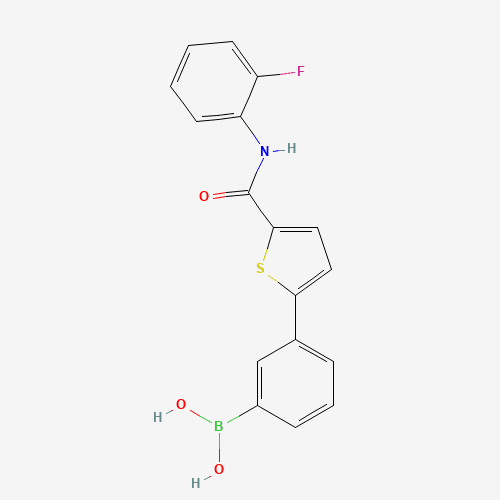
SLU-PP-915 is a pan-ERR agonist from the lab that made SLU-PP-332. It is a chemically distinct thiophene boronic acid [1] and, unlike SLU-PP-332, it is orally bioavailable. In mice it improved aerobic exercise performance as much as SLU-PP-332 did [2] and protected the heart in a heart-failure model [3]. It has never been tested in humans.
The orally active version of the best-known exercise mimetic; still a mouse-only compound, and banned in sport.
- meta-analysis
- RCT
- trial
- observational
- preclinical / case
- review / patent / other
- retracted
- + Orally active in mice, unlike SLU-PP-332
- + Improved running distance and duration in mice
- + Improved heart function in a mouse heart-failure model
- − No human studies of any kind
- − Newest of the group; the smallest literature
- − Falls under WADA's exercise-mimetic ban
SLU-PP-915 came from a structure-based design program that started from known ERRγ agonists. That program produced a series of 2,5-disubstituted thiophenes, and replacing a phenol with a boronic acid kept their potency [1].
Its selling point over SLU-PP-332 is oral activity. SLU-PP-332 lacks oral bioavailability. Injected at 20 mg/kg, SLU-PP-915 raised maximal running time and distance by roughly 50% over vehicle, matching SLU-PP-332 at 50 mg/kg — the same effect at under half the dose. Taken orally at 32 mg/kg twice daily for a week it produced comparable running gains and Ddit4 induction to injection, and adding an hour of daily treadmill running on top increased both further, along with muscle mitochondrial DNA content [2]. In a pressure-overload heart failure model it improved ejection fraction, reduced fibrosis and increased survival, alongside SLU-PP-332 [3].
Like SLU-PP-332, it activates the ERRs, which control mitochondrial biogenesis, oxidative phosphorylation, fatty acid oxidation and the Krebs cycle. It induces Ddit4, a gene switched on by acute aerobic exercise, at levels matching or exceeding treadmill running [2]. In the heart the benefit ran mainly through ERRγ [3].
It has not been co-crystallized with an ERR. Docking into the ERRγ ligand-binding domain puts it in much the same pose as the older agonist GSK4716, with two hydrogen bonds to Asp328 and π-stacking against Tyr326 and Phe435; the boronic acid does the hydrogen-bonding job that a phenol does in SLU-PP-332 [4].
- ERRα / ERRβ / ERRγ nuclear receptorsactivatesstrong
Dosing
as studied or commonly reported; not a recommendationDoses below are what studies used or, where marked, what is commonly reported. None is a recommendation.No peer-reviewed human dosing data. The doses below come from animal studies or company filings; animal doses do not translate directly to people.
Intraperitoneal (animals)
- 20 mg/kg (human equivalent ≈1.6 mg/kg, or ≈97 mg at 60 kg)
- 25 mg/kg (human equivalent ≈2 mg/kg, or ≈120 mg at 60 kg)
Oral
- 32 mg/kg (human equivalent ≈2.6 mg/kg, or ≈156 mg at 60 kg)
- 2, 8 and 32 mg/kg, single doses
- Form
- The injected doses above were given into the abdomen, dissolved in DMSO with Tween or Cremophor and saline [1][3]. The oral doses used a sugar-free pharmacy compounding suspension, which the mice drank voluntarily from a micropipette rather than being gavaged [2].
- Notes
- SLU-PP-915 has never been given to people. Every dose above is a mouse dose taken from the methods of the paper cited beside it; the oral study ranged over 0.2–32 mg/kg, once or twice daily, for up to 7 days, in groups of 3–6 male C57BL/6 mice [2]. Human equivalents are body-surface-area estimates [5][6], not doses tested in people.
Pharmacokinetics
what the body does with it| Half-life | 18–28 minutes in mice after oral gavage at 2, 8 and 32 mg/kg [2] |
|---|---|
| Bioavailability | Orally bioavailable in mice. Plasma levels rose in proportion to the oral dose, though a voluntarily drunk suspension plateaued at the top of the range [2] |
| Steady state | No accumulation: plasma one hour after a single dose matched plasma one hour after the 14th dose of a twice-daily 7-day course [2] |
| Metabolism | More stable than the acyl hydrazones: half-life over 60 minutes in both human and mouse liver microsomes, which the boronic acid group is credited with [4]. In human liver preparations it forms seven phase I metabolites and no phase II conjugates [7]. |
Safety
risks and cautions, not medical adviceThere is no human safety data. Mice given 25 mg/kg twice daily for six weeks in the heart failure study showed no overt toxicity [3], and seven days of oral or injected dosing did not significantly change body weight [2]. Neither study set out to test safety. The animal literature reports no evident toxicity in obesity models, and clinical trials are still needed [8]. In human liver preparations it formed seven phase I metabolites and no phase II conjugates. Anti-doping laboratories characterized these because of its doping potential [7].
Its chemistry carries one specific theoretical concern. The boronic acid on the A-ring is electrophilic — a Michael acceptor — and could form covalent bonds with off-target proteins, though its designers expect no covalent bond inside the ERRγ pocket itself. Their own 2026 review, while calling SLU-PP-915 one of the most interesting preclinical candidates in the class, recommends replacing that group with a tetrazole, a carboxylic acid or a cyclic hemiboronic acid for better drug-likeness and lower toxicity [4]. Nothing has tested whether this matters in an animal.
- None established; no human exposure has been studied
- Exercise mimetics are prohibited in sport by WADA [9]
- Not approved; product identity and purity unverified; the boronic acid group is unusual in supplements
- Every efficacy result is from mice [2][3]
- Its dedicated literature is only a few papers, all from a small number of labs
- Less potent than SLU-PP-332 at ERRα in reporter assays; its advantages are oral activity and metabolic stability, not raw potency [4]
- The boronic acid group is an electrophile that could bind off-target proteins covalently; its own designers suggest replacing it [4]
Interactions
documented pairs only, not exhaustive- SLU-PP-332cautionSame receptors, same mechanism; combining them duplicates one lever and has never been studied
References
entry last reviewed 2026-09-18- [1]Development and pharmacological evaluation of a new chemical series of potent pan-ERR agonists, identification of SLU-PP-915.Hampton CS, Sitaula S, Billon C et al.Eur J Med Chem 2023preclinical · animalPMID 37421886◌ unreviewed
- [2]An orally active estrogen receptor-related receptor agonist, SLU-PP-915, enhances aerobic exercise capacity.Billon C, Appourchaux K, Côté I et al.J Pharmacol Exp Ther 2026preclinical · animalPMID 41421047◌ unreviewed
- [3]Novel Pan-ERR Agonists Ameliorate Heart Failure Through Enhancing Cardiac Fatty Acid Metabolism and Mitochondrial Function.Xu W, Billon C, Li H et al.Circulation 2024preclinical · animalPMID 37961903◌ unreviewed
- [4]Pharmacology of estrogen-related receptors (ERRs) agonists.Radwan MO, Guin S, Burris TPRSC Chem Biol 2026reviewPMID 42256350◌ unreviewed
- [5]A simple practice guide for dose conversion between animals and human.Nair AB, Jacob SJ Basic Clin Pharm 2016reviewPMID 27057123◌ unreviewed
- [6]Dose translation from animal to human studies revisited.Reagan-Shaw S, Nihal M, Ahmad NFASEB J 2008reviewPMID 17942826◌ unreviewed
- [7]In Vitro Metabolism and Analytical Characterization of SLU-PP-332 and SLU-PP-915: Novel Pan-ERR Agonists With Doping Potential.Möller T, Krug O, Thevis MRapid Commun Mass Spectrom 2026preclinical · cellPMID 41588687◌ unreviewed
- [8][Pharmacological Activation of ERRα/β/γ as an Exercise Mimetic: Potential Therapeutic Applications].de Souza-Lima J, Astrosa-Martin BD, Galaz-Rodríguez CA et al.Rev Med Chil 2026reviewPMID 42024694in Spanish◌ unreviewed
- [9]Analysis and Identification of In Vitro Metabolites of Exercise Mimetic SLU-PP-332 ERRα/β/γ Agonist for Doping-Control Purposes.Avliyakulov NK, Sobolevsky T, Ahrens EDrug Test Anal 2026preclinical · cellPMID 41688415◌ unreviewed