Astaxanthin
also all-trans-Astaxanthin · Astaxanthine · AstaREAL · BioAstin · Haematococcus pluvialis extract
Astaxanthin is the red carotenoid that colours salmon, shrimp and crayfish. Supplements usually contain an extract of the microalga Haematococcus pluvialis [1][2]. It is sold as a very strong antioxidant, and pooled trials do show a modest fall in the lipid-peroxidation marker malondialdehyde [3]. The effects that matter clinically are small or inconsistent. Meta-analyses find a little more skin moisture and elasticity but no change in wrinkle depth [4], no reliable effect on blood lipids or blood pressure in the general population [5][6], and no gain in endurance performance [7]. Its safety at up to 8 mg a day is well studied [8][9].
A safe, well-tolerated antioxidant with a real but modest effect on oxidative-stress markers; the skin, lipid, brain and exercise claims rest on small trials that mostly miss when pooled.
- meta-analysis
- RCT
- trial
- observational
- preclinical / case
- review / patent / other
- retracted
- + Lowers malondialdehyde, a lipid-peroxidation marker, in meta-analysis of 12 trials
- + Slightly better skin moisture and elasticity in pooled oral trials
- + Lower creatine kinase after exercise (moderate-certainty evidence)
- + Lower glucose and better lipids in pooled trials in type 2 diabetes and prediabetes
- + No safety signal across dozens of human trials; EFSA judges 8 mg a day safe for adults
- − No effect on wrinkle depth when trials are pooled
- − No effect on VO2max, time trials or power output
- − Lipid and blood pressure meta-analyses in general populations are mostly null
- − Cognitive trials found no significant difference from placebo
- − Several positive trials were run or funded by manufacturers
- − EFSA's acceptable intake is exceeded at 8 mg a day in children under 14
Astaxanthin is a red, fat-soluble xanthophyll carotenoid. Fish and crustaceans cannot make it; they get it from algae and other microorganisms in their diet. That is why salmon, shrimp and crayfish are pink or red [2]. The microalga Haematococcus pluvialis can accumulate it up to 3.8% of its dry weight and is the usual source of supplements. Commercial astaxanthin also comes from Phaffia yeast and from chemical synthesis, and the US FDA approves it as a colourant in animal and fish feed [1]. Unlike beta-carotene, it has no provitamin A activity [1].
The human trial literature is large but made of small studies, many run in Japan or Iran and several funded by manufacturers [4][10]. When those trials are pooled, most of the headline claims shrink.
Oxidative stress and inflammation. A meta-analysis of 12 randomised trials (380 people) found that astaxanthin lowered blood malondialdehyde (SMD −0.95), with some evidence of higher superoxide dismutase and lower isoprostanes in overweight people. It lowered IL-6 in type 2 diabetes but had no significant effect on CRP or TNF-α [3]. Individual trials go both ways. In overweight adults, 12 weeks lowered malondialdehyde and isoprostanes and raised total antioxidant capacity compared with placebo [11]. In middle-aged and older adults, 6 or 12 mg a day lowered phospholipid hydroperoxides in red blood cells [12]. In young Finnish men, 8 mg a day for 3 months lowered plasma hydroxy fatty acids within the astaxanthin group, but the difference from placebo just missed significance (p = 0.056) [13]. And 20 mg a day for 4 weeks in trained cyclists raised plasma astaxanthin without changing antioxidant capacity or malondialdehyde [14]. In the XANTHIN trial, a year of 12 mg a day in 61 kidney transplant recipients changed neither F2-isoprostanes nor arterial stiffness nor inflammation [15].
Blood lipids, glucose and blood pressure. In general populations the pooled evidence is mostly null. A 2015 meta-analysis of 7 trials (280 people) found no effect on total, LDL or HDL cholesterol or on triglycerides, and only a non-significant trend for glucose [5]. A 2020 meta-analysis of 14 trials found only a small rise in HDL (+1.5 mg/dL) and no effect on glucose, HbA1c, LDL, triglycerides, weight or blood pressure. Its overall CRP result was null, with 98% heterogeneity, and the CRP benefit it reports is confined to subgroups [6]. In adults at risk of metabolic syndrome, systolic pressure fell by 4.2 mmHg, a result at the edge of significance (p = 0.05) [16].
The picture is better in diabetes and prediabetes. A 2026 meta-analysis of 9 trials (403 patients) found lower fasting glucose (−16 mg/dL), HbA1c (−0.34 points), LDL (−9 mg/dL) and total cholesterol, and higher HDL. Body weight and HOMA-IR did not change. The caveats are that most of the trials came from Iran, the fasting-glucose result had 98% heterogeneity, and the HbA1c result was rated low certainty [10]. The most thorough single trial, 24 weeks of 12 mg a day in 34 people with prediabetes, missed its primary outcome (insulin sensitivity measured with a glucose clamp). It found falls from baseline in LDL (−0.33 mmol/L) and in fibrinogen, fetuin-A and L-selectin [17].
Skin. Pooling 8 oral trials, a 2021 meta-analysis found higher skin moisture (SMD 0.53) and elasticity (SMD 0.77) but no significant reduction in wrinkle depth. It rated the evidence preliminary because the trials were small and several were run or funded by commercial entities [4]. In one of those trials, run by a manufacturer, 6 mg a day for 6 weeks in 36 men improved crow's-feet wrinkles, elasticity and water loss through the skin [18]. In a 9-week trial of 4 mg a day, the dose of UV needed to redden the skin rose from baseline more than on placebo, but the post-treatment values themselves did not differ significantly between groups (22 people analysed; FUJIFILM sponsored) [19].
Brain. Astaxanthin is marketed for memory, but no trial has shown a significant difference from placebo. In the largest (96 middle-aged adults, 6 or 12 mg a day for 12 weeks), some scores improved within the astaxanthin groups but none differed from placebo [20]. A small trial in mild cognitive impairment combined astaxanthin with sesamin, so it cannot isolate astaxanthin [21]. A 2024 meta-analysis found at most a marginal effect on cognitive accuracy and none on reaction time [22]. A review of trials in older adults also found no statistically supported benefit [23].
Exercise. Two cycling trials were positive: a 20 km time trial improved by 121 seconds (7 completers per group) [24], and a 40 km time trial by 1.2% [25]. A larger trial of 32 trained cyclists on 20 mg a day found no change in fat oxidation or performance [14]. Two trials in resistance-trained men found no effect on muscle damage or soreness [26][27]. A 2026 meta-analysis of 24 trials found no improvement in VO2max, time-trial performance or maximal power (low certainty). Creatine kinase after exercise was lower (SMD −0.45, moderate certainty), which points to a possible effect on recovery rather than on performance [7].
Fertility. In a 30-man pilot trial of 16 mg a day, sperm linear velocity and pregnancy rates were better with astaxanthin, but only 11 men were in the astaxanthin group [28]. A larger trial of 80 men with oligo-astheno-teratozoospermia, on the same dose, found no effect on any semen parameter [29]. A 2026 meta-analysis of the human trials found no significant improvement in semen quality [30]. In women undergoing assisted reproduction, four small Iranian trials pooled to a higher oocyte maturation rate (+8.4 percentage points), but no pregnancy outcome changed [31].
Eyes and immunity. In a manufacturer-run trial in 64 children with digital eye strain, 4 mg a day for 12 weeks improved a symptom questionnaire score more than placebo (−4.0 vs −1.7 points). Visual acuity and accommodation did not differ between groups [32]. In 42 young women, 2 mg a day lowered CRP and a DNA-damage marker and raised several immune responses, while 8 mg a day raised IL-6 and interferon-γ [33].
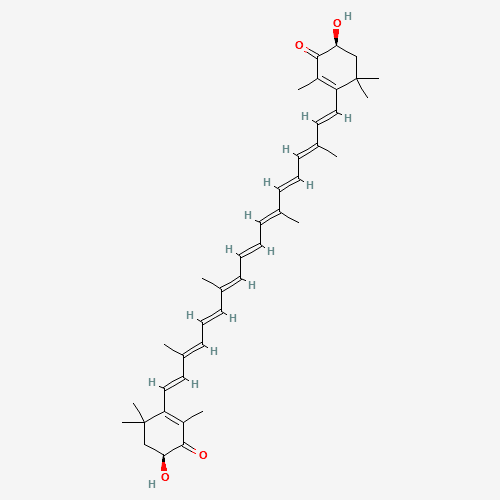
Astaxanthin has no known receptor. It is a C40 carotenoid: a long chain of conjugated double bonds capped at each end by a six-membered ring carrying a 3-hydroxyl and a 4-keto group [1][2]. That layout makes it polar at both ends and non-polar in the middle, so it can insert into a cell membrane with its polar ends at the surfaces [1][4]. Most of the antioxidant story follows from that position.
In the membrane. In model membranes rich in polyunsaturated fatty acids, astaxanthin preserved bilayer structure and cut lipid hydroperoxide formation by 40%. Lycopene and beta-carotene, which lack polar end groups, disordered the bilayer and increased lipid hydroperoxides by more than 85% [34]. In that experiment, where the carotenoid sat in the membrane decided whether it protected the lipids or harmed them.
Singlet oxygen and radicals. The polyene chain takes up the excess energy of singlet oxygen, and the molecule also reacts with peroxyl and hydroxyl radicals. In vitro, astaxanthin scavenged peroxyl radicals 16% more effectively than alpha-tocopherol. The paired hydroxyl and keto groups can also bind iron and copper and block the Fenton reaction that makes hydroxyl radicals [2]. The claim that it is the strongest carotenoid antioxidant depends on where it is measured. Inside liposome membranes, astaxanthin quenched singlet oxygen more slowly than lycopene or beta-carotene [35], and its rate constants in membranes are far lower than those measured in organic solvents [2].
Signalling. In cell and rodent studies, astaxanthin activates the Nrf2 antioxidant-response pathway. It raises Nrf2 and its targets HO-1, NQO1, SOD and catalase and lowers Keap1, the protein that normally holds Nrf2 in check. It also inhibits NF-κB, the main switch for inflammatory genes, possibly acting on the IKK kinase complex. The review that collects this work says the mechanism is still being worked out [36]. In human trials the anti-inflammatory signal is weak: IL-6 fell in type 2 diabetes, but CRP and TNF-α did not change on pooling [3].
Isomers. The ring carbons at positions 3 and 3′ are chiral, so astaxanthin exists as (3S,3′S), (3R,3′R) and the meso (3R,3′S) form. Each can also form cis (Z) isomers along the chain [2]. Absorption is selective. In men, cis isomers made up a larger share of plasma astaxanthin than of the dose. When a mixture of stereoisomers was given, the (3R,3′R) form rose from 31% of the dose to 54% of plasma astaxanthin [37][38].
- Direct receptor targetno bindingstrong
- Lipid peroxidation in membranesblocksin membranes enriched with polyunsaturated fatty acids, astaxanthin preserved bilayer structure and cut lipid hydroperoxides by 40%, while lycopene and beta-carotene disordered the bilayer and raised them by more than 85% [34]moderate
- Singlet oxygenblocksmoderate
- Peroxyl and hydroxyl radicals; iron and copperblocksin vitro it scavenges peroxyl radicals 16% more effectively than alpha-tocopherol, and the adjacent hydroxyl and keto groups on each end ring can chelate iron and copper, blocking Fenton chemistry [2]moderate
- Nrf2 / Keap1 antioxidant responseactivatesin cell and rodent models astaxanthin raises Nrf2 and its targets HO-1, NQO1, SOD and catalase and lowers Keap1; how it switches the pathway on is still being worked out [36]weak
- NF-κB inflammatory signallingblocksweak
- CYP3A4 and CYP2B6 (induction)activatesinduced CYP3A4 and CYP2B6, but not CYP1A or CYP2C enzymes, in cultured human liver cells; enzyme induction has not been tested in people [39]weak
Formulation
how the form changes blood levelsSource and stereochemistry. Haematococcus algae make (3S,3′S)-astaxanthin, mostly as mono- and di-esters of fatty acids. Phaffia yeast makes the (3R,3′R) form, and synthetic astaxanthin is a mixture of all three stereoisomers [1][2]. People who ate wild salmon for four weeks carried mostly the (3S,3′S) form in plasma (80%), while those who ate farmed salmon carried mostly the meso form (48%) [2]. EFSA's acceptable intake was derived from a rat study of synthetic astaxanthin and applied to algal astaxanthin too [8]. A safety review argues that the two are chemically different and that synthetic astaxanthin has few human trials of its own [9].
Esters. Esters are split in the gut before absorption; none appear in plasma [38]. In a three-man study of esterified astaxanthin, a tenfold higher dose gave only about 3.5 times the peak level [38].
Delivery systems. Because astaxanthin is very fat-soluble, the vehicle matters. In a study of 32 men given 40 mg, three lipid-based formulations containing polysorbate 80 gave 1.7 to 3.7 times the exposure of a commercial supplement [40]. A micellar product (8 mg, 12 men, crossover) roughly doubled the peak concentration and reached it in 3.7 rather than 8.5 hours. Total exposure (AUC) and half-life were not different, so the micelles sped up absorption rather than increasing it [41]. That study was co-authored by employees of the product's maker, and its plasma levels after 8 mg were higher than those reported elsewhere after 100 mg [37][41].
Dosing
as studied or commonly reported; not a recommendationDoses below are what studies used or, where marked, what is commonly reported. None is a recommendation.
Oral
- 6 mg (3 × 2 mg)healthy adults, safety trial (blood pressure, metabolic panel, blood count)with each meal · 8 weekshuman study[42]
- 6 or 12 mgmiddle-aged adults with age-related forgetfulnessonce daily after breakfast · 12 weekshuman study[20]
- 6, 12 or 18 mg
- 12 mg
- 12 mgkidney transplant recipients (no effect on arterial stiffness, oxidative stress or inflammation)once daily · 1 yearhuman study[15]
- 8 mg
- 4 mg
- 6 or 12 mg
- 16 mg
- 4 mg
- 4–20 mg
- 100 mg
- 4–12 mggeneral supplement useonce daily with a meal containing fatcommonly reported, not from trials
- Form
- Most supplements use Haematococcus pluvialis extract, in which astaxanthin is the (3S,3′S) isomer and mostly esterified to fatty acids; yeast (Phaffia) astaxanthin is (3R,3′R), and synthetic astaxanthin is a mixture of all three stereoisomers [1][2]. A safety review argues that synthetic and natural astaxanthin are chemically different and that synthetic has far less human safety data [9]. Label amounts refer to astaxanthin, not to the weight of extract: in one trial, 400 mg capsules held 8 mg [41].
- Timing and food
- With a meal containing fat. Carotenoids are absorbed like dietary lipids, and astaxanthin is taken up better with dietary oils [1]; lipid-based formulations raised exposure 1.7–3.7-fold [40].
- Time to effect
- Plasma levels plateau within about 4 weeks [33]; most trials ran 8–12 weeks before measuring outcomes [3][20][43].
- Notes
- EFSA considers 8 mg a day from supplements safe for adults, even on top of a high seafood intake. At that dose the acceptable daily intake is reached by 14–17-year-olds and exceeded in children under 14 [8].
Pharmacokinetics
what the body does with it| Half-life | About 16 hours after a single 40 mg dose in 32 men [40]; 21 ± 11 hours after 100 mg [37]; 52 ± 40 hours when given as fatty-acid esters [38]; about 32 hours after 8 mg [41] |
|---|---|
| Time to peak | 6.7 hours after 100 mg of free astaxanthin with a meal [37]; 11.5 hours when given as esters [38]; 8.5 hours for a standard capsule and 3.7 hours for a micellar one [41] |
| Peak level | 1.3 mg/L after 100 mg [37]. From esters, 0.08 mg/L after 10 mg and 0.28 mg/L after 100 mg, so the dose response is not linear [38] |
| Bioavailability | Low and fat-dependent. Lipid-based formulations gave 1.7 to 3.7 times the exposure of a commercial supplement [40]. A micellar formulation roughly doubled the peak and halved the time to it, but total exposure (AUC) was not different [41] |
| Steady state | At 2 or 8 mg a day, plasma levels reached a plateau of 0.09–0.13 µmol/L by week 4 and did not rise further by week 8 [33] |
| Metabolism | Esters are hydrolysed during absorption, and only free astaxanthin appears in plasma [38]. It travels in chylomicrons/VLDL (36–64%), LDL and HDL [37]. Liver cells cleave it to 3-hydroxy-4-oxo-β-ionone and β-ionol and their 7,8-dihydro forms; the same four metabolites were found in human plasma 24 hours after 100 mg [39] |
Safety
risks and cautions, not medical adviceNo safety concern has emerged from the human trials. A 2019 review of 87 human studies of natural astaxanthin found none, including 35 at 12 mg a day or more [9]. In an 8-week placebo-controlled safety trial of 6 mg a day, blood pressure, a full metabolic panel and blood count showed no clinically meaningful change [42]. Trials at 6–16 mg a day for 12 weeks to 6 months reported no treatment-related adverse events [17][20][29].
The regulatory limit comes from rat data. EFSA set an acceptable daily intake of 0.2 mg/kg body weight by applying a 200-fold safety factor to the lowest dose (40 mg/kg a day) that raised the number of multinucleated liver cells in a 2-year rat study; that study used synthetic astaxanthin [8][9]. EFSA found astaxanthin neither mutagenic nor carcinogenic. It concluded that 8 mg a day from supplements is safe for adults even on top of high seafood intake, reaches the limit for 14–17-year-olds, and exceeds it in younger children, by 28% at 10–13 years and up to 524% in young infants [8]. Earlier EFSA opinions used a limit about six times lower [8], and doses approved in different countries range from 2 to 24 mg a day [9].
- Most trials are small (often under 50 people) and short (8–12 weeks), and many were run in Japan or Iran [4][10]
- Several positive trials were run or funded by astaxanthin manufacturers [4][19][32]
- Pooled lipid and blood pressure effects in general populations are small or null [5][6][16]
- The 2020 lipid meta-analysis found no overall CRP effect (98% heterogeneity); its CRP benefit rests on subgroups [6]
- The metabolic-syndrome meta-analysis reports its LDL result inconsistently, as a significant rise in the results and an attenuation in the abstract [16]
- The diabetes meta-analysis had 98% heterogeneity for fasting glucose, and its HbA1c result was rated low certainty [10]
- No cognitive trial has shown a significant difference from placebo [20][22][23]
- The one year-long trial (kidney transplant recipients) was null on every outcome [15]
- No gain in VO2max, time-trial performance or power when exercise trials are pooled [7]
- Pooled human trials show no significant effect on semen quality [30]
- The strongest antioxidant claims come from solvent measurements; in membranes it quenches singlet oxygen more slowly than lycopene or beta-carotene [2][35]
Interactions
documented pairs only, not exhaustiveNone of the studies cited here tested a drug interaction in people. In cultured human liver cells astaxanthin induced CYP3A4 and CYP2B6, the enzymes that clear many drugs, but not CYP1A or CYP2C enzymes [39]. In enzyme assays it only weakly inhibited CYP2C19 (IC₅₀ 16.2 µM), far above the concentrations seen in people, and the authors judged a clinical interaction unlikely [45]. Whether the induction seen in liver cells matters at supplement doses has not been tested.
- Coenzyme Q10compatibleNo interaction documented
- Omega-3 Fish OilcompatibleNo interaction documented
- S-AcetylglutathionecompatibleNo interaction documented
- Is astaxanthin really the strongest antioxidant?
- It depends on where it is measured. Rate constants measured in membranes are far lower than in solvents, and in membranes it quenches singlet oxygen more slowly than lycopene or beta-carotene [2][35]. Its real advantage may be position: in model membranes it protected against lipid peroxidation, while lycopene and beta-carotene made it worse [34].
- Does it reduce wrinkles?
- Pooled trials found slightly better skin moisture and elasticity but no significant change in wrinkle depth, and the authors call the evidence preliminary [4].
- Does it improve endurance?
- Not on current evidence. A meta-analysis of 24 trials found no improvement in VO2max, time trials or power. It did find lower creatine kinase after exercise, which suggests at most a recovery effect [7].
- Does it help memory?
- No trial has shown a significant difference from placebo. The largest found improvements within groups only [20], and a meta-analysis found at most a marginal effect on cognitive accuracy [22].
- How much is safe?
- EFSA considers 8 mg a day safe for adults, but that dose exceeds its acceptable intake in children under 14 [8]. A review of 87 human studies, 35 of them at 12 mg a day or more, found no safety concerns [9].
References
entry last reviewed 2026-09-27- [1]Astaxanthin: sources, extraction, stability, biological activities and its commercial applications--a review.Ambati RR, Phang SM, Ravi S et al.Mar Drugs 2014reviewPMID 24402174◌ unreviewed
- [2]Structures of Astaxanthin and Their Consequences for Therapeutic Application.Brotosudarmo THP, Limantara L, Setiyono E et al.Int J Food Sci 2020reviewPMID 32775406◌ unreviewed
- [3]Astaxanthin supplementation mildly reduced oxidative stress and inflammation biomarkers: a systematic review and meta-analysis of randomized controlled trials.Ma B, Lu J, Kang T et al.Nutr Res 2022meta-analysis · humanPMID 35091276◌ unreviewed
- [4]Systematic Review and Meta-Analysis on the Effects of Astaxanthin on Human Skin Ageing.Zhou X, Cao Q, Orfila C et al.Nutrients 2021meta-analysis · humanPMID 34578794◌ unreviewed
- [5]Lipid profile and glucose changes after supplementation with astaxanthin: a systematic review and meta-analysis of randomized controlled trials.Ursoniu S, Sahebkar A, Serban MC et al.Arch Med Sci 2015meta-analysis · humanPMID 25995739◌ unreviewed
- [6]The effects of astaxanthin supplementation on obesity, blood pressure, CRP, glycemic biomarkers, and lipid profile: A meta-analysis of randomized controlled trials.Xia W, Tang N, Kord-Varkaneh H et al.Pharmacol Res 2020meta-analysis · humanPMID 32755613◌ unreviewed
- [7]The Effects of Astaxanthin Supplementation on Exercise Recovery Biomarkers and Exercise Performance: A Systematic Review and Meta-Analysis.Liu S, Yao W, Wei Y et al.Nutrients 2026meta-analysis · humanPMID 42197030◌ unreviewed
- [8]Safety of astaxanthin for its use as a novel food in food supplements.EFSA Panel on Nutrition, Novel Foods and Food Allergens (NDA), Turck D, Castenmiller J et al.EFSA J 2020otherPMID 32874213◌ unreviewed
- [9]Astaxanthin: How much is too much? A safety review.Brendler T, Williamson EMPhytother Res 2019review · humanPMID 31788888◌ unreviewed
- [10]Effects of Astaxanthin Supplementation on Glycemic Control and Lipid Profile in Patients With Prediabetes and Type 2 Diabetes: A Meta-Analysis of Randomized Controlled Trials.Molani-Gol R, Bohlouli Sardroudi S, Rafraf MNutr Metab Insights 2026meta-analysis · humanPMID 42100673◌ unreviewed
- [11]Positive effects of astaxanthin on lipid profiles and oxidative stress in overweight subjects.Choi HD, Youn YK, Shin WGPlant Foods Hum Nutr 2011RCT · humanPMID 21964877◌ unreviewed
- [12]Antioxidant effect of astaxanthin on phospholipid peroxidation in human erythrocytes.Nakagawa K, Kiko T, Miyazawa T et al.Br J Nutr 2011RCT · humanPMID 21276280◌ unreviewed
- [13]Effects of astaxanthin supplementation on lipid peroxidation.Karppi J, Rissanen TH, Nyyssönen K et al.Int J Vitam Nutr Res 2007RCT · humanPMID 17685090◌ unreviewed
- [14]Astaxanthin supplementation does not augment fat use or improve endurance performance.Res PT, Cermak NM, Stinkens R et al.Med Sci Sports Exerc 2013RCT · humanPMID 23274592◌ unreviewed
- [15]Astaxanthin has no effect on arterial stiffness, oxidative stress, or inflammation in renal transplant recipients: a randomized controlled trial (the XANTHIN trial).Coombes JS, Sharman JE, Fassett RGAm J Clin Nutr 2016RCT · humanPMID 26675778◌ unreviewed
- [16]Astaxanthin Influence on Health Outcomes of Adults at Risk of Metabolic Syndrome: A Systematic Review and Meta-Analysis.Leung LY, Chan SM, Tam HL et al.Nutrients 2022meta-analysis · humanPMID 35631193◌ unreviewed
- [17]Astaxanthin, a natural antioxidant, lowers cholesterol and markers of cardiovascular risk in individuals with prediabetes and dyslipidaemia.Ciaraldi TP, Boeder SC, Mudaliar SR et al.Diabetes Obes Metab 2023RCT · humanPMID 36999233◌ unreviewed
- [18]Cosmetic benefits of astaxanthin on humans subjects.Tominaga K, Hongo N, Karato M et al.Acta Biochim Pol 2012RCT · humanPMID 22428137◌ unreviewed
- [19]The Protective Role of Astaxanthin for UV-Induced Skin Deterioration in Healthy People-A Randomized, Double-Blind, Placebo-Controlled Trial.Ito N, Seki S, Ueda FNutrients 2018RCT · humanPMID 29941810◌ unreviewed
- [20]Effects of astaxanthin-rich Haematococcus pluvialis extract on cognitive function: a randomised, double-blind, placebo-controlled study.Katagiri M, Satoh A, Tsuji S et al.J Clin Biochem Nutr 2012RCT · humanPMID 22962526◌ unreviewed
- [21]Effects of Composite Supplement Containing Astaxanthin and Sesamin on Cognitive Functions in People with Mild Cognitive Impairment: A Randomized, Double-Blind, Placebo-Controlled Trial.Ito N, Saito H, Seki S et al.J Alzheimers Dis 2018RCT · humanPMID 29614679◌ unreviewed
- [22]Effects of Astaxanthin Supplementation on Fatigue, Motor Function and Cognition: A Meta-Analysis of Randomized Controlled Trials.Liu C, Dong X, Jia J et al.Biol Res Nurs 2024meta-analysis · humanPMID 38243785◌ unreviewed
- [23]Astaxanthin and improvement of dementia: A systematic review of current clinical trials.Utomo NP, Pinzon RT, Latumahina PK et al.Cereb Circ Cogn Behav 2024review · humanPMID 39036318◌ unreviewed
- [24]Effect of astaxanthin on cycling time trial performance.Earnest CP, Lupo M, White KM et al.Int J Sports Med 2011RCT · humanPMID 21984399◌ unreviewed
- [25]The effect of astaxanthin supplementation on performance and fat oxidation during a 40 km cycling time trial.Brown DR, Warner AR, Deb SK et al.J Sci Med Sport 2021RCT · humanPMID 32660833◌ unreviewed
- [26]Astaxanthin supplementation does not attenuate muscle injury following eccentric exercise in resistance-trained men.Bloomer RJ, Fry A, Schilling B et al.Int J Sport Nutr Exerc Metab 2005RCT · humanPMID 16286671◌ unreviewed
- [27]Astaxanthin Supplementation Does Not Affect Markers of Muscle Damage or Inflammation After an Exercise-Induced Muscle Damage Protocol in Resistance-Trained Males.Waldman HS, Bryant AR, Parten AL et al.J Strength Cond Res 2023RCT · humanPMID 36727984◌ unreviewed
- [28]Combined conventional/antioxidant "Astaxanthin" treatment for male infertility: a double blind, randomized trial.Comhaire FH, El Garem Y, Mahmoud A et al.Asian J Androl 2005RCT · humanPMID 16110353◌ unreviewed
- [29]Effect of the oral intake of astaxanthin on semen parameters in patients with oligo-astheno-teratozoospermia: a randomized double-blind placebo-controlled trial.Kumalic SI, Klun IV, Bokal EV et al.Radiol Oncol 2020RCT · humanPMID 33885235◌ unreviewed
- [30]A systematic review and meta-analysis of astaxanthin efficacy in male infertility: evidence from clinical and preclinical studies.Dehpahni MF, Hoolari BB, Amidi FSci Rep 2026meta-analysis · humanPMID 41714744◌ unreviewed
- [31]Effect of astaxanthin supplementation on female fertility and reproductive outcomes: a systematic review and meta-analysis of clinical and animal studies.Maleki-Hajiagha A, Shafie A, Maajani K et al.J Ovarian Res 2024meta-analysis · humanPMID 39127677◌ unreviewed
- [32]Astaxanthin (AstaReal®) Improved Acute and Chronic Digital Eye Strain in Children: A Randomized Double-Blind Placebo-Controlled Trial.Hecht KA, Marwah M, Wood V et al.Adv Ther 2025RCT · humanPMID 40014233◌ unreviewed
- [33]Astaxanthin decreased oxidative stress and inflammation and enhanced immune response in humans.Park JS, Chyun JH, Kim YK et al.Nutr Metab (Lond) 2010RCT · humanPMID 20205737◌ unreviewed
- [34]Differential effects of carotenoids on lipid peroxidation due to membrane interactions: X-ray diffraction analysis.McNulty HP, Byun J, Lockwood SF et al.Biochim Biophys Acta 2007preclinicalPMID 17070769◌ unreviewed
- [35]Singlet oxygen quenching by dietary carotenoids in a model membrane environment.Cantrell A, McGarvey DJ, Truscott TG et al.Arch Biochem Biophys 2003preclinicalPMID 12646267◌ unreviewed
- [36]Astaxanthin as a Modulator of Nrf2, NF-κB, and Their Crosstalk: Molecular Mechanisms and Possible Clinical Applications.Davinelli S, Saso L, D'Angeli F et al.Molecules 2022reviewPMID 35056816◌ unreviewed
- [37]Plasma appearance and distribution of astaxanthin E/Z and R/S isomers in plasma lipoproteins of men after single dose administration of astaxanthin.Østerlie M, Bjerkeng B, Liaaen-Jensen SJ Nutr Biochem 2000clinical trial · humanPMID 11120445◌ unreviewed
- [38]Plasma appearance of unesterified astaxanthin geometrical E/Z and optical R/S isomers in men given single doses of a mixture of optical 3 and 3'R/S isomers of astaxanthin fatty acyl diesters.Coral-Hinostroza GN, Ytrestøyl T, Ruyter B et al.Comp Biochem Physiol C Toxicol Pharmacol 2004clinical trial · humanPMID 15556071◌ unreviewed
- [39]Metabolism and CYP-inducer properties of astaxanthin in man and primary human hepatocytes.Kistler A, Liechti H, Pichard L et al.Arch Toxicol 2002other · humanPMID 11876499◌ unreviewed
- [40]Oral bioavailability of the antioxidant astaxanthin in humans is enhanced by incorporation of lipid based formulations.Mercke Odeberg J, Lignell A, Pettersson A et al.Eur J Pharm Sci 2003clinical trial · humanPMID 12885395◌ unreviewed
- [41]Comparative Pharmacokinetic Study of Standard Astaxanthin and its Micellar Formulation in Healthy Male Volunteers.Khayyal MT, Teaima MH, Marzouk HM et al.Eur J Drug Metab Pharmacokinet 2024clinical trial · humanPMID 38748358◌ unreviewed
- [42]Safety of an astaxanthin-rich Haematococcus pluvialis algal extract: a randomized clinical trial.Spiller GA, Dewell AJ Med Food 2003RCT · humanPMID 12804020◌ unreviewed
- [43]Administration of natural astaxanthin increases serum HDL-cholesterol and adiponectin in subjects with mild hyperlipidemia.Yoshida H, Yanai H, Ito K et al.Atherosclerosis 2010RCT · humanPMID 19892350◌ unreviewed
- [44]Astaxanthin improves glucose metabolism and reduces blood pressure in patients with type 2 diabetes mellitus.Mashhadi NS, Zakerkish M, Mohammadiasl J et al.Asia Pac J Clin Nutr 2018RCT · humanPMID 29384321◌ unreviewed
- [45]Inhibitory effects of astaxanthin, β-cryptoxanthin, canthaxanthin, lutein, and zeaxanthin on cytochrome P450 enzyme activities.Zheng YF, Bae SH, Kwon MJ et al.Food Chem Toxicol 2013preclinical · cellPMID 23669408◌ unreviewed