S-Acetylglutathione
also SAG · S-acetyl glutathione · S-acetyl-L-glutathione · Glutathione S-acetate · Emothion
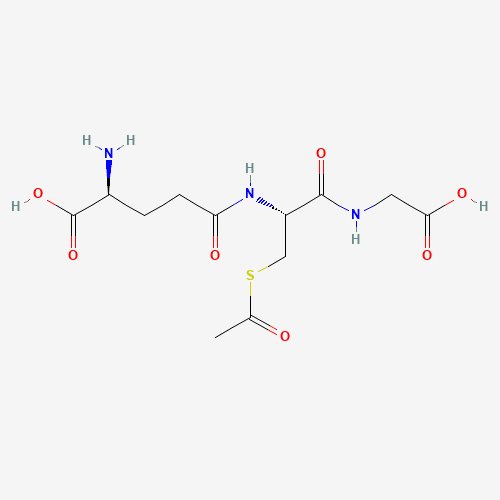
S-acetylglutathione (SAG) is glutathione with an acetyl group attached to its sulfur. It is sold as a supplement on the idea that it survives digestion better than plain glutathione [1][2]. In the only human pharmacokinetic study, a 3.5 g dose produced no detectable SAG in the blood, and the rise in blood glutathione looked much like the rise after plain glutathione [3]. Every other result comes from cells, animals, or one small open-label trial of a multi-ingredient product [4]. EFSA judged it safe as a food at up to 300 mg a day for adults [3].
A glutathione prodrug with a clean toxicology file but almost no human evidence. It has never been tested on its own for any clinical outcome, and the one human absorption study does not show a clear advantage over plain glutathione.
- meta-analysis
- RCT
- trial
- observational
- preclinical / case
- review / patent / other
- retracted
- + Raised glutathione inside cultured cells, including fibroblasts from people with an inherited glutathione synthesis defect
- + Oral dosing protected mouse livers against chemical injury and fibrosis
- + Slightly higher plasma glutathione peak than an equal weight of plain glutathione in one crossover study
- + No genotoxicity, and a 90-day rat study at up to 1,500 mg/kg a day found no organ damage on histology
- − Intact SAG was not detected in human blood after a 3.5 g dose
- − Red-blood-cell glutathione rose slightly less after SAG than after plain glutathione
- − No human trial of SAG on its own for any clinical outcome
- − The one human trial that included it tested a nine-ingredient product without a placebo
Glutathione is the main antioxidant made inside cells. Plain oral glutathione is mostly broken down in the gut and liver. In one early study, 3 g did not raise blood glutathione at all over the next four and a half hours [5], and a 4-week trial of 1 g a day found no change in red-cell glutathione or oxidative stress markers [6]. A longer 6-month trial did find body stores rising 30–35% at 1 g a day [7], and liposomal glutathione has been tested for the same reason [8].
SAG was developed as a way round the absorption problem. Adding an acetyl group to the sulfur is described as making the molecule more stable in plasma and letting cells take it up whole, then convert it back to glutathione [1]. In rat tissue preparations it was only slowly hydrolysed in plasma and raised glutathione inside red blood cells [9].
Human absorption. The only human pharmacokinetic study compared 3.5 g of SAG with 3.5 g of plain glutathione in 17 healthy adults. No intact SAG appeared in the blood. Plasma glutathione peaked a little higher after SAG, while red-cell glutathione peaked a little higher after plain glutathione. Both changes were small and varied widely between people, and EFSA concluded that the glutathione curve after SAG did not substantially differ from plain glutathione's [3]. The comparison was by weight, not by number of molecules, so the SAG arm actually delivered about 14% less glutathione [3].
Cell and animal work. SAG raised glutathione back to normal in cultured skin cells from patients with glutathione synthetase deficiency, an inherited disorder [10]. In cells infected with herpes simplex virus it restored glutathione more effectively than plain glutathione, and in mice it reduced herpes deaths where plain glutathione did not [1]. Injected into muscle in a mouse model of retroviral immunodeficiency, it lowered viral load in the spleen and lymph nodes [11]. In mice given carbon tetrachloride to cause liver fibrosis, 30 mg/kg by mouth for 8 weeks restored liver glutathione and antioxidant enzymes, lowered inflammatory cytokines and liver enzymes, and reduced collagen scarring. Each group had five mice [2].
Studies of combination products. In 18 people with mild Alzheimer's disease, 10 took a supplement with 50 mg of SAG, 80 mg of oleuropein (an olive polyphenol), bacopa, piperine and four vitamins twice a day for 6 months, and 8 had no supplement. The authors reported gains on all 14 cognitive and behavioural measures against the untreated group, 13 of them statistically significant, including a 1.7-point MMSE improvement against no change. There was no placebo and no blinding, enrolment stopped at 18 of a planned 40 because of the COVID-19 pandemic so the crossover never ran, and one author was a shareholder in the company that developed the product [4]. In 24 dogs with liver disease, a supplement with SAG, silybin and vitamins raised red-cell glutathione and lowered liver enzymes over five weeks, while untreated dogs' values stayed level [12]. Neither study can separate SAG's contribution from the other ingredients.
SAG carries glutathione's sulfur group capped with an acetyl group. The proposed advantage is that the capped molecule resists breakdown in plasma, enters cells intact and is then unmasked to glutathione by enzymes inside the cell [1][9]. Plain glutathione, by contrast, has to be broken down into its amino acids and rebuilt inside the cell [1]. In human blood, however, intact SAG was not detected after a large oral dose, which suggests it is deacetylated before or during absorption [3].
In the mouse liver-injury model, SAG restored the Nrf2 antioxidant pathway (Nrf2, HO-1, NQO1) and the mitochondrial clean-up proteins PINK1 and Parkin, and damped TLR4/NF-κB inflammatory signalling [2].
One cell study complicates the simple "more glutathione" picture. In three lymphoma cell lines, SAG lowered glutathione and triggered cell death, while leaving normal lymphocytes alone [13]. An earlier study found the same selective effect on cancer cells with both SAG and plain glutathione at 1–2 mM [14].
- Intracellular glutathioneactivatesweak
- Nrf2 / HO-1 / NQO1 antioxidant responseactivatesrestored liver Nrf2, HO-1 and NQO1 levels that carbon tetrachloride had lowered in mice [2]weak
- TLR4 / NF-κB inflammatory signallingblocksreduced liver TLR4, MyD88 and nuclear NF-κB and lowered inflammatory cytokines in the same mouse model [2]weak
- Apoptosis in lymphoma cellsmodulatesunclear
Formulation
how the form changes blood levelsThe ingredient EFSA assessed is at least 97% SAG, with around 1% reduced glutathione and under 1% oxidised glutathione as impurities. It dissolves poorly in acidic water (under 20 g/L at pH 3) and is stable for three years at room temperature [3].
Plain oral glutathione, liposomal glutathione and SAG all aim at the same goal. The only direct comparison of SAG with plain glutathione in people was one single-dose study, which found no substantial difference in the blood glutathione curve [3]. SAG has not been compared with liposomal glutathione, which raised blood and immune-cell glutathione in a 12-person open-label study [8].
Dosing
as studied or commonly reported; not a recommendationDoses below are what studies used or, where marked, what is commonly reported. None is a recommendation.
Oral
- 3.5 g
- 50 mg (with 80 mg oleuropein, bacopa, piperine and vitamins)mild Alzheimer's disease, open-label with an untreated control group; multi-ingredient producttwice daily · 6 monthshuman study[4]
- 30 mg/kg (human equivalent ≈2.4 mg/kg)
- 100–300 mggeneral supplement useonce dailycommonly reported, not from trials
- Form
- Sold as powder and capsules. The EFSA-assessed ingredient is at least 97% SAG, made by acetylating glutathione under acidic conditions and precipitating it with acetone [3]. Some products describe their SAG as fermentation-derived, from the yeast Saccharomyces cerevisiae [12].
- Notes
- No trial has tested SAG on its own for a clinical outcome, so there is no evidence-based dose. EFSA judged 300 mg a day safe for adults, about 270 mg for ages 14–17 and 190 mg for ages 10–13; pregnant and breastfeeding women were not covered [3]. The single 3.5 g dose in the pharmacokinetic study was more than eleven times that limit [3].
Pharmacokinetics
what the body does with it| Time to peak | Time to peak blood glutathione did not differ significantly from plain glutathione in a single-dose crossover study [3] |
|---|---|
| Peak level | After 3.5 g orally, plasma glutathione peaked at 0.74 ± 0.41 µM, against 0.47 ± 0.24 µM after 3.5 g of plain glutathione; red-blood-cell glutathione peaked slightly lower after SAG (64.5 vs 68.5 µM). Results varied widely between people (coefficient of variation above 87%) [3] |
| Bioavailability | Intact SAG was not detected in any plasma sample from 17 healthy adults after a single 3.5 g dose. The 24-hour plasma glutathione AUC was 3.90 µM·h after SAG and 2.31 µM·h after plain glutathione [3] |
| Metabolism | Removal of the acetyl group releases glutathione. In rat preparations, hydrolysis was limited in plasma and more extensive in liver, kidney and heart cytosol, and γ-glutamyl transpeptidase accepted SAG as a substrate [9] |
Safety
risks and cautions, not medical adviceSAG was not mutagenic in bacteria and did not cause chromosome damage in human cells, and its acute oral LD50 is above 2,000 mg/kg [3][16]. In a 90-day rat study at up to 1,500 mg/kg a day, the manufacturer's authors found no treatment-related damage on histology and set the no-adverse-effect level at the top dose [16]. EFSA read the same study more cautiously. It judged the roughly 10% rise in relative liver weight at the top dose to be adverse, because it was outside historical control ranges and had not reversed in males after the recovery period. It also noted lower thyroid T4 in male rats at the middle and top doses, which it did not consider relevant without matching pathology. From the liver finding it set a safe level of 4.39 mg/kg a day, or 300 mg a day for adults [3].
There are no human safety studies of SAG itself. EFSA relied instead on 10 trials of plain oral glutathione (230 adults, 250–1,000 mg a day for 3 weeks to 6 months), which reported no serious adverse events and no harmful changes in blood counts or liver and kidney markers [3]. The ingredient contains traces of perchlorate (about 27 mg/kg). At 300 mg a day this adds little to normal dietary intake and stays below EFSA's tolerable limit [3].
The toxicology studies were funded by Gnosis by Lesaffre, which sells SAG as Emothion, and the human pharmacokinetic study was part of the same company's EU application [3][16].
- The only human pharmacokinetic study was a single-dose, open-label crossover in 17 people, submitted by the manufacturer [3]
- It compared equal weights rather than equal numbers of molecules, so SAG delivered about 14% less glutathione [3]
- The Alzheimer's trial tested a nine-ingredient product in 18 patients with no placebo [4]
- The mouse liver study used five animals per group [2]
- Claims that SAG enters cells intact come from cell and rat tissue work, not human studies [1][9]
Interactions
documented pairs only, not exhaustiveNo interactions with drugs or other compounds have been studied.
- Is SAG better absorbed than regular glutathione?
- Not clearly. In the one human comparison, plasma glutathione peaked slightly higher after SAG and red-cell glutathione slightly higher after plain glutathione; EFSA saw no substantial difference overall [3].
- Does SAG reach the blood intact?
- No. After 3.5 g by mouth, SAG itself was not detected in any plasma sample [3].
- Does it help Alzheimer's disease?
- Unknown. One small open-label trial of a product containing SAG, oleuropein and several other ingredients reported better cognitive scores, but it had no placebo and cannot isolate SAG [4].
References
entry last reviewed 2026-09-25- [1]Effects of S-acetylglutathione in cell and animal model of herpes simplex virus type 1 infection.Vogel JU, Cinatl J, Dauletbaev N et al.Med Microbiol Immunol 2005preclinical · animalPMID 14624358◌ unreviewed
- [2]S-Acetyl-Glutathione Attenuates Carbon Tetrachloride-Induced Liver Injury by Modulating Oxidative Imbalance and Inflammation.Di Paola R, Modafferi S, Siracusa R et al.Int J Mol Sci 2022preclinical · animalPMID 35457246◌ unreviewed
- [3]Safety of S-acetyl glutathione as an novel food pursuant to Regulation (EU) 2015/2283.EFSA Panel on Nutrition, Novel Foods and Food Allergens (NDA), Turck D, Bohn T et al.EFSA J 2026reviewPMID 42683004◌ unreviewed
- [4]Olive polyphenols and bioavailable glutathione: Promising results in patients diagnosed with mild Alzheimer's disease.Marianetti M, Pinna S, Venuti A et al.Alzheimers Dement (N Y) 2022clinical trial · humanPMID 35310529◌ unreviewed
- [5]The systemic availability of oral glutathione.Witschi A, Reddy S, Stofer B et al.Eur J Clin Pharmacol 1992clinical trial · humanPMID 1362956◌ unreviewed
- [6]Effects of oral glutathione supplementation on systemic oxidative stress biomarkers in human volunteers.Allen J, Bradley RDJ Altern Complement Med 2011RCT · humanPMID 21875351◌ unreviewed
- [7]Randomized controlled trial of oral glutathione supplementation on body stores of glutathione.Richie JP, Nichenametla S, Neidig W et al.Eur J Nutr 2015RCT · humanPMID 24791752◌ unreviewed
- [8]Oral supplementation with liposomal glutathione elevates body stores of glutathione and markers of immune function.Sinha R, Sinha I, Calcagnotto A et al.Eur J Clin Nutr 2018clinical trial · humanPMID 28853742◌ unreviewed
- [9]S-acetyl- and S-phenylacetyl-glutathione as glutathione precursors in rat plasma and tissue preparations.Galzigna L, Rizzoli V, Schiappelli P et al.Enzyme Protein 1994preclinical · animalPMID 7581748◌ unreviewed
- [10]S-Acetylglutathione normalizes intracellular glutathione content in cultured fibroblasts from patients with glutathione synthetase deficiency.Okun JG, Sauer S, Bähr S et al.J Inherit Metab Dis 2004preclinical · cellPMID 15617191◌ unreviewed
- [11]Inhibition of murine AIDS by pro-glutathione (GSH) molecules.Fraternale A, Paoletti MF, Casabianca A et al.Antiviral Res 2008preclinical · animalPMID 18164447◌ unreviewed
- [12]Antioxidant Effect of a Dietary Supplement Containing Fermentative S-Acetyl-Glutathione and Silybin in Dogs with Liver Disease.Martello E, Perondi F, Bisanzio D et al.Vet Sci 2023preclinical · animalPMID 36851435◌ unreviewed
- [13]S-acetyl-glutathione selectively induces apoptosis in human lymphoma cells through a GSH-independent mechanism.Locigno R, Pincemail J, Henno A et al.Int J Oncol 2002preclinical · cellPMID 11743644◌ unreviewed
- [14]Reduced glutathione and S-acetylglutathione as selective apoptosis-inducing agents in cancer therapy.Donnerstag B, Ohlenschlager G, Cinatl J et al.Cancer Lett 1996preclinical · cellPMID 9018082◌ unreviewed
- [15]A simple practice guide for dose conversion between animals and human.Nair AB, Jacob SJ Basic Clin Pharm 2016reviewPMID 27057123◌ unreviewed
- [16]Safety assessment of S-Acetyl Glutathione for use in foods and dietary supplements.Camillerapp C, Mayfield DB, Papineni S et al.Food Chem Toxicol 2025preclinical · animalPMID 39892735◌ unreviewed