ASP4345
also ASP-4345 · ASP 4345
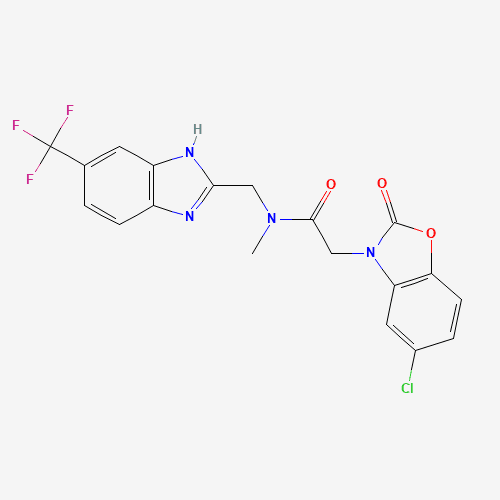
ASP4345 is an experimental oral drug from Astellas, a positive allosteric modulator of the dopamine D1 receptor: it does not switch the receptor on, but makes it respond to lower concentrations of dopamine [1][2]. It was developed for the cognitive impairment of schizophrenia. Phase 1 found once-daily pharmacokinetics, entry into the cerebrospinal fluid and, in 48 patients over 14 days, faster reaction times than placebo on two computerised tests [2][3]. The phase 2 trial then failed: in 233 patients, 50 or 150 mg a day for 12 weeks did no better than placebo on a standard cognitive battery or on a test of everyday functioning, and development was stopped [4][5]. Those results are posted on the trial registry, which lists no journal publication of them [4].
A well-tolerated D1 modulator whose encouraging 14-day signal did not survive a 12-week placebo-controlled trial; there is no human evidence that it improves cognition.
- meta-analysis
- RCT
- trial
- observational
- preclinical / case
- review / patent / other
- retracted
- + Once-daily oral dosing, with a half-life of about 9–14 hours, steady state within five days and no food effect on exposure
- + Reaches the cerebrospinal fluid at 25–86% of the unbound plasma concentration
- + Tolerated up to 900 mg as a single dose and 150 mg a day for 12 weeks, with adverse-event rates close to placebo
- + No clinically relevant change in blood pressure or heart rate, unlike the related D1 modulator mevidalen
- + In the 14-day trial, patients on every dose reacted faster than those on placebo, although the trial was not powered to test it
- − Failed its phase 2 trial, with no effect on the MCCB cognitive composite or on functional capacity at 50 or 150 mg a day
- − Development was stopped after that result
- − The phase 1 cognitive signal had no dose-response and did not extend to working memory
- − The only disclosed preclinical data are one potency figure and one mouse test in the company's patent
- − Its binding site on the receptor is unknown and no selectivity data have been published
- − Metabolites and routes of excretion are unreported
- − Every study was run or funded by Astellas
ASP4345 is a small molecule from Astellas, built to treat the cognitive impairment that comes with schizophrenia. Antipsychotics control hallucinations and delusions but do little for attention, memory and planning, and no drug is approved for those deficits [3]. The dopamine D1 receptor in the prefrontal cortex has been a leading target for decades [3][6]. Drugs that activate it directly were held back by poor absorption, low blood pressure and seizures [3][6]. ASP4345 takes the other route. It is a positive allosteric modulator, a compound that binds somewhere other than dopamine's own site and makes the receptor respond more strongly to the dopamine already being released [2][6].
The published preclinical record is thin. Astellas's patent reports that the compound doubled dopamine's potency at the human D1 receptor at 0.46 µM, and that 0.1 mg/kg by mouth was effective in mice whose short-term memory had been disrupted with MK-801 [1]. The phase 1 paper mentions other rodent models of cognitive deficit only as data on file [2]. No primary pharmacology paper has followed.
Phase 1 went well. Single doses of 3–900 mg in healthy volunteers peaked in the blood within about two hours, cleared with a half-life of 9–14 hours, and reached the cerebrospinal fluid [3]. A second study gave 3, 15, 50 or 150 mg a day for 14 days to 36 patients with schizophrenia or schizoaffective disorder who stayed on their antipsychotics, with 12 more on placebo [2]. Adverse events were about as common on placebo as on the drug. On the Cogstate battery, patients on every dose improved more than placebo on the Detection task, a response-speed test of psychomotor function, with effect sizes of 0.58–0.99 on day 14 that fell to 0.14–0.34 three days after the last dose [2]. A smaller effect appeared on the Identification task, a test of visual attention. The One Back test of working memory showed no consistent benefit, which the authors called surprising given dopamine's role in working memory [2]. EEG markers of auditory processing moved in the hoped-for direction at three of the four doses, without reaching statistical significance [2]. The authors were explicit that the study was sized for safety and that no conclusion about efficacy could be drawn from it [2].
Phase 2 found nothing. The trial randomised 233 clinically stable patients at 27 sites in the United States to 50 mg, 150 mg or placebo once a day for 12 weeks on top of their antipsychotics [4]. The primary measure was the MATRICS Consensus Cognitive Battery composite, on which patients started about 1.7 standard deviations below the healthy average. It rose by 1.15 points on placebo, 1.34 on 50 mg and 0.87 on 150 mg. The differences from placebo were 0.18 and −0.28 points, with p values of 0.86 and 0.78 [4]. The secondary measure, a performance test of everyday skills called the UPSA-2-ER, showed the same absence of effect [4]. Astellas stopped development [5][7].
Why it failed is not known. No analysis of the phase 2 data has been published. A review of the D1 target that still described the trial as under way had noted the main weakness of the approach: a modulator can only amplify dopamine that is released, and imaging studies find dopamine release blunted across the cortex in schizophrenia [6]. The same review argued that antipsychotic treatment brings down the raised cortical D1 receptor levels found in untreated patients, that D1 levels fall with age, and that early illness may therefore offer a better window than chronic illness [6]. The phase 2 patients averaged 43 years of age and were all on antipsychotics [4]. The direct D1 agonists tested in patients with schizophrenia, DAR-0100A and PF-06412562, had not separated from placebo on their main cognitive measures either [6].
It amplifies dopamine and does not replace it. In the patent's assay, CHO cells carrying the human D1 receptor were given a range of dopamine concentrations with and without test compound, and cyclic AMP was measured. The compounds moved dopamine's concentration–response curve to the left, more so at higher concentrations, and had no agonist effect when dopamine was absent [1]. Potency was expressed as the concentration that doubled dopamine's potency, which was 0.46 µM for the hydrochloride of ASP4345 [1]. That looks modest beside other D1 modulators, though the assays differ: a 2019 review lists Lilly's DETQ at 5.8 nM and a Bristol-Myers Squibb compound at 43 nM, and calls the 460 nM Astellas compound moderately potent [8].
Why the D1 receptor. D1 receptors sit on the dendritic spines of the glutamate neurons of the prefrontal cortex, and working memory depends on how strongly they are stimulated. The relationship is an inverted U: too little stimulation leaves the neurons that hold information online barely firing, and too much, as under stress, suppresses them [6]. That narrow window is one argument for a modulator. Another is selectivity, since the site where dopamine binds is closely conserved across dopamine receptors and allosteric sites are less so [3]. A third is timing: a modulator keeps the pattern of dopamine release that behaviour produces, where an agonist stimulates the receptor continuously [6]. The authors of the pharmacokinetic paper compare it to a dimmer switch [3].
Where it binds is unknown. The phase 1 paper says so directly [2]. Other D1 modulators, including DETQ and the Bristol-Myers Squibb compound, are thought to bind a cleft in the receptor's second intracellular loop, and structural work points to two possible allosteric sites [8][9]. The published papers describe ASP4345 as selective for D1 without showing binding or functional data at other receptors [2][3].
The mouse result leaves questions open. Several D1 modulators work poorly on rodent receptors. DETQ is about 30 times weaker at the rat and mouse receptor than at the human one and is inactive in ordinary mice, and the Bristol-Myers Squibb compound lacks rodent activity altogether [8]. The Astellas patent reports a behavioural effect in mice but measured potency only at the human receptor, and its maze experiment has no D1-blocking control and gives no group data, only the effective dose [1].
In patients the brain signals were suggestive and unconfirmed. The 14-day trial recorded EEG measures of early auditory processing. The 40 Hz auditory steady-state response, a measure of how well cortical gamma rhythms lock to a click train, showed a growing effect size against placebo by day 14 at 3, 15 and 150 mg. Mismatch negativity, the brain's automatic response to an odd tone, showed a small to moderate effect by day 7 at the same three doses [2]. The 50 mg dose improved neither, the P3a response did not change at any dose, and the study was too small for any of these to reach statistical significance [2].
It did not move blood pressure. Direct D1 agonists lower blood pressure, because D1 receptors relax renal and other blood vessels [6][7]. The D1 modulator mevidalen did the opposite, raising blood pressure and heart rate at 75 mg and above [7]. ASP4345 produced no clinically relevant change in vital signs at 3–150 mg [2][7].
- Dopamine D1 receptormodulatesmoderate
- Cortical gamma synchrony (40 Hz auditory steady-state response)activatesin patients with schizophrenia the effect size against placebo grew by day 14 at 3, 15 and 150 mg a day but not at 50 mg, and none of it was statistically significant in groups of nine [2]unclear
- Mismatch negativityactivatesa small to moderate effect size against placebo on day 7 at 3, 15 and 150 mg a day, again not at 50 mg; the P3a response did not change at any dose [2]unclear
- Blood pressure and heart rateno bindingunclear
Formulation
how the form changes blood levelsThe compound that went into people is the monohydrochloride salt [2][3]. It is the first worked example in Astellas's patent, made by coupling (5-chloro-2-oxo-1,3-benzoxazol-3-yl)acetic acid to the benzimidazole methylamine and treating the product with hydrogen chloride, and one claim covers that salt specifically [1].
Trial capsules were hard gelatin, in strengths of 0.5, 5 and 50 mg, with anhydrous silicic acid and low-substituted hydroxypropyl cellulose as excipients [3]. Exposure rose less than in proportion to dose from 3 to 900 mg, and the 900 mg dose was the most variable, which the authors suggest may reflect the number of capsules that dose required [3]. A high-fat breakfast delayed absorption of a 300 mg dose without changing how much was absorbed [3].
Dosing
as studied or commonly reported; not a recommendationDoses below are what studies used or, where marked, what is commonly reported. None is a recommendation.
Oral
- 50 or 150 mg233 adults with schizophrenia or schizoaffective disorder on stable antipsychotics (65 on 50 mg, 68 on 150 mg, 100 on placebo); cognition and functional capacity did not differ from placeboonce daily, as capsules · 12 weekshuman study[4]
- 3, 15, 50 or 150 mg
- 3–900 mg58 healthy adults (46 on drug, 12 on placebo) in six ascending cohorts, plus a 300 mg cohort dosed after a high-fat breakfast; safety and pharmacokineticssingle dose, fastedhuman study[3]
- 300 mg5 healthy men (4 on drug, 1 on placebo); plasma and cerebrospinal fluid levels over 24 hourssingle dose, fastedhuman study[3]
- 0.1 mg/kg (human equivalent ≈0.008 mg/kg)
- Form
- Never marketed. The trials used hard gelatin capsules of the hydrochloride salt in strengths of 0.5, 5 and 50 mg [3].
- Timing and food
- Once daily in every multiple-dose study, which the half-life and the modest accumulation support [3]. Food delays the peak without changing exposure [3]. In the 14-day trial doses were taken fasted on days 1, 7 and 14, the testing days, and with food on the others [2].
- Time to effect
- No clinical effect has been established. In the 14-day trial the apparent gains on a reaction-time test were measured on day 14 and had shrunk by 60–80% three days after the last dose, and the mismatch negativity effects were generally largest on day 7 [2]. Twelve weeks of dosing produced no difference from placebo in cognition [4].
- Notes
- No dose has been shown to improve cognition. The 50 and 150 mg doses taken into phase 2 were the top two of the 14-day trial, where the cognitive and EEG signals showed no dose-response and 50 mg was the one dose with no EEG effect [2][4]. A maximum tolerated dose was not reached at single doses up to 900 mg [3]. The mouse row comes from the developer's patent, not from a peer-reviewed paper, and its human equivalent is body-surface-area arithmetic, not a dose given to anyone [1][10].
Pharmacokinetics
what the body does with it| Half-life | About 9–14 hours after a single dose in healthy adults: the means were 9.12–14.3 hours across 3–900 mg, with no trend by dose. At steady state in patients the means were 11.1–14.9 hours at 3, 15 and 150 mg and 26.8 hours at 50 mg [3]. |
|---|---|
| Time to peak | A median of 1.0–1.5 hours for single doses of 3–300 mg taken fasted and 2.26 hours at 900 mg; 1.25–3.02 hours at steady state. A high-fat breakfast moved the peak of a 300 mg dose from 1.5 to 4.0 hours. In cerebrospinal fluid the peak came later, at a median of 4.73 hours [3]. |
| Peak level | Mean peak plasma levels rose from 106 ng/mL after 3 mg to 2,590 ng/mL after 300 mg and 7,710 ng/mL after 900 mg, less than in proportion to dose. On day 14 of once-daily dosing they were 122, 349, 624 and 1,580 ng/mL at 3, 15, 50 and 150 mg [3]. In the 12-week trial, trough levels at week 12 averaged 205 ng/mL on 50 mg and 434 ng/mL on 150 mg, with standard deviations nearly as large as the means [4]. |
| Bioavailability | Absolute bioavailability has not been reported; the published studies gave it only by mouth. Apparent clearance and volume of distribution both rose with dose (4.1 to 19.7 L/h and 66.5 to 289 L across 3–900 mg), which the authors read as bioavailability falling at higher doses. Food did not change exposure: after a high-fat breakfast the peak of a 300 mg dose was 4% lower and total exposure 3% higher. More than 99% is bound to plasma proteins in vitro. In four volunteers given 300 mg, peak cerebrospinal fluid levels were 0.09–0.31% of total plasma levels and 25–86% of unbound plasma levels, 46.5% on average [3]. |
| Steady state | Reached by day 5 of once-daily dosing, judged from trough levels. Total exposure over a dosing interval on day 14 was 1.3–2.2 times that of the first dose [3]. |
| Metabolism | CYP3A4 and CYP2C19 are involved, according to unpublished company data cited in the pharmacokinetic paper, and the multiple-dose trial excluded people taking inhibitors or inducers of either enzyme. Samples were collected to profile metabolites in phase 1, but the paper reports none [3]. |
| Excretion | Not reported. Urine was collected in both phase 1 studies, but the published paper gives no urinary data [3]. |
Safety
risks and cautions, not medical adviceTolerability was close to placebo in every published dataset. In the 14-day trial 29 of 36 patients on ASP4345 reported an adverse event, against 9 of 12 on placebo, and the rate did not rise with dose [2]. Headache was the commonest, in 9 of 36 on the drug and 4 of 12 on placebo. Somnolence was reported by 7 of 36 and 1 of 12, and constipation by 5 of 36 and none on placebo [2]. Nearly all events were mild. One patient on 3 mg had a moderate psychotic episode, and one on 50 mg had a small-bowel obstruction five days after the last dose that was judged unrelated [2].
Over 12 weeks, 28 of 65 patients on 50 mg and 28 of 68 on 150 mg reported an adverse event, against 45 of 100 on placebo [4]. Only two events were common enough to be listed. Headache was evenly spread, and dizziness was not: it was reported by 4 of 68 on 150 mg, 1 of 65 on 50 mg and nobody on placebo [4]. Five serious events occurred, none judged drug-related: a head injury, an acute respiratory failure and two psychotic episodes on ASP4345, and one case of suicidal ideation on placebo [4]. Eleven patients stopped because of an adverse event, six on 50 mg, one on 150 mg and four on placebo [4]. Nobody died in either patient trial [2][4].
The problems of D1 agonists did not appear. Earlier D1 agonists were limited by seizures and falls in blood pressure [3]. Neither is reported for ASP4345, and vital signs, ECGs and laboratory tests showed no clinically relevant change over 14 days [2]. Movement-disorder ratings did not worsen in either trial, symptom scores did not change in the 14-day trial, and neither trial found a signal on the suicidality scale [2][4]. A checklist used to screen for abuse potential showed no drug-related change [2].
What is missing. Exposure stops at 12 weeks. Every patient was also taking an antipsychotic, so nothing is known about ASP4345 given alone for more than a single dose [2][3][4]. Animal toxicology is described only as "well tolerated" [2].
- Headache in 9 of 36 patients on ASP4345 and 4 of 12 on placebo over 14 days [2]
- Somnolence in 7 of 36 on ASP4345 and 1 of 12 on placebo over 14 days [2]
- Constipation in 5 of 36 on ASP4345 and none on placebo over 14 days [2]
- Dizziness in 5 of 133 on ASP4345, four of them on 150 mg, and none of 100 on placebo over 12 weeks [4]
- Serious events over 12 weeks were a head injury, an acute respiratory failure and two psychotic episodes on ASP4345 and one case of suicidal ideation on placebo; none was judged drug-related [4]
- A small-bowel obstruction five days after the last 50 mg dose in the 14-day trial, judged unrelated [2]
- D1 stimulation follows an inverted U, so more is not better: stimulation above the optimum impairs working memory [6]
- Psychotic disorder was recorded as an adverse event in one patient in the 14-day trial and as a serious event in two in the 12-week trial, all on ASP4345; every participant had schizophrenia or schizoaffective disorder, and symptom scores did not shift in the 14-day trial [2][4]
- Earlier drugs that stimulate D1 receptors caused seizures and low blood pressure; neither was reported with ASP4345, and the phase 2 trial excluded anyone with a history of seizure disorder [2][3][4]
- The related D1 modulator mevidalen raised blood pressure and heart rate at higher doses; ASP4345 showed no clinically relevant change at 3–150 mg [2][7]
- Inhibitors and inducers of CYP3A4 and CYP2C19 were excluded from the trials, so their effect on blood levels is untested [3]
- Pregnant and breastfeeding women were excluded from the phase 1 studies, and there is no pregnancy data [3]
- The 12-week phase 2 trial found no difference from placebo on the MCCB cognitive composite or the UPSA-2-ER [4]
- Those results exist only as a registry posting; the record lists no journal publication of the trial [4]
- The 14-day trial's cognitive findings are effect sizes from groups of nine with no dose-response, and its authors state that no conclusion about efficacy can be drawn [2]
- It has been tested for cognition only as an add-on to antipsychotics in clinically stable patients; no published study measured cognition in healthy people [2][3][4]
- Preclinical pharmacology is known only from the developer's patent: one potency value in cells and one effective dose in a mouse maze test, with no group data and no D1-blocking control [1]
- The binding site is unknown, and selectivity for D1 is asserted without published data [2][3]
- Metabolism is attributed to CYP3A4 and CYP2C19 on the strength of unpublished company data, and metabolites and excretion have not been reported [3]
- The single-dose study was 91% male [3]
- Every trial was sponsored by Astellas [2][4]
Interactions
documented pairs only, not exhaustive- L-THPcaution
- any stimulantcautiona D1 modulator amplifies whatever dopamine is released, and D1 stimulation above the optimum impairs working memory [6]; no study of ASP4345 with a dopamine-releasing drug has been published
- Modafinilcaution
The molecule first appeared without its code name, as Example 1 of an Astellas patent on heterocyclic acetamides that act as D1 positive allosteric modulators [1]. A 2019 review of D1 drugs described an Astellas patent compound with a potency of 460 nM and, in the next sentence but one, said that the activity of ASP4345 had not been disclosed [8]. That potency is the figure the patent gives for Example 1, whose chemical name is the one the phase 1 paper later printed for ASP4345 [1][2].
The 14-day patient study ran at a single United States site from March 2016 to June 2017 [2]. The phase 2a trial ran from July 2018 to October 2019 and its results were posted in October 2020 [4]. Both phase 1 papers were published after the phase 2 trial had finished, and the pharmacokinetic paper describes its results as forthcoming [2][3]. Later reviews record that development was stopped [5][7].
ASP4345 was one of two D1 modulators taken into phase 2 for cognition [6]. The other, Lilly's mevidalen, missed its cognitive endpoint in a 12-week trial of 344 people with Lewy body dementia while improving motor symptoms [5][7]. A third, glovadalen, has since met its primary endpoint for motor fluctuations in Parkinson's disease, a different use of the same mechanism [7].
- Is ASP4345 a dopamine agonist?
- No. It is a positive allosteric modulator. In the patent's cell assay it shifted dopamine's concentration–response curve to the left and did nothing when dopamine was absent [1].
- Did it improve cognition in schizophrenia?
- Not in the trial designed to test it. Over 12 weeks in 233 patients, neither 50 nor 150 mg a day differed from placebo on the MCCB composite or on the UPSA-2-ER test of everyday skills [4].
- Why did the phase 1 results look promising?
- Patients on all four doses improved more than placebo on a reaction-time test after 14 days, with a smaller effect on an attention test and EEG changes at three of the four doses. The groups had nine patients each, the study was not powered to test efficacy, there was no dose-response, and working memory did not improve [2].
- Why make a modulator instead of an agonist?
- Direct D1 agonists were limited by poor absorption, low blood pressure and seizures, and they stimulate the receptor whether or not dopamine is being released [3][6]. A modulator acts only where and when dopamine is present, which is also its weakness if dopamine release is deficient [6].
- How long does it stay in the body?
- The half-life is about 9–14 hours after a single dose, and blood levels are steady by day 5 of once-daily dosing [3].
References
entry last reviewed 2026-10-11- [1]Heterocyclic acetamide compoundRyota Shiraki, Takahiko Tobe, Shimpei Kawakami et al.Patent US8937087B2 · Astellas Pharma Inc 2014patentnot peer reviewed◌ unreviewed
- [2]Phase 1 randomized study on the safety, tolerability, and pharmacodynamic cognitive and electrophysiological effects of a dopamine D1 receptor positive allosteric modulator in patients with schizophrenia.Desai A, Benner L, Wu R et al.Neuropsychopharmacology 2021RCT · humanPMID 33203954◌ unreviewed
- [3]Pharmacokinetics of ASP4345 from Single Ascending-Dose and Multiple Ascending-Dose Phase I Studies.Desai A, Benner L, Wu R et al.Clin Pharmacokinet 2021clinical trial · humanPMID 32533536◌ unreviewed
- [4]A Phase 2a, Randomized, Double-Blind, Placebo-Controlled, Parallel-group Study to Assess the Safety and Efficacy of ASP4345 as Add-on Treatment for Cognitive Impairment in Subjects With Schizophrenia on Stable Doses of Antipsychotic MedicationAstellas Pharma Global Development, Inc.ClinicalTrials.gov registry record NCT03557931 — registry results, not peer reviewed 2020other · human◌ unreviewed
- [5]Progress and Pitfalls in Developing Agents to Treat Neurocognitive Deficits Associated with Schizophrenia.Veselinović T, Neuner ICNS Drugs 2022reviewPMID 35831706◌ unreviewed
- [6]Dopamine D1R Receptor Stimulation as a Mechanistic Pro-cognitive Target for Schizophrenia.Abi-Dargham A, Javitch JA, Slifstein M et al.Schizophr Bull 2022reviewPMID 34423843◌ unreviewed
- [7]Cardiovascular pharmacology of dopaminergic agents in humans: a review.Palma JA, Gomez Casanovas JGClin Auton Res 2026reviewPMID 42393412◌ unreviewed
- [8]Advances in Dopamine D1 Receptor Ligands for Neurotherapeutics.Felsing DE, Jain MK, Allen JACurr Top Med Chem 2019reviewPMID 31553283◌ unreviewed
- [9]Novel Strategies To Activate the Dopamine D1 Receptor: Recent Advances in Orthosteric Agonism and Positive Allosteric Modulation.Hall A, Provins L, Valade AJ Med Chem 2019reviewPMID 30525590◌ unreviewed
- [10]A simple practice guide for dose conversion between animals and human.Nair AB, Jacob SJ Basic Clin Pharm 2016reviewPMID 27057123◌ unreviewed
- [11]l-tetrahydropalamatine: a potential new medication for the treatment of cocaine addiction.Wang JB, Mantsch JRFuture Med Chem 2012reviewPMID 22300097◌ unreviewed
- [12]Effect of modafinil on the pharmacokinetics of ethinyl estradiol and triazolam in healthy volunteers.Robertson P, Hellriegel ET, Arora S et al.Clin Pharmacol Ther 2002RCT · humanPMID 11823757◌ unreviewed