L-THP
also Levo-tetrahydropalmatine · L-tetrahydropalmatine · Levotetrahydropalmatine · Rotundine · Rotundin
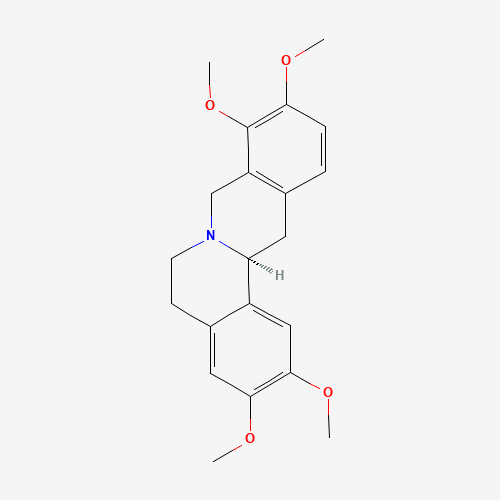
L-THP (levo-tetrahydropalmatine, or rotundine) is a tetrahydroprotoberberine alkaloid used in China as a sedative and analgesic and investigated for substance-use disorders [1][2]. One 120-person pilot trial reported less heroin craving and more abstinence, but treatment caused markedly more early dropout [3]. A small phase-I study found 30 mg twice daily tolerable for 3.5 days, not proof of long-term efficacy or safety [4].
Pharmacologically active and clinically interesting, but the addiction evidence rests on one methodologically limited pilot and the safety record is not strong enough for casual self-experimentation.
- meta-analysis
- RCT
- trial
- observational
- preclinical / case
- review / patent / other
- retracted
- + Reduced craving and withdrawal scores in one randomized heroin-abstinence pilot
- + Higher three-month abstinence among participants retained beyond the first two treatment weeks
- + Rapid oral absorption and an approximately 11–13 hour terminal half-life
- − Sedation, dizziness and nausea at higher doses
- − Significantly worse retention during the first two weeks of the heroin pilot
- − Hepatitis and severe neurologic or cardiovascular toxicity reported with the L-THP-containing Jin Bu Huan product
Overview
L-THP is the levorotatory form of tetrahydropalmatine, an alkaloid found in Corydalis and Stephania species. Purified L-THP has been used in China under the name rotundine for analgesic and sedative indications [1]. It is not a conventional cognitive enhancer: its most developed modern research program is addiction, where dopamine-receptor blockade may reduce drug reward and craving.
The principal efficacy study randomized 120 people who had completed 7–10 days of heroin detoxification to 60 mg twice daily or placebo for four weeks. Craving, insomnia and somatic withdrawal scores improved. Among those who remained after the first two weeks, three-month abstinence was 47.8% versus 15.2% on placebo [3]. The difficult qualification is retention: the L-THP group fell from 61 to 44 people in the first two weeks while the placebo group retained all 59, a highly significant imbalance. Dropouts were counted as relapses, but the favorable abstinence comparison reported by the paper was conditioned on surviving that early period [3].
A later randomized phase-I study gave 30 mg every 12 hours for 3.5 days to cocaine-using men, followed by a controlled intranasal cocaine challenge. Only nine participants receiving L-THP contributed complete PK data. L-THP did not change cocaine pharmacokinetics, cardiovascular response or QTc, and short-term adverse effects were no more frequent than placebo [4]. This was a safety study, not a cocaine-use efficacy trial.
Mechanism
L-THP antagonizes D1 and D2 dopamine receptors and binds D3 at lower affinity. The review reports Ki values of about 124 nM at D1, 388 nM at D2 and 1.4 µM at D3, so D3 blockade at clinical exposure remains uncertain [1]. Blocking postsynaptic dopamine signaling may reduce drug reward; blocking presynaptic autoreceptors may simultaneously increase dopamine release. The balance between these actions is not resolved.
It is not dopamine-selective. Reported targets also include alpha-1 and alpha-2 adrenergic receptors, 5-HT1A serotonin receptors and positive modulation of GABA-A binding [1]. This broad profile may help explain sedation and analgesia, but most receptor-mechanism work is preclinical. In mice, D1 and D2 receptors both contributed to analgesic and hypnotic effects [5].
- Dopamine D1 and D2 receptorsblocksantagonizes D1 and D2 signaling; reported binding affinities are about 124 nM and 388 nM, respectively [1]moderate
- Dopamine D3 receptorblocksbinds at lower affinity than D1 or D2, making clinically relevant D3 antagonism uncertain [1]weak
- Alpha-adrenergic and serotonin receptorsmodulatesalso interacts with alpha-1, alpha-2 and 5-HT1A receptors; their contribution to human effects is unresolved [1]unclear
Formulation
how the form changes blood levelsPurified levo-THP is not interchangeable with racemic THP or crude botanical preparations. The dextro isomer has different monoamine effects, and multi-alkaloid products add constituents whose dose and toxicity may differ [1]. The 2011 pharmacokinetic study used a 60 mg orally disintegrating tablet that dissolved in about 16 seconds and was rapidly absorbed [6].
Dosing
as studied or commonly reported; not a recommendationDoses below are what studies used or, where marked, what is commonly reported. None is a recommendation.
Oral
- 60 mg120 recently detoxified heroin users; reduced craving and later relapse, but substantially more early dropouttwice daily · 4 weekshuman study[3]
- 30 mgphase-I safety and pharmacokinetics in adult male cocaine usersevery 12 hours for 7 doses · 3.5 dayshuman study[4]
- 60 mgpharmacokinetic study of an orally disintegrating tablet in 12 healthy Chinese mensingle dosehuman study[6]
- Form
- The human studies used purified L-THP tablets. Results should not be generalized to racemic tetrahydropalmatine or multi-ingredient Corydalis products; the dextro isomer has different pharmacology [1].
- Time to effect
- Plasma levels peak in roughly 1–1.5 hours [4][6]. In the heroin pilot, craving separated from placebo after one week [3].
- Notes
- These are investigational or country-specific clinical regimens, not self-treatment guidance. The heroin trial took place after inpatient detoxification and under supervision [3].
Pharmacokinetics
what the body does with it| Half-life | 13.3 hours after repeated 30 mg oral doses in nine cocaine users [4]; 11.42 ± 2.43 hours after a single 60 mg orally disintegrating tablet in 12 healthy men [6]. |
|---|---|
| Onset | Sedative effects are dose-related; the clinical review reports that they become more evident above 100 mg per 70 kg [1][3]. |
| Time to peak | Median 1.5 hours after the first 30 mg dose in cocaine users [4]; about 1.25 hours after a 60 mg orally disintegrating tablet in healthy adults [6]. |
| Peak level | Geometric mean 42.8 ng/mL after the first 30 mg dose in cocaine users; a separate 60 mg disintegrating-tablet study reported about 190 ng/mL [4][6]. |
| Metabolism | Demethylated at several positions; multiple demethylated metabolites have been found in urine and faeces and may themselves be pharmacologically active [1]. |
| Excretion | Metabolites are recovered in urine and faeces; the proportion attributable to each route is not established in the studies cited here [1]. |
Safety
risks and cautions, not medical adviceAt labeled therapeutic doses discussed in a clinical review, common dose-related effects are sleepiness, dizziness and nausea; overdose may cause respiratory depression and extrapyramidal symptoms [1]. The 3.5-day phase-I study found no significant difference from placebo in sleepiness, movement scales, laboratory values, vital signs or QTc, but only nine L-THP recipients completed the PK analysis [4]. It cannot rule out uncommon or delayed toxicity.
The heroin pilot reported no acute hepatic toxicity, yet its L-THP group had far more early withdrawal from the study [3]. A separate case series described three children with life-threatening neurologic and cardiovascular toxicity after acute Jin Bu Huan ingestion and three adults with hepatitis after long-term use [7]. Jin Bu Huan was a mislabelled, concentrated herbal product, so those cases do not isolate purified L-THP—but they prevent assuming that L-THP-containing products are harmless.
- Purified L-THP cannot be assumed equivalent to Corydalis extracts, Jin Bu Huan or racemic tetrahydropalmatine [1][7].
- Short-term normal liver tests do not establish safety during chronic use [4].
- The heroin pilot's sharp early dropout signal is clinically important even though no adverse event was assigned as the cause [3].
- The positive heroin trial was a single-centre pilot with only one dose and substantially worse early retention on L-THP [3].
- The reported abstinence advantage was emphasized among participants who remained after the first two weeks [3].
- The US phase-I study was short, all male and had complete L-THP PK data from only nine participants [4].
- Much of the receptor, analgesia and anti-relapse evidence remains preclinical [1][5].
Interactions
documented pairs only, not exhaustiveA controlled phase-I study found that 30 mg L-THP every 12 hours for 3.5 days did not change the pharmacokinetics, acute cardiovascular response or QTc response to 40 mg intranasal cocaine [4]. That narrow result does not establish safety with larger doses, chronic use or other stimulants.
Because L-THP blocks dopamine receptors and can sedate, pharmacodynamic opposition to stimulants and additive impairment with other sedatives are plausible. The receptor review notes sedation and anhedonia as known problems for dopamine antagonists and documents both sedative effects and broad monoamine-receptor activity for L-THP [1].
- any stimulantcaution
FAQ
- Is L-THP proven to prevent opioid relapse?
- No. One 120-person pilot was encouraging, but early retention was substantially worse on L-THP and the later abstinence comparison was conditioned on remaining through those first two weeks [3].
References
entry last reviewed 2026-09-21- [1]l-tetrahydropalamatine: a potential new medication for the treatment of cocaine addiction.Wang JB, Mantsch JRFuture Med Chem 2012reviewPMID 22300097◌ unreviewed
- [2]Role of Levo-tetrahydropalmatine and its metabolites for management of chronic pain and opioid use disorders.Liu J, Dai R, Damiescu R et al.Phytomedicine 2021reviewPMID 34144869◌ unreviewed
- [3]Medication of l-tetrahydropalmatine significantly ameliorates opiate craving and increases the abstinence rate in heroin users: a pilot study.Yang Z, Shao YC, Li SJ et al.Acta Pharmacol Sin 2008RCT · humanPMID 18565275◌ unreviewed
- [4]Pharmacokinetics and Safety Assessment of l-Tetrahydropalmatine in Cocaine Users: A Randomized, Double-Blind, Placebo-Controlled Study.Hassan HE, Kelly D, Honick M et al.J Clin Pharmacol 2017RCT · humanPMID 27363313◌ unreviewed
- [5]Dopamine D1 and D2 receptors mediate analgesic and hypnotic effects of l-tetrahydropalmatine in a mouse neuropathic pain model.Liu YY, Wang TX, Zhou JC et al.Psychopharmacology (Berl) 2019preclinical · animalPMID 31172225◌ unreviewed
- [6]Determination of L-tetrahydropalmatine in human plasma by HPLC and pharmacokinetics of its disintegrating tablets in healthy Chinese.Chao-Wu L, Shuo Z, Hai-Qing G et al.Eur J Drug Metab Pharmacokinet 2011clinical trial · humanPMID 21633914◌ unreviewed
- [7]The clinical spectrum of Jin Bu Huan toxicity.Horowitz RS, Feldhaus K, Dart RC et al.Arch Intern Med 1996case report · humanPMID 8774209◌ unreviewed