VIP
also invicorp · Vip human vip · Vasoactive intestinal octacosapeptide · RLF-100 · Zyesami
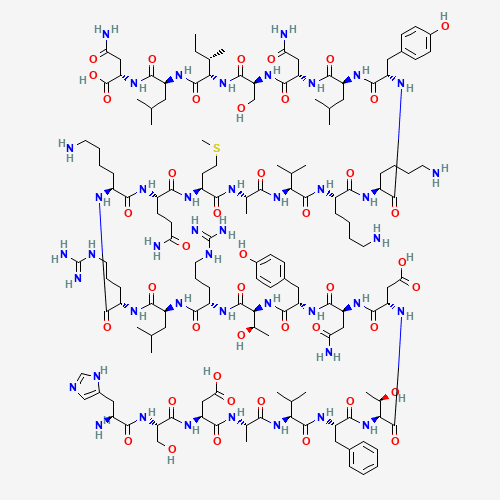
VIP - vasoactive intestinal peptide - is a 28-amino-acid neuropeptide the body makes, densely present in the lung, where it relaxes smooth muscle, dilates pulmonary vessels and restrains inflammation. As a drug it is called aviptadil, and it has been tried in three quite different settings with three different outcomes. Inhaled VIP in sarcoidosis was safe and produced measurable immunoregulatory effects in an open phase 2 study [1]. Inhaled aviptadil in pulmonary hypertension gave modest haemodynamic changes in a 20-patient study [2]. And in COVID-19 respiratory failure, one 196-patient randomised trial reported a survival benefit at 60 days [3] while the larger, better-powered TESICO trial found nothing [4]. That sequence - promising small trial, null large trial - is the most informative thing about it.
A real human neuropeptide with genuine pulmonary biology, whose most publicised indication failed in the trial designed to test it properly.
- meta-analysis
- RCT
- trial
- observational
- preclinical / case
- review / patent / other
- retracted
- + A native human peptide with well-characterised receptors and physiology
- + Inhaled VIP produced measurable immunoregulatory effects in sarcoidosis and was well tolerated
- + Modest pulmonary vasodilation in pulmonary hypertension without systemic blood pressure effects
- + Approved in some markets as an injectable for erectile dysfunction, in combination with phentolamine
- − The large randomised COVID-19 trial (TESICO) was null on every endpoint
- − The sarcoidosis study was open-label with 20 patients and no control group
- − Very short circulating half-life, which is why inhaled and infused routes are used
- − Systemic administration causes flushing, diarrhoea and hypotension
Overview
What it is. VIP is a 28-residue neuropeptide of the secretin/glucagon family, released by nerves throughout the gut, lung and vasculature. It relaxes smooth muscle, dilates pulmonary and systemic vessels and has substantial anti-inflammatory and immunoregulatory activity. The lung carries among the highest densities of VIP receptors in the body, which is why almost all of its drug development has been respiratory [5][6]. As a pharmaceutical it is called aviptadil.
Sarcoidosis. In an open phase 2 study, 20 patients inhaled VIP. It was safe and well tolerated, and produced measurable immunoregulatory effects in cells isolated from bronchoalveolar lavage - the first demonstration of that effect in humans [1]. Open-label, 20 patients, no control group.
Pulmonary hypertension. Twenty patients - nine with pulmonary arterial hypertension, eight with pulmonary hypertension from lung disease - inhaled aviptadil. Six had a pulmonary vascular resistance reduction greater than 20%, systemic blood pressure was unaffected, and oxygenation tended to improve in those with significant lung disease [2]. Modest, and consistent with the biology. VIP-deficient mice develop pulmonary hypertension [7], which is the animal evidence that made the idea attractive.
COVID-19, which is where it became famous. Aviptadil was promoted heavily during the pandemic. A randomised trial in 196 patients with critical COVID-19 respiratory failure missed its primary endpoint - the odds ratio for being alive and free from respiratory failure was 1.6 (95% CI 0.86-3.11) - but reported improved survival at 60 days, OR 2.0 (95% CI 1.1-3.9, p = 0.035) [3].
Then TESICO, part of the ACTIV-3b platform, randomised 473 participants across 28 US sites; 94% were in intensive care at baseline and 40% were already on invasive mechanical ventilation. The odds ratio for the primary ordinal outcome at day 90 was 1.11 (95% CI 0.80-1.55). Mortality at 60 days was 38% on aviptadil against 36% on placebo, hazard ratio 1.04 [4]. That is a well-powered, well-conducted null result, and it is the one that should be believed.
Where it is actually approved. Not for lungs. Aviptadil combined with phentolamine is marketed in some countries as an intracavernosal injection for erectile dysfunction.
Mechanism
VIP acts on VPAC1 and VPAC2, G-protein-coupled receptors that raise intracellular cyclic AMP. In airway and vascular smooth muscle that produces relaxation and vasodilation; on immune cells it shifts cytokine production away from inflammatory patterns and modulates regulatory T cell populations [5].
The rationale for the lung indications is straightforward: high receptor density, local delivery by inhalation, and a combination of vasodilation and immunomodulation that suits both pulmonary hypertension and granulomatous inflammation [6]. Genetic support exists - male mice lacking the VIP gene develop moderate pulmonary arterial hypertension [7] - and receptor expression changes in experimental pulmonary hypertension [8].
The COVID-19 rationale was different and weaker: VIP is concentrated in alveolar type II cells, the cells SARS-CoV-2 infects, and was proposed to protect them. TESICO tested that and it did not hold [4].
The pharmacological obstacle throughout is the half-life. VIP is degraded within minutes, so any systemic effect requires continuous infusion, and any lung effect is easier to obtain by putting the peptide directly into the lung [6].
- VPAC1 and VPAC2 receptorsactivatesVIP signals through two G-protein-coupled receptors widely expressed in lung, immune cells and vasculature, raising cyclic AMP; the lung has among the highest receptor densities in the body [5]strong
- Pulmonary vascular resistanceblocksin 20 patients with pulmonary hypertension, inhaled aviptadil produced a greater than 20% reduction in pulmonary vascular resistance in six, without lowering systemic blood pressure, and tended to improve oxygenation in those with significant lung disease [2]weak
- Pulmonary inflammationblocksinhaled VIP in sarcoidosis was safe and well tolerated and produced immunoregulatory effects in cells isolated from bronchoalveolar lavage fluid [1]moderate
- Survival in COVID-19 respiratory failureno bindingstrong
Formulation
how the form changes blood levelsThree routes appear in the literature: nebulised inhalation for the lung indications [1][2], intravenous infusion in the COVID-19 trials [3][4], and intracavernosal injection in the licensed erectile dysfunction combination with phentolamine.
Inhalation is the pharmacologically sensible route for lung disease: it delivers peptide to the tissue with the highest receptor density while minimising the flushing, diarrhoea and hypotension that systemic VIP causes [6].
Dosing
as studied or commonly reported; not a recommendationDoses below are what studies used or, where marked, what is commonly reported. None is a recommendation.
Nasal
Intravenous
- escalating infusion over 12 hours daily
- infusion per protocol473 participants with COVID-19-associated hypoxaemic respiratory failure (TESICO)daily · 3 dayshuman study[4]
- Form
- Nebulised for inhalation in the lung studies, intravenous infusion in the COVID-19 trials, and intracavernosal in the erectile dysfunction combination product with phentolamine.
- Notes
- The sarcoidosis dose figure comes from the phase 2 report [1]; doses in the COVID-19 trials were given as weight-based infusions detailed in the full papers rather than in the abstracts. VIP is not approved for any pulmonary indication in the major markets.
Pharmacokinetics
what the body does with it| Half-life | Minutes in the circulation - VIP is rapidly degraded, which is why it is given by inhalation or continuous infusion rather than as a bolus [5] |
|---|---|
| Onset | Haemodynamic effects of inhaled aviptadil were measured acutely after inhalation [2] |
| Bioavailability | Not orally available. Routes used are inhalation, intravenous infusion and, for the erectile dysfunction product, intracavernosal injection [1][4] |
| Metabolism | Rapid peptidase degradation; inhaled delivery targets the lung directly and largely avoids systemic exposure [6] |
Safety
risks and cautions, not medical adviceInhaled VIP was safe and well tolerated in both lung studies [1][2]. That is the strongest tolerability signal, and it is for local delivery.
Systemic VIP is a potent vasodilator and gut secretagogue, and infusion causes flushing, diarrhoea and hypotension - the same effects seen pathologically in VIPoma, a tumour that secretes it. In TESICO, aviptadil was given by infusion in critically ill patients and the trial reported no survival benefit; 60-day mortality was 38% against 36% on placebo [4]. Nothing in that trial suggests harm, but nothing suggests benefit either.
Two things to keep straight. First, the favourable tolerability data are for inhaled delivery in stable outpatients; the systemic route in critical illness is a different exposure. Second, the compound sold online as "VIP" for self-administration has no established route, dose or indication outside these trials, and the peptide's rapid degradation means a subcutaneous injection has no published pharmacokinetic basis at all.
- Not approved for any pulmonary indication; the licensed product is an intracavernosal combination for erectile dysfunction
- The favourable tolerability data are for inhaled delivery, not for systemic or subcutaneous use
- The positive 196-patient COVID-19 result was not reproduced by the larger TESICO trial [3][4]
- The large, well-powered COVID-19 trial was null on every endpoint [4]
- The sarcoidosis study was open-label in 20 patients with no control group [1]
- The pulmonary hypertension study was an acute 20-patient study, not a treatment trial [2]
- Circulating half-life is minutes, so any systemic effect needs continuous infusion [6]
Interactions
documented pairs only, not exhaustiveNo formal interaction studies have been published. Mechanistically, VIP is a vasodilator acting through cyclic AMP, so combination with other vasodilators - including PDE5 inhibitors, with which it shares the cyclic nucleotide pathway in erectile tissue - would be expected to be additive on blood pressure. The licensed erectile dysfunction product deliberately pairs it with phentolamine, an alpha-blocker.
No interactions with other compounds on this site have been documented.
History
VIP was isolated from porcine intestine by Said and Mutt in 1970 and characterised as a vasodilator, which is where the name comes from. Its pulmonary biology was worked out over the following decades [5].
Clinical development has been sporadic: inhaled aviptadil in pulmonary hypertension in 2008 [2], inhaled VIP in sarcoidosis in 2010 [1], with reviews of inhaled VIP agonists appearing in 2013 [6] and surveys of emerging pulmonary arterial hypertension therapies discussing it through that period [9][10][11].
The COVID-19 programme in 2020-2023 was by far its highest-profile episode, and ended with the null TESICO result [3][4].
FAQ
- Does aviptadil work for COVID-19?
- No, on the best evidence. The 473-participant TESICO trial found an odds ratio of 1.11 on the primary outcome and 60-day mortality of 38% against 36% on placebo [4]. An earlier 196-patient trial had reported a survival benefit [3].
- Is VIP a natural human peptide?
- Yes - a 28-amino-acid neuropeptide released by nerves in the gut, lung and vasculature, with two receptors that are densely expressed in the lung [5].
- Why is it inhaled rather than injected?
- Its half-life is minutes, and the lung has the highest receptor density; inhalation puts it where it is needed and avoids the flushing, diarrhoea and hypotension systemic VIP causes [6].
- Is it approved for anything?
- Aviptadil with phentolamine is marketed in some countries as an intracavernosal injection for erectile dysfunction. It is not approved for any lung disease.
References
entry last reviewed 2026-09-19- [1]Inhaled vasoactive intestinal peptide exerts immunoregulatory effects in sarcoidosis.Prasse A, Zissel G, Lützen N et al.Am J Respir Crit Care Med 2010clinical trial · humanPMID 20442436◌ unreviewed
- [2]Inhalation of vasoactive intestinal peptide in pulmonary hypertension.Leuchte HH, Baezner C, Baumgartner RA et al.Eur Respir J 2008clinical trial · humanPMID 18978135◌ unreviewed
- [3]The Use of IV Vasoactive Intestinal Peptide (Aviptadil) in Patients With Critical COVID-19 Respiratory Failure: Results of a 60-Day Randomized Controlled Trial.Youssef JG, Lavin P, Schoenfeld DA et al.Crit Care Med 2022RCT · humanPMID 36044317◌ unreviewed
- [4]Intravenous aviptadil and remdesivir for treatment of COVID-19-associated hypoxaemic respiratory failure in the USA (TESICO): a randomised, placebo-controlled trial.Brown SM, Barkauskas CE, Grund B et al.Lancet Respir Med 2023RCT · humanPMID 37348524◌ unreviewed
- [5]The role of vasoactive intestinal peptide in pulmonary diseases.Zhong HL, Li PZ, Li D et al.Life Sci 2023reviewPMID 37742737◌ unreviewed
- [6]Vasoactive intestinal Peptide inhaled agonists: potential role in respiratory therapeutics.Mathioudakis A, Chatzimavridou-Grigoriadou V, Evangelopoulou E et al.Hippokratia 2013reviewPMID 23935337◌ unreviewed
- [7]Moderate pulmonary arterial hypertension in male mice lacking the vasoactive intestinal peptide gene.Said SI, Hamidi SA, Dickman KG et al.Circulation 2007other · animalPMID 17309917◌ unreviewed
- [8]Expression of vasoactive intestinal peptide and related receptors in overcirculation-induced pulmonary hypertension in piglets.Vuckovic A, Rondelet B, Brion JP et al.Pediatr Res 2009other · humanPMID 19581838◌ unreviewed
- [9]Pulmonary arterial hypertension specific therapy: The old and the new.Zolty RPharmacol Ther 2020reviewPMID 32417272◌ unreviewed
- [10]Emerging treatments for pulmonary arterial hypertension.O'Callaghan DSClin Respir J 2008reviewPMID 20298321◌ unreviewed
- [11]Pharmacotherapeutic management of pulmonary arterial hypertension.Anderson JR, Nawarskas JJCardiol Rev 2010reviewPMID 20395700◌ unreviewed