Ubiquinol
also Reduced coenzyme Q10 · Ubiquinol-10 · CoQH2 · Reduced ubiquinone
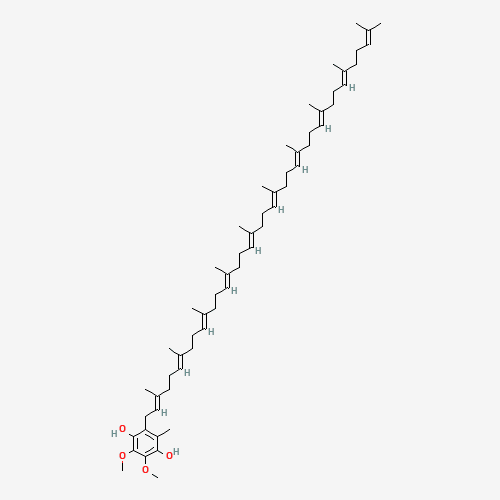
Ubiquinol is the reduced, electron-carrying form of Coenzyme Q10, sold as a better-absorbed version. One small study found it raised blood CoQ10 more than ubiquinone [1]. A randomised crossover study in older adults found no significant difference [2]. Its most notable trial is in multiple-system atrophy, where high doses improved a motor score [3].
The same molecule as CoQ10 in a different oxidation state; the absorption advantage is inconsistent, so it is worth paying more for only if a specific trial used it.
- meta-analysis
- RCT
- trial
- observational
- preclinical / case
- review / patent / other
- retracted
- + Raised blood CoQ10 more than ubiquinone in a small comparison
- + Improved motor scores in a multiple-system atrophy trial
- + Reduced oxidative stress markers after strenuous exercise
- − Absorption advantage not significant in an older-adult crossover
- − Oxidises easily in air
- − Few outcome trials of its own
Overview
CoQ10 exists in two states: oxidised ubiquinone and reduced ubiquinol. Ubiquinol is marketed as the "active" form that absorbs better. The evidence on that is split. In 12 healthy volunteers taking 200 mg a day for four weeks of each form, ubiquinol raised plasma CoQ10 to 4.3 µg/mL against 2.5 µg/mL for ubiquinone [1]. In a randomised crossover in 21 healthy adults aged 65 to 74, ubiquinol's 1.7-fold advantage over ubiquinone was not statistically significant. A water-soluble ubiquinone syrup beat both [2].
Its most notable clinical result is in multiple-system atrophy, a rare neurodegenerative disease. In a randomised phase 2 trial of 139 patients, high-dose ubiquinol met its primary endpoint, a motor score, and improved daily-living and walking measures, with side-effect rates similar to placebo [3]. Smaller trials found that ubiquinol raised CoQ10 levels in septic shock without changing clinical outcomes [4]. In trained adults it reduced oxidative damage markers from strenuous exercise [5].
Mechanism
Ubiquinol is the reduced form of CoQ10 [1]. After strenuous exercise it raised fat-soluble antioxidant status and lowered oxidative damage markers [5]. Taking ubiquinol raised the share of blood CoQ10 in the reduced state, and taking ubiquinone did not [1].
- Mitochondrial electron transport chainactivatesthe reduced, electron-carrying form of CoQ10 [1]strong
- Lipid-soluble antioxidant defenceactivatesraised fat-soluble antioxidant status and lowered oxidative damage markers after strenuous exercise [5]moderate
Safety
risks and cautions, not medical adviceNo side effects were noted in the head-to-head bioavailability study [1]. In the multiple-system atrophy trial, adverse events possibly related to the drug were no more common than on placebo [3].
Interactions
documented pairs only, not exhaustive- Coenzyme Q10compatibleThe same molecule in its oxidised form; taking both duplicates one supplement
FAQ
References
entry last reviewed 2026-09-18- [1]Comparison study of plasma coenzyme Q10 levels in healthy subjects supplemented with ubiquinol versus ubiquinone.Langsjoen PH, Langsjoen AMClin Pharmacol Drug Dev 2014clinical trial · humanPMID 27128225◌ unreviewed
- [2]Comparative Bioavailability of Different Coenzyme Q10 Formulations in Healthy Elderly Individuals.Pravst I, Rodríguez Aguilera JC, Cortes Rodriguez AB et al.Nutrients 2020RCT · humanPMID 32188111◌ unreviewed
- [3]High-dose ubiquinol supplementation in multiple-system atrophy: a multicentre, randomised, double-blinded, placebo-controlled phase 2 trial.Mitsui J, Matsukawa T, Uemura Y et al.EClinicalMedicine 2023RCT · humanPMID 37256098◌ unreviewed
- [4]Ubiquinol (reduced Coenzyme Q10) in patients with severe sepsis or septic shock: a randomized, double-blind, placebo-controlled, pilot trial.Donnino MW, Mortensen SJ, Andersen LW et al.Crit Care 2015RCT · humanPMID 26130237◌ unreviewed
- [5]Short-term ubiquinol supplementation reduces oxidative stress associated with strenuous exercise in healthy adults: A randomized trial.Sarmiento A, Diaz-Castro J, Pulido-Moran M et al.Biofactors 2016RCT · humanPMID 27193497◌ unreviewed
- [6]Stability of ubiquinol-10 (reduced form of coenzyme Q10 ) in human blood.Matsuo K, Kasai K, Hosoe K et al.Biomed Chromatogr 2016other · humanPMID 26248527◌ unreviewed
- [7]The effect of coenzyme Q10 on morbidity and mortality in chronic heart failure: results from Q-SYMBIO: a randomized double-blind trial.Mortensen SA, Rosenfeldt F, Kumar A et al.JACC Heart Fail 2014RCT · humanPMID 25282031◌ unreviewed