Sobetirome
also GC-1 · QRX-431
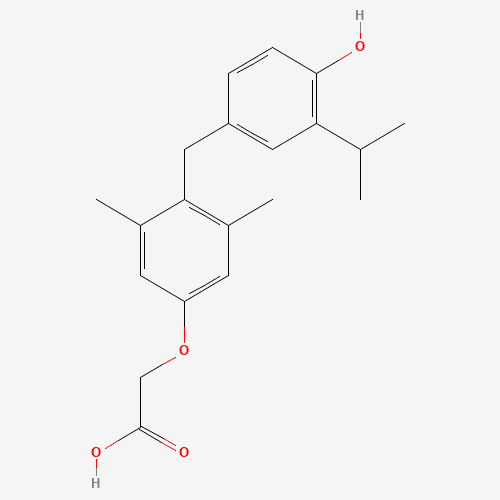
Sobetirome (GC-1) is a thyroid hormone receptor β-preferring agonist studied for lipid disorders and metabolic disease [1]. It reduced fat mass and stimulated subcutaneous white-fat browning in mice [2][3], but separate rodent studies found impaired glucose control at lower doses [4][5]. No published human study demonstrates weight loss from sobetirome.
Strong mouse thermogenesis results and early human lipid research, with no established human fat-loss benefit and conflicting animal glucose results.
- meta-analysis
- RCT
- trial
- observational
- preclinical / case
- review / patent / other
- retracted
- + Reduced fat mass and increased energy expenditure in obese mice
- + Lowered cholesterol in rats and nonhuman primates
- + Reduced liver fat in rodent models
- − No human weight-loss outcome has been published
- − Some rodent doses worsened glucose control despite reducing liver fat
- − Thyroid-axis suppression and off-target tissue effects remain concerns
Sobetirome was developed as a thyroid hormone mimic with preference for receptor β, aiming to keep hepatic lipid effects while reducing unwanted cardiac stimulation [1]. In rats and cynomolgus monkeys it lowered cholesterol; in a seven-day monkey experiment both GC-1 and T3 reduced body weight by about 4%, while GC-1 did not cause the tachycardia seen with T3 [6]. This is animal evidence, not a human fat-loss trial.
In genetically obese mice, GC-1 produced a large rise in energy expenditure, body temperature and subcutaneous-fat UCP1, with fat loss and improved glucose testing in that experiment [2]. An implanted device delivering GC-1 continuously to diet-induced obese mice also reduced weight, fat mass, cholesterol and glucose over 24 days [3].
Results were not uniformly favorable. In ob/ob mice, lower-dose GC-1 cleared liver fat but raised fasting glucose and insulin, whereas a higher dose improved glucose tolerance [4]. In high-fat-fed rats it cut liver triglycerides by 75% yet impaired hepatic insulin sensitivity and caused fasting hyperglycemia [5]. Lipid lowering and glucose improvement cannot be treated as the same outcome.
GC-1 activates thyroid hormone receptor β in a tissue-dependent way. Human hepatocyte-derived cells showed induction of CPT1A, a fatty-acid oxidation gene [7]. In mice it strongly induced UCP1 and mitochondrial genes in subcutaneous white adipocytes, while classical brown-fat activity fell; isolated white adipocytes also increased respiration [2]. The mouse response may therefore depend on white-fat thermogenesis rather than ordinary brown-fat activation.
Selectivity is relative, not absolute. A mouse study found suppressed TSH during continuous GC-1 exposure [3], and a bone-development experiment showed that receptor β selectivity did not remove all skeletal effects [8].
- Thyroid hormone receptor βactivatesstrong
- UCP1 thermogenic program in subcutaneous white fatactivatesmarkedly increased UCP1 and mitochondrial markers in mouse subcutaneous fat [2]strong
Dosing
as studied or commonly reported; not a recommendationDoses below are what studies used or, where marked, what is commonly reported. None is a recommendation.No peer-reviewed human dosing data. The doses below come from animal studies or company filings; animal doses do not translate directly to people.
Intraperitoneal (animals)
- 0.3 mg/kg
Oral
- Form
- Mouse studies used injected GC-1, drug-mixed chow, or an implanted slow-release device; these are not interchangeable exposure schedules [2][3].
- Notes
- No human dose for fat loss has been studied. The slow-release implant paper reported 24 days of dosing in obese mice, but the publisher full text was unavailable and its abstract did not report an administered dose [3]. The early human cholesterol programme is discussed in reviews, without a published primary dose-and-outcome report [1][9].
Safety
risks and cautions, not medical adviceHuman safety for a fat-loss regimen is unknown. Early human cholesterol development has been described in reviews, but a peer-reviewed primary trial report with body-composition and safety outcomes was not located [1][9]. Rodent data show thyroid-axis suppression [3] and a dose-dependent risk of worse glycemia despite reduced liver fat [4][5]. The apparent cardiac sparing versus T3 in short animal studies does not establish long-term safety in people [6].
References
entry last reviewed 2026-09-24- [1]Sobetirome: a case history of bench-to-clinic drug discovery and development.Scanlan TSHeart Fail Rev 2010reviewPMID 19002578◌ unreviewed
- [2]Pharmacological Activation of Thyroid Hormone Receptors Elicits a Functional Conversion of White to Brown Fat.Lin JZ, Martagón AJ, Cimini SL et al.Cell Rep 2015preclinical · animalPMID 26586443◌ unreviewed
- [3]Sustained zero-order delivery of GC-1 from a nanochannel membrane device alleviates metabolic syndrome.Filgueira CS, Nicolov E, Hood RL et al.Int J Obes (Lond) 2016preclinical · animalPMID 27460601◌ unreviewed
- [4]The amelioration of hepatic steatosis by thyroid hormone receptor agonists is insufficient to restore insulin sensitivity in ob/ob mice.Martagón AJ, Lin JZ, Cimini SL et al.PLoS One 2015preclinical · animalPMID 25849936◌ unreviewed
- [5]Thyroid hormone receptor-β agonists prevent hepatic steatosis in fat-fed rats but impair insulin sensitivity via discrete pathways.Vatner DF, Weismann D, Beddow SA et al.Am J Physiol Endocrinol Metab 2013preclinical · animalPMID 23651850◌ unreviewed
- [6]Effects of the thyroid hormone receptor agonist GC-1 on metabolic rate and cholesterol in rats and primates: selective actions relative to 3,5,3'-triiodo-L-thyronine.Grover GJ, Egan DM, Sleph PG et al.Endocrinology 2004preclinical · animalPMID 14701670◌ unreviewed
- [7]Regulation of gene transcription by thyroid hormone receptor β agonists in clinical development for the treatment of non-alcoholic steatohepatitis (NASH).Luong XG, Stevens SK, Jekle A et al.PLoS One 2020preclinical · cellPMID 33306682◌ unreviewed
- [8]The thyroid hormone receptor beta-specific agonist GC-1 selectively affects the bone development of hypothyroid rats.Freitas FR, Capelo LP, O'Shea PJ et al.J Bone Miner Res 2005preclinical · animalPMID 15647824◌ unreviewed
- [9]Sobetirome: the past, present and questions about the future.Lammel Lindemann J, Webb PExpert Opin Ther Targets 2016reviewPMID 26565124◌ unreviewed