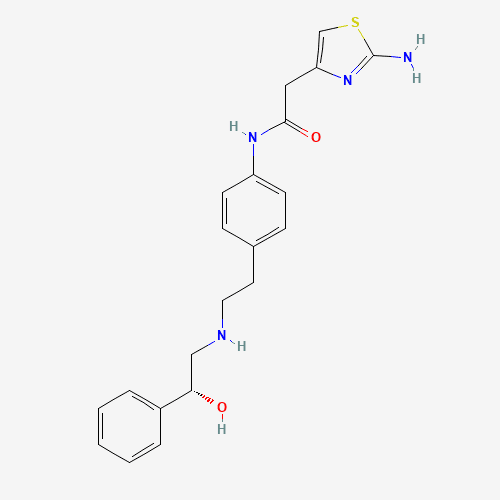
Mirabegron
also Myrbetriq · Betmiga · YM178
Mirabegron is an approved overactive-bladder drug that activates β3 adrenergic receptors [1]. Small human metabolic studies found higher brown-fat activity and energy expenditure, and two uncontrolled studies found improved glucose measures [2][3][4]. Neither chronic study produced significant weight or fat loss [3][4].
Human β3-target evidence is real, but mirabegron has not demonstrated clinically meaningful fat loss; higher research doses add cardiovascular effects.
- meta-analysis
- RCT
- trial
- observational
- preclinical / case
- review / patent / other
- retracted
- + Increased brown-fat activity and resting expenditure in small human studies
- + Improved insulin sensitivity and glucose tolerance in uncontrolled metabolic studies
- + Induced beige-fat markers in obese volunteers at 50 mg daily
- − No significant weight or fat-mass reduction in the human metabolic trials
- − Higher study doses increased heart rate and blood pressure
- − Inhibits CYP2D6 and can raise exposure to other medicines
Mirabegron's licensed use is overactive bladder; metabolic research tests whether β3 agonism can recruit thermogenic fat [1][2]. In 12 men, one 200 mg dose raised PET-measured brown-fat activity and resting metabolic rate by 203 ± 40 kcal per day versus placebo [2]. A later crossover study found that only 200 mg, not 50 mg, raised both free fatty acids and resting expenditure; the 200 mg expenditure change was 5.8% [5].
Chronic data are more relevant to fat loss. Fourteen healthy women taking 100 mg daily for four weeks had greater brown-fat activity, resting expenditure, HDL and modeled insulin sensitivity, without a change in weight or body composition [3]. In 13 obese, insulin-resistant adults taking 50 mg daily for 12 weeks, glucose tolerance, HbA1c, clamp-measured insulin sensitivity and β-cell function improved, while weight did not significantly change and PET did not show greater brown-fat activity [4]. A separate 10-week 50 mg study found beige-fat proteins in subcutaneous biopsies, but was small and open-label [6].
A six-study human meta-analysis found higher brown-fat activity and resting expenditure, but no significant pooled change in brown-fat volume or blood glucose. It also found higher heart rate, diastolic pressure and insulin [7]. A later 11-person crossover study found only about 36–38 extra kcal expended over six hours after 100–200 mg, with no clear dose-response trend [8]. Acute thermogenesis is a physiological signal, not proof of sustained fat loss.
β3 activation relaxes bladder smooth muscle and can stimulate adipose lipolysis and thermogenic signalling [5][6]. Human adipose biopsies after chronic 50 mg exposure showed higher UCP1, TMEM26 and CIDEA, markers of beige adipocytes [6]. A 100 mg study found increased fat oxidation after dosing [3]. The obese 50 mg cohort improved glucose handling without detectable brown-fat activation, suggesting that brown-fat PET response is not required for the observed glucose change [4].
- β3 adrenergic receptoractivatesstrong
- Subcutaneous beige-fat programmeactivatesincreased UCP1 and other beige adipocyte markers after 10 weeks at 50 mg daily [6]moderate
Dosing
as studied or commonly reported; not a recommendationDoses below are what studies used or, where marked, what is commonly reported. None is a recommendation.
Oral
- 50 mg13 adults with obesity and insulin resistance; glucose, fat and muscle outcomesonce daily · 12 weekshuman study[4]
- 50 mgobese volunteers; subcutaneous fat biopsies for beige-fat markersonce daily · 10 weekshuman study[6]
- 100 mg14 healthy women; brown fat, energy expenditure and body compositiononce daily · 4 weekshuman study[3]
- 200 mg
Pharmacokinetics
what the body does with it| Half-life | About 32–60 hours across two phase-I human studies [9]. |
|---|
Safety
risks and cautions, not medical adviceMirabegron's ordinary bladder-dose safety has been studied extensively, but metabolic studies at 100–200 mg are small. In the four-week 100 mg study, heart rate and systolic pressure rose acutely and baseline values were higher at day 28 [3]. The human metabolic meta-analysis also found higher heart rate and diastolic pressure [7]. The US product label advises blood-pressure monitoring and says mirabegron is not recommended with severe uncontrolled hypertension. It warns of urinary retention in susceptible patients.
Mirabegron inhibits CYP2D6: 100–160 mg daily increased desipramine and metoprolol exposure about threefold in interaction studies [10]. The US product label warns that CYP2D6 substrates may require monitoring or dose adjustment. These interaction data cannot be ignored when considering higher metabolic-study doses.
- Blood-pressure monitoring matters, especially with hypertension; the US product label discourages use in severe uncontrolled hypertension
- CYP2D6 inhibition can increase exposure to drugs such as metoprolol and desipramine [10]
- Urinary retention is a labelled risk in bladder-outlet obstruction or with antimuscarinic medicines
Interactions
documented pairs only, not exhaustive- any stimulantcautionCombining agents that raise heart rate or blood pressure may add cardiovascular strain; mirabegron raised both in a 100 mg metabolic study [3]
References
entry last reviewed 2026-09-24- [1]Safety and tolerability of the β3 -adrenoceptor agonist mirabegron, for the treatment of overactive bladder: results of a prospective pooled analysis of three 12-week randomised Phase III trials and of a 1-year randomised Phase III trial.Nitti VW, Chapple CR, Walters C et al.Int J Clin Pract 2014RCT · humanPMID 24703195◌ unreviewed
- [2]Activation of human brown adipose tissue by a β3-adrenergic receptor agonist.Cypess AM, Weiner LS, Roberts-Toler C et al.Cell Metab 2015clinical trial · humanPMID 25565203◌ unreviewed
- [3]Chronic mirabegron treatment increases human brown fat, HDL cholesterol, and insulin sensitivity.O'Mara AE, Johnson JW, Linderman JD et al.J Clin Invest 2020clinical trial · humanPMID 31961826◌ unreviewed
- [4]The β3-adrenergic receptor agonist mirabegron improves glucose homeostasis in obese humans.Finlin BS, Memetimin H, Zhu B et al.J Clin Invest 2020clinical trial · humanPMID 31961829◌ unreviewed
- [5]Regulation of Human Adipose Tissue Activation, Gallbladder Size, and Bile Acid Metabolism by a β3-Adrenergic Receptor Agonist.Baskin AS, Linderman JD, Brychta RJ et al.Diabetes 2018clinical trial · humanPMID 29980535◌ unreviewed
- [6]Human adipose beiging in response to cold and mirabegron.Finlin BS, Memetimin H, Confides AL et al.JCI Insight 2018clinical trial · humanPMID 30089732◌ unreviewed
- [7]Effects of mirabegron on brown adipose tissue and metabolism in humans: A systematic review and meta-analysis.Ma L, Xiong L, Huang GEur J Clin Pharmacol 2024meta-analysis · humanPMID 38159219◌ unreviewed
- [8]The thermogenic effect of mirabegron ingestion during cool conditions.Gorini Pereira F, Ryan CT, Miller S et al.Front Physiol 2025RCT · humanPMID 41000106◌ unreviewed
- [9]Pharmacokinetic properties of mirabegron, a β3-adrenoceptor agonist: results from two phase I, randomized, multiple-dose studies in healthy young and elderly men and women.Krauwinkel W, van Dijk J, Schaddelee M et al.Clin Ther 2012clinical trial · humanPMID 23063375◌ unreviewed
- [10]The effect of mirabegron, a potent and selective β3-adrenoceptor agonist, on the pharmacokinetics of CYP2D6 substrates desipramine and metoprolol.Krauwinkel W, Dickinson J, Schaddelee M et al.Eur J Drug Metab Pharmacokinet 2014clinical trial · humanPMID 23728524◌ unreviewed