N-acetylcysteine
also NAC · Acetylcysteine · N-Acetyl-L-cysteine · Acetadote · Mucomyst
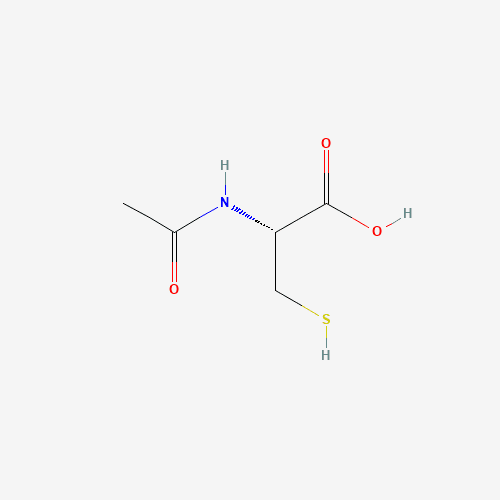
N-acetylcysteine (NAC) is an acetylated form of the amino acid cysteine. It is the standard antidote for paracetamol (acetaminophen) overdose [1][2], a mucolytic that modestly cuts flare-ups of COPD and chronic bronchitis [3][4], and a widely sold supplement. Its psychiatric uses rest on a mixed record: a positive trial in adolescents who used cannabis failed to repeat in adults [5][6], and large trials found no benefit for idiopathic pulmonary fibrosis or for protecting the kidneys during angiography [7][8]. Only about a tenth of an oral dose reaches the blood [9].
An essential hospital antidote and a modestly useful mucolytic. Outside those roles most of its promise has faded in larger trials, though small studies in hair-pulling and adolescent cannabis use are still encouraging.
- meta-analysis
- RCT
- trial
- observational
- preclinical / case
- review / patent / other
- retracted
- + Standard antidote for paracetamol poisoning, with decades of clinical use
- + About a fifth fewer COPD exacerbations at 600 mg twice daily in a 1-year trial
- + More hair-pulling improvement than placebo in one adult trichotillomania trial
- + Oral doses up to 2,400 mg a day caused no more adverse events than placebo in trials
- − Oral bioavailability of only 6–10%
- − No benefit in large trials for pulmonary fibrosis, kidney protection during angiography, adult cannabis use or bipolar depression
- − Intravenous loading doses often cause anaphylactoid reactions
- − In mice, NAC sped up the growth of existing lung tumours
Overview
NAC is the acetylated form of cysteine. It is used in three quite different ways: as a hospital antidote, as a lung medicine and as a supplement.
Paracetamol poisoning. NAC is first-line treatment for paracetamol (acetaminophen) overdose, now usually given intravenously [10]. A Cochrane review found it better than placebo and better tolerated than older antidotes, and one small trial suggested it lowers mortality in fulminant liver failure. Most of the evidence is observational, because the antidote became standard before large trials were run [2]. US and Canadian poison centres published consensus guidance on its use in 2023 [1].
COPD and chronic bronchitis. In PANTHEON, 1,006 Chinese patients with moderate-to-severe COPD took 600 mg twice daily or placebo for a year. Exacerbations fell from 1.49 to 1.16 per patient-year (risk ratio 0.78) [11]. A 2024 meta-analysis found about 24% fewer exacerbations in COPD and 19% fewer in chronic bronchitis [3]. A Cochrane review of all mucolytics reported a small benefit, and it noted that newer trials show smaller effects than older ones [4].
Psychiatry and addiction. In 116 cannabis-dependent adolescents, NAC 1,200 mg twice daily more than doubled the odds of a negative urine test [5]. A larger trial in 302 adults using the same dose found no difference at all: 22.3% of tests were negative on NAC and 22.4% on placebo [6]. In adults with trichotillomania (hair-pulling), 56% were much or very much improved on NAC versus 16% on placebo [12]; a Cochrane review rated this as moderate-certainty evidence from one trial, and a trial in children found no clear benefit [13]. A meta-analysis of six trials found a benefit as add-on treatment in schizophrenia, none in bipolar disorder, and only a small effect in major depression [14]. A later 80-patient trial in bipolar depression was negative [15].
Negative trials. In idiopathic pulmonary fibrosis, NAC 600 mg three times daily did not slow the loss of lung function over 60 weeks [7]. In PRESERVE, 5,177 high-risk patients having angiography received oral NAC or placebo. It did not reduce death, dialysis or lasting kidney decline, and it did not prevent contrast-associated kidney injury [8].
Ageing. A 16-week trial in 24 older adults combined NAC with glycine ("GlyNAC") and reported corrections in glutathione, oxidative stress, mitochondrial function and physical function against an alanine placebo [16]. It was small, and it tested the combination, not NAC alone.
Mechanism
NAC supplies cysteine, which the liver uses to make glutathione [17]. In paracetamol overdose it works as an antidote to NAPQI, the toxic metabolite that damages the liver [2]. In the airways it is used as a mucolytic with antioxidant properties [3].
The psychiatric trials rest on a different idea: preclinical work suggests NAC restores extracellular glutamate in the nucleus accumbens, a brain region involved in reward and habit [5][12]. Whether oral doses do much in the human brain is unclear. In a small study, 6 g a day for four weeks raised some blood antioxidant measures but did not raise brain glutathione, which the authors linked to poor oral bioavailability [18].
- Airway mucusmodulatesused as a mucolytic with antioxidant properties in COPD and chronic bronchitis [3]moderate
- Glutathione synthesisactivatesstrong
- Glutamate in the nucleus accumbensmodulatesweak
Formulation
how the form changes blood levelsOral NAC is heavily broken down in the gut wall, so only about 6–10% of a dose reaches the blood [9][17]. In a crossover study of a single 600 mg dose, the fast-dissolving forms had the highest bioavailability and a slow-release tablet the lowest [9]. Peak levels of about 14–17 µmol/L arrive 40–70 minutes after standard tablets [17].
Intravenous NAC is fully bioavailable [17]. The traditional three-bag infusion front-loads 150 mg/kg in the first hour, while simplified two-bag regimens spread that dose over several hours [10].
Dosing
as studied or commonly reported; not a recommendationDoses below are what studies used or, where marked, what is commonly reported. None is a recommendation.
Intravenous
- 150 mg/kg over 15–60 min, then 50 mg/kg over 4 h, then 100 mg/kg over 16 h (300 mg/kg in 21 h)paracetamol poisoning; the FDA-approved three-bag regimenthree consecutive infusions · 21 hoursstudy[10]
- 200 mg/kg over 4 h, then 100 mg/kg over 16 hparacetamol poisoning; simplified off-label two-bag regimentwo consecutive infusions · 20 hoursstudy[10]
Oral
- 600 mg
- 1,200 mgcannabis-dependent adolescents aged 15–21, with contingency management (more negative urine tests)twice daily · 8 weekshuman study[5]
- 1,200 mgadults with cannabis use disorder, with contingency management (no benefit)twice daily · 12 weekshuman study[6]
- 1,200–2,400 mg
- 600 mg
- 3 g
- 3,000 mgParkinson's disease and healthy controls; pharmacokinetic study (brain glutathione did not rise)twice daily (6 g a day) · 4 weekshuman study[18]
- 600–1,200 mggeneral supplement useonce or twice dailycommonly reported, not from trials
- Form
- Sold as tablets, effervescent tablets and capsules, and given intravenously in hospital. In a crossover study, fast-dissolving oral forms were absorbed quickly and a slow-release tablet flattened the blood-level curve [9].
Pharmacokinetics
what the body does with it| Half-life | Late elimination half-life of 2.27 hours after 600 mg intravenously in healthy volunteers [9]. Studies measuring total NAC report longer terminal half-lives (around 6 hours), and 35–51 hours in people on dialysis [17] |
|---|---|
| Time to peak | 40–70 minutes for standard oral tablets; about 110 minutes for a sustained-release form [17] |
| Peak level | About 14–17 µmol/L of total NAC after a single 600 mg oral dose [17] |
| Bioavailability | 6–10% orally, lowest with a slow-release tablet and highest with a fast-dissolving one [9]. Most of the dose is deacetylated in the gut wall before it reaches the blood [17] |
| Metabolism | Deacetylated to cysteine, mainly in the intestinal mucosa [17]. After high oral doses, blood cysteine exposure exceeded that of NAC itself [18] |
| Excretion | Renal clearance is about 30% of total body clearance [9]; total clearance falls by about 90% in dialysis-dependent kidney failure [17] |
Safety
risks and cautions, not medical adviceOral NAC was well tolerated in trials. In PANTHEON, 29% of patients on NAC and 26% on placebo reported adverse events over a year [11]. In both cannabis trials, adverse events were no more common than on placebo [5][6], and the adult trichotillomania trial reported none in the NAC group [12]. At 6 g a day, indigestion was common, and three of five people with Parkinson's disease had symptoms, including worse tremor, which resolved after stopping [18].
In the pulmonary fibrosis trial, serious cardiac events were more frequent on NAC than placebo (6.8% vs 1.5%), while serious gastrointestinal events were less frequent (0% vs 4.6%) [7].
Intravenous NAC often causes non-allergic anaphylactoid reactions such as flushing and itching and, less often, bronchospasm, low blood pressure or swelling [10]. In one emergency department series, 31 of 64 patients (48%) reacted, 71% of them within the first 15 minutes [19]. Two-bag regimens that slow the loading dose cause fewer of these reactions [10].
In mouse models of lung cancer, NAC in the diet sped up tumour growth and shortened survival by lowering oxidative stress, DNA damage and p53 in tumour cells. The authors raised the concern for smokers and people with COPD who take NAC [20]. This has not been shown in humans.
- The antidote evidence is mostly observational; the randomised trials are small and at high risk of bias [2]
- Newer COPD trials show smaller benefits than older ones [4]
- The positive adolescent cannabis result did not replicate in adults [5][6]
- The adult trichotillomania benefit comes from a single 50-person trial [12][13]
- The GlyNAC ageing trial had 12 people per arm and tested NAC combined with glycine [16]
Interactions
documented pairs only, not exhaustiveClearance of NAC falls sharply in advanced kidney disease, so levels stay high for much longer [17]. No interactions with other compounds on this site have been documented.
FAQ
- Does oral NAC raise glutathione in the brain?
- Not in the one study here that measured it: 6 g a day for four weeks raised blood antioxidant markers but not brain glutathione [18].
- Does NAC help with cannabis or other addictions?
- It helped adolescents in one trial [5], but the same dose did nothing for adults in a larger trial [6].
- Does it protect the kidneys from contrast dye?
- No. The 5,177-patient PRESERVE trial found no benefit over placebo [8].
References
entry last reviewed 2026-09-19- [1]Management of Acetaminophen Poisoning in the US and Canada: A Consensus Statement.Dart RC, Mullins ME, Matoushek T et al.JAMA Netw Open 2023reviewPMID 37552484◌ unreviewed
- [2]Interventions for paracetamol (acetaminophen) overdose.Chiew AL, Gluud C, Brok J et al.Cochrane Database Syst Rev 2018meta-analysis · humanPMID 29473717◌ unreviewed
- [3]N-acetylcysteine Treatment in Chronic Obstructive Pulmonary Disease (COPD) and Chronic Bronchitis/Pre-COPD: Distinct Meta-analyses.Papi A, Alfano F, Bigoni T et al.Arch Bronconeumol 2024meta-analysis · humanPMID 38555190◌ unreviewed
- [4]Mucolytic agents versus placebo for chronic bronchitis or chronic obstructive pulmonary disease.Poole P, Sathananthan K, Fortescue RCochrane Database Syst Rev 2019meta-analysis · humanPMID 31107966◌ unreviewed
- [5]A double-blind randomized controlled trial of N-acetylcysteine in cannabis-dependent adolescents.Gray KM, Carpenter MJ, Baker NL et al.Am J Psychiatry 2012RCT · humanPMID 22706327◌ unreviewed
- [6]A randomized placebo-controlled trial of N-acetylcysteine for cannabis use disorder in adults.Gray KM, Sonne SC, McClure EA et al.Drug Alcohol Depend 2017RCT · humanPMID 28623823◌ unreviewed
- [7]Randomized trial of acetylcysteine in idiopathic pulmonary fibrosis.Idiopathic Pulmonary Fibrosis Clinical Research Network, Martinez FJ, de Andrade JA et al.N Engl J Med 2014RCT · humanPMID 24836309◌ unreviewed
- [8]Outcomes after Angiography with Sodium Bicarbonate and Acetylcysteine.Weisbord SD, Gallagher M, Jneid H et al.N Engl J Med 2018RCT · humanPMID 29130810◌ unreviewed
- [9]Pharmacokinetics of N-acetylcysteine in man.Borgström L, Kågedal B, Paulsen OEur J Clin Pharmacol 1986clinical trial · humanPMID 3803419◌ unreviewed
- [10]Is Two Better Than Three? A Systematic Review of Two-bag Intravenous N-acetylcysteine Regimens for Acetaminophen Poisoning.Cole JB, Oakland CL, Lee SC et al.West J Emerg Med 2023reviewPMID 38165196◌ unreviewed
- [11]Twice daily N-acetylcysteine 600 mg for exacerbations of chronic obstructive pulmonary disease (PANTHEON): a randomised, double-blind placebo-controlled trial.Zheng JP, Wen FQ, Bai CX et al.Lancet Respir Med 2014RCT · humanPMID 24621680◌ unreviewed
- [12]N-acetylcysteine, a glutamate modulator, in the treatment of trichotillomania: a double-blind, placebo-controlled study.Grant JE, Odlaug BL, Kim SWArch Gen Psychiatry 2009RCT · humanPMID 19581567◌ unreviewed
- [13]Pharmacotherapy for trichotillomania.Hoffman J, Williams T, Rothbart R et al.Cochrane Database Syst Rev 2021meta-analysis · humanPMID 34582562◌ unreviewed
- [14]N-acetylcysteine for major mental disorders: a systematic review and meta-analysis of randomized controlled trials.Zheng W, Zhang QE, Cai DB et al.Acta Psychiatr Scand 2018meta-analysis · humanPMID 29457216◌ unreviewed
- [15]The efficacy of adjunctive N-acetylcysteine in acute bipolar depression: A randomized placebo-controlled study.Ellegaard PK, Licht RW, Nielsen RE et al.J Affect Disord 2019RCT · humanPMID 30699846◌ unreviewed
- [16]Supplementing Glycine and N-Acetylcysteine (GlyNAC) in Older Adults Improves Glutathione Deficiency, Oxidative Stress, Mitochondrial Dysfunction, Inflammation, Physical Function, and Aging Hallmarks: A Randomized Clinical Trial.Kumar P, Liu C, Suliburk J et al.J Gerontol A Biol Sci Med Sci 2023RCT · humanPMID 35975308◌ unreviewed
- [17]N-acetylcysteine in Kidney Disease: Molecular Mechanisms, Pharmacokinetics, and Clinical Effectiveness.Hernández-Cruz EY, Aparicio-Trejo OE, Hammami FA et al.Kidney Int Rep 2024reviewPMID 39430194◌ unreviewed
- [18]Repeated-Dose Oral N-Acetylcysteine in Parkinson's Disease: Pharmacokinetics and Effect on Brain Glutathione and Oxidative Stress.Coles LD, Tuite PJ, Öz G et al.J Clin Pharmacol 2018clinical trial · humanPMID 28940353◌ unreviewed
- [19]Anaphylactoid reactions to intravenous N-acetylcysteine: a prospective case controlled study.Lynch RM, Robertson RAccid Emerg Nurs 2004observational · humanPMID 14700565◌ unreviewed
- [20]Antioxidants accelerate lung cancer progression in mice.Sayin VI, Ibrahim MX, Larsson E et al.Sci Transl Med 2014preclinical · animalPMID 24477002◌ unreviewed