Oxytocin
also Pitocin · Ocytocin · Syntocinon
Oxytocin is a nine-amino-acid hormone made in the hypothalamus. It contracts the uterus in labour and releases milk, and in the brain it acts on social, sexual and stress behaviour through a single receptor [1]. Injected oxytocin is a standard drug for preventing bleeding after birth [2]. As a nasal spray it raised oxytocin in the cerebrospinal fluid [3], but the large trials of intranasal oxytocin in autism and obesity were negative [4][5], a famous finding that it increases trust failed to replicate [6], and it did no better than placebo for women's sexual function [7].
An essential obstetric drug whose promise as a nasal spray for social, sexual and weight problems has mostly not survived larger, better-controlled trials. The nasal spray is well tolerated, so the main problem is lack of effect, not harm.
- meta-analysis
- RCT
- trial
- observational
- preclinical / case
- review / patent / other
- retracted
- + Standard injection for preventing heavy bleeding after childbirth
- + Nasal spray reaches the cerebrospinal fluid in people
- + A single nasal dose improved recognition of facial emotions in healthy people, in a meta-analysis
- + Increased orgasm intensity and contentment after sex in a study of couples
- + Well tolerated in trials lasting up to 24 weeks
- − No effect on social symptoms of autism in the largest trials
- − No weight loss over 8 weeks in adults with obesity
- − The trust effect did not replicate
- − No better than placebo for women's sexual function
- − Very short half-life
- − Large intravenous doses in labour can cause water retention and low sodium
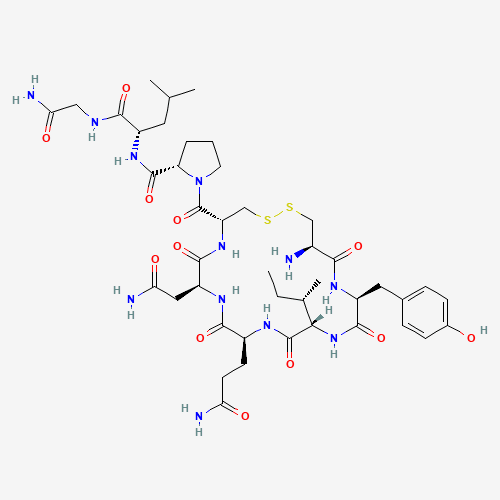
Oxytocin is a nine-amino-acid peptide with a disulfide ring, made in the hypothalamus and released from the posterior pituitary into the blood and within the brain. Its classical jobs are milk let-down and uterine contraction in labour; in animals and people it has also been linked to sexual and maternal behaviour, pair bonding, anxiety, trust, sociability and food intake, all through one receptor [1].
Childbirth. Intravenous or intramuscular oxytocin 10 IU is the World Health Organization's recommended drug for preventing postpartum haemorrhage, the leading cause of maternal death worldwide. In a 2025 Cochrane network meta-analysis, adding ergometrine or misoprostol to oxytocin reduced bleeding of 500 mL or more further than oxytocin alone [2]. Its short half-life on continuous infusion makes it easy to control when inducing labour [8].
Trust and social cognition. A 2005 study reported that intranasal oxytocin made people more willing to trust strangers with money [9]. A registered replication with more than 95% power, run by some of the same authors, found no effect [6]. A statistical analysis of the field concluded that intranasal oxytocin studies are generally underpowered and that most published findings are probably false positives [10]. A meta-analysis of 33 studies found one dose improved recognition of basic emotions, particularly fear, in healthy people, but had no effect on emotion processing in clinical groups [11].
Autism. In the largest trial, 290 children and adolescents took nasal oxytocin (target 48 IU a day) or placebo for 24 weeks; social withdrawal, other social measures and IQ did not differ [4]. In 106 Japanese adults, 6 weeks at 48 IU a day did not improve the primary social measure more than placebo, though repetitive behaviour and eye gaze to faces improved [12]. A higher-bioavailability spray showed an inverted-U dose response with a possible benefit at 6 units a day [13]. A 2026 meta-analysis of 42 trials across mental disorders found no significant overall effect, with a small signal in schizophrenia [14].
Sexual function. In 30 women with sexual dysfunction, oxytocin sprayed before sex for 8 weeks improved sexual function scores, but no more than placebo, which improved them just as much [7]. In 29 healthy couples, a single 24 IU dose did not change sexual drive, arousal, erection or lubrication, but increased orgasm intensity and contentment afterwards, particularly in men; the effects were small to moderate [15].
Weight. In 61 adults with obesity, 24 IU four times a day for 8 weeks did not change weight, body fat, visceral fat or liver fat, although people ate less at a test meal [5]. A pilot crossover trial in 13 young people with hypothalamic obesity also found no significant weight change [16]. A pilot in 21 older adults with sarcopenic obesity reported 2.25 kg more lean mass and lower LDL cholesterol than placebo [17].
The oxytocin receptor is a G protein-coupled receptor that can signal through Gq or Gi, activating pathways including MAPK, PKC, PLC and CaMK. In the brain, oxytocin neurons project to anxiety- and stress-regulating circuits such as the amygdala, the bed nucleus of the stria terminalis and the prefrontal cortex [1]. In the uterus the same receptor drives contraction [2].
How much of a nasal dose reaches the brain has been a central question. In people given 24 IU intranasally, oxytocin rose in the cerebrospinal fluid by 75 minutes, but plasma and CSF levels did not track each other [3]. Oxytocin also has an antidiuretic effect, so intravenous doses can cause water retention [18].
- Oxytocin receptoractivatesa single G protein-coupled receptor that couples to Gq or Gi and mediates uterine contraction, milk ejection and effects on social and sexual behaviour [1]strong
Dosing
as studied or commonly reported; not a recommendationDoses below are what studies used or, where marked, what is commonly reported. None is a recommendation.
Intravenous
- 10 IUWHO-recommended dose for preventing postpartum haemorrhageafter birth (intramuscular is an alternative)human study[2]
Nasal
- 24 IU
- 48 IU a day (target)
- 48 IU a day
- 24 IU
- 32 IUpre- and postmenopausal women with sexual dysfunction (crossover, 30 women)within 50 minutes before sex, as needed · 8 weekshuman study[7]
- 24 IU
- Form
- Given by injection in obstetrics and as a nasal spray in behavioural research [2][3]. A reformulated spray with higher bioavailability (TTA-121) was tested at 3–20 units a day [13].
- Timing and food
- After a nasal dose, plasma levels peak within 15 minutes but cerebrospinal fluid levels take up to 75 minutes to rise [3]. In the sexual-function trial, women used it within 50 minutes before sex [7].
- Notes
- The optimal intranasal dose is unknown: with the higher-bioavailability spray, the best autism response was at 6 units a day, with smaller effects at higher doses (an inverted U), and only in the per-protocol analysis [13].
Pharmacokinetics
what the body does with it| Half-life | Plasma elimination half-life of about 10 minutes during intravenous infusion in obstetrics [8]. After 10 IU intravenously in postmenopausal women, a population model found a distribution half-life of 5.5 minutes and a terminal half-life of 1.2 hours [19]. |
|---|---|
| Time to peak | After 24 IU intranasally, plasma oxytocin peaked at 15 minutes and fell after 75 minutes; cerebrospinal fluid levels took up to 75 minutes to rise significantly, and did not correlate with plasma levels [3]. |
| Bioavailability | Only about 2.5% of a vaginal dose reached the blood, with very large variation between people [19]. |
| Metabolism | Clearance about 27 L/h and volume of distribution at steady state about 15 L after intravenous dosing [19]. |
Safety
risks and cautions, not medical adviceIntranasal oxytocin has been well tolerated in trials. In the 24-week paediatric autism trial the incidence and severity of adverse events were similar to placebo [4]. A meta-analysis of long-term use in autism found nasal discomfort, tiredness, irritability, diarrhoea and skin irritation, none more common than on placebo [20]. In adults with obesity taking it four times a day for 8 weeks, there were no serious adverse events and no difference from placebo [5]. One adult in an autism trial developed temporary breast enlargement [12]. In young people with hypothalamic obesity, nosebleeds, nasal irritation, headache, nausea and changes in heart rate, blood pressure and QTc interval were similar on oxytocin and placebo [16].
In obstetrics, where doses are larger and given intravenously, oxytocin can overstimulate the uterus and cause cardiovascular events [8]. Its antidiuretic effect can cause water intoxication with severe low sodium, even on low-dose labour regimens [18].
- Many early intranasal studies were small and underpowered, and a key finding failed to replicate [6][10]
- The largest autism trials were negative [4][12]
- How much of a nasal dose reaches the brain, and the best dose, are still unclear [3][13]
- Positive body-composition findings come from a 21-person pilot [17]
- Does oxytocin nasal spray increase libido?
- In women with sexual dysfunction it was no better than placebo over 8 weeks [7]. In healthy couples it did not change drive or arousal, though orgasm intensity and contentment afterwards rose slightly [15].
- Does intranasal oxytocin reach the brain?
- Levels in the cerebrospinal fluid rose within 75 minutes of a 24 IU dose in people [3].
References
entry last reviewed 2026-09-25- [1]The Oxytocin Receptor: From Intracellular Signaling to Behavior.Jurek B, Neumann IDPhysiol Rev 2018reviewPMID 29897293◌ unreviewed
- [2]Uterotonic agents for preventing postpartum haemorrhage: a network meta-analysis.Gallos ID, Yunas I, Devall AJ et al.Cochrane Database Syst Rev 2025meta-analysis · humanPMID 40237648◌ unreviewed
- [3]Elevated cerebrospinal fluid and blood concentrations of oxytocin following its intranasal administration in humans.Striepens N, Kendrick KM, Hanking V et al.Sci Rep 2013RCT · humanPMID 24310737◌ unreviewed
- [4]Intranasal Oxytocin in Children and Adolescents with Autism Spectrum Disorder.Sikich L, Kolevzon A, King BH et al.N Engl J Med 2021RCT · humanPMID 34644471◌ unreviewed
- [5]Intranasal Oxytocin for Obesity.Plessow F, Kerem L, Wronski ML et al.NEJM Evid 2024RCT · humanPMID 38815173◌ unreviewed
- [6]A registered replication study on oxytocin and trust.Declerck CH, Boone C, Pauwels L et al.Nat Hum Behav 2020RCT · humanPMID 32514040◌ unreviewed
- [7]Effect of long-term intranasal oxytocin on sexual dysfunction in premenopausal and postmenopausal women: a randomized trial.Muin DA, Wolzt M, Marculescu R et al.Fertil Steril 2015RCT · humanPMID 26151620◌ unreviewed
- [8]A risk-benefit assessment of oxytocics in obstetric practice.Winkler M, Rath WDrug Saf 1999reviewPMID 10230581◌ unreviewed
- [9]Oxytocin increases trust in humans.Kosfeld M, Heinrichs M, Zak PJ et al.Nature 2005clinical trial · humanPMID 15931222◌ unreviewed
- [10]Statistical and Methodological Considerations for the Interpretation of Intranasal Oxytocin Studies.Walum H, Waldman ID, Young LJBiol Psychiatry 2016reviewPMID 26210057◌ unreviewed
- [11]Meta-analysis of the effects of intranasal oxytocin on interpretation and expression of emotions.Leppanen J, Ng KW, Tchanturia K et al.Neurosci Biobehav Rev 2017meta-analysis · humanPMID 28467893◌ unreviewed
- [12]Effect of intranasal oxytocin on the core social symptoms of autism spectrum disorder: a randomized clinical trial.Yamasue H, Okada T, Munesue T et al.Mol Psychiatry 2020RCT · humanPMID 29955161◌ unreviewed
- [13]Effect of a novel nasal oxytocin spray with enhanced bioavailability on autism: a randomized trial.Yamasue H, Kojima M, Kuwabara H et al.Brain 2022RCT · humanPMID 35067719◌ unreviewed
- [14]Does intranasal oxytocin reduce symptoms of mental disorders? A meta-analysis of clinical trials.Bonnieux J, Gumuchian ST, Harboun A et al.Neurosci Biobehav Rev 2026meta-analysis · humanPMID 42134427◌ unreviewed
- [15]Differential effects of intranasal oxytocin on sexual experiences and partner interactions in couples.Behnia B, Heinrichs M, Bergmann W et al.Horm Behav 2014RCT · humanPMID 24503174◌ unreviewed
- [16]A Pilot Randomized Clinical Trial of Intranasal Oxytocin to Promote Weight Loss in Individuals With Hypothalamic Obesity.McCormack SE, Wang Z, Wade KL et al.J Endocr Soc 2023RCT · humanPMID 37153702◌ unreviewed
- [17]Intranasal Oxytocin Improves Lean Muscle Mass and Lowers LDL Cholesterol in Older Adults with Sarcopenic Obesity: A Pilot Randomized Controlled Trial.Espinoza SE, Lee JL, Wang CP et al.J Am Med Dir Assoc 2021RCT · humanPMID 34029521◌ unreviewed
- [18]Water intoxication in the course of stimulation of labor with oxytocin.Szadok P, Bajorek A, Fluder RGinekol Pol 2021case report · humanPMID 34379318◌ unreviewed
- [19]Population Pharmacokinetic Analysis of Vaginally and Intravenously Administered Oxytocin in Postmenopausal Women.Nielsen EI, Al-Saqi SH, Jonasson AF et al.J Clin Pharmacol 2017clinical trial · humanPMID 28679021◌ unreviewed
- [20]Systematic review and meta-analysis of reported adverse events of long-term intranasal oxytocin treatment for autism spectrum disorder.Cai Q, Feng L, Yap KZPsychiatry Clin Neurosci 2018meta-analysis · humanPMID 29232031◌ unreviewed