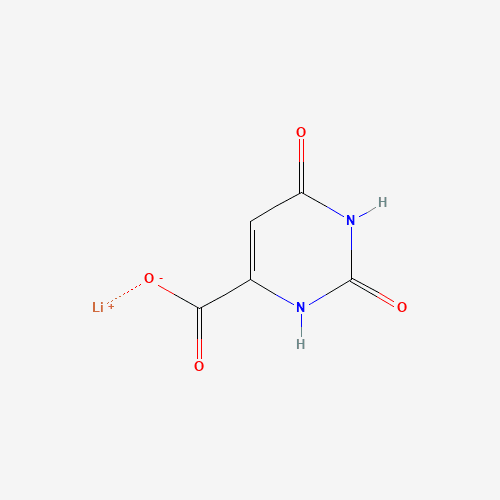
Lithium orotate
also LiOr · Orotic acid lithium salt
Lithium orotate is a lithium salt sold over the counter as a low-dose supplement, far below the doses of prescription lithium carbonate [1]. Interest rose after a 2025 Nature study that restored brain lithium with lithium orotate in mice and prevented Alzheimer-like changes [2]. There are no controlled human trials of lithium orotate itself. Whether the orotate salt behaves differently from other lithium salts is disputed [3].
An intriguing idea backed by mouse work and population data on trace lithium in water, not by trials of this product; lithium still has real interactions, and "orotate is safer" is unproven in people.
- meta-analysis
- RCT
- trial
- observational
- preclinical / case
- review / patent / other
- retracted
- + Low-dose lithium in drinking water is linked to lower suicide rates
- + Prevented memory loss in Alzheimer mouse models
- + No toxicity signal in a 28-day rat study
- − No controlled human trials of lithium orotate
- − Claims of a distinct orotate effect are disputed
- − Lithium's drug interactions apply at any dose
Overview
Lithium orotate combines lithium with orotic acid. It was largely abandoned as a medicine by the late 1970s, and it has since been sold as a supplement at lithium doses 5.5 to 67 times lower than those of pharmaceutical lithium [1][4]. By weight it carries much less lithium than lithium carbonate: about 3.8 mg per 100 mg, against about 18.8 mg per 100 mg [5].
Two lines of evidence drive current interest, and neither is a trial of lithium orotate in people.
- Trace lithium in drinking water. Meta-analyses of ecological studies find that places with more natural lithium in drinking water have lower suicide rates [6][7]. A systematic review of five studies linked trace lithium with lower dementia risk [8]. These are population correlations, open to the ecological fallacy [6].
- Brain lithium and Alzheimer's. A 2025 Nature study found lithium was the only metal significantly reduced in the brains of people with mild cognitive impairment. Halving brain lithium in mice sped up amyloid, tau and memory changes. Lithium orotate, chosen because it binds amyloid less, prevented those changes in Alzheimer mouse models and ageing mice [2].
Mechanism
In mice, the effects of lithium deficiency ran partly through the enzyme GSK3β [2].
Whether the orotate salt matters is contested. In a mouse model of mania, lithium orotate blocked hyperactivity at about one-tenth the dose of lithium carbonate. Blocking orotate's transport cancelled the effect, and the orotate did not cause carbonate's thirst, raised creatinine or thyroid changes [9]. A 2026 critique argues the other side. No study has shown stable lithium orotate in body fluids, basic acid-base chemistry predicts it dissociates in the stomach, and earlier oral studies found similar pharmacokinetics for the two salts [3].
- GSK3βblockslithium deficiency in mice acted partly through activating GSK3β [2]moderate
Safety
risks and cautions, not medical adviceLithium has a narrow margin between effective and toxic levels, and it is cleared almost entirely by the kidneys [10]. At prescription doses it lowers the kidneys' ability to concentrate urine, raises the risk of hypothyroidism and causes weight gain [11].
For the orotate salt specifically:
- A 28-day rat study found no toxicity up to 400 mg/kg a day, and genetic toxicity tests were negative [1].
- A 1979 rat study found that injected lithium orotate reduced kidney function more than lithium carbonate, and its authors advised against using it in patients [12].
- An 18-year-old who took 18 tablets of an internet lithium orotate product developed nausea, vomiting and a tremor, and recovered with fluids [5].
Interactions
documented pairs only, not exhaustiveBecause lithium leaves the body through the kidneys, drugs that change kidney handling change lithium levels. Thiazide diuretics can raise lithium levels by 25 to 40%, and NSAIDs have also been implicated [10]. In a population study of older people on lithium, starting a loop diuretic or an ACE inhibitor sharply raised the risk of hospitalisation for lithium toxicity [13]. Methylxanthines such as caffeine have the opposite effect and speed lithium clearance [10].
These interactions are documented for prescription lithium. Supplement doses are much lower, but the mechanism is the same.
- CaffeinecautionMethylxanthines speed lithium clearance, so caffeine intake changes lithium levels [10]
FAQ
- Is lithium orotate the same as prescription lithium?
- It is a different lithium salt, sold at much lower lithium doses [1]. Whether it behaves differently in the body is disputed [3][9].
- Did the 2025 Nature study test lithium orotate in people?
- No. It measured lithium in human brain tissue and tested lithium orotate in mice [2].
References
entry last reviewed 2026-09-18- [1]A toxicological evaluation of lithium orotate.Murbach TS, Glávits R, Endres JR et al.Regul Toxicol Pharmacol 2021preclinical · animalPMID 34146638◌ unreviewed
- [2]Lithium deficiency and the onset of Alzheimer's disease.Aron L, Ngian ZK, Qiu C et al.Nature 2025preclinical · animalPMID 40770094◌ unreviewed
- [3]Lithium orotate: distinct compound or simply Li+ after administration?Hajek T, Munthe S, Licht RWBr J Psychiatry 2026otherPMID 42312809◌ unreviewed
- [4]Lithium orotate: A superior option for lithium therapy?Pacholko AG, Bekar LKBrain Behav 2021reviewPMID 34196467◌ unreviewed
- [5]Lithium toxicity from an Internet dietary supplement.Pauzé DK, Brooks DEJ Med Toxicol 2007case report · humanPMID 18072162◌ unreviewed
- [6]Association between naturally occurring lithium in drinking water and suicide rates: systematic review and meta-analysis of ecological studies.Memon A, Rogers I, Fitzsimmons SMDD et al.Br J Psychiatry 2020meta-analysis · humanPMID 32716281◌ unreviewed
- [7]The association between lithium in drinking water and neuropsychiatric outcomes: A systematic review and meta-analysis from across 2678 regions containing 113 million people.Eyre-Watt B, Mahendran E, Suetani S et al.Aust N Z J Psychiatry 2021meta-analysis · humanPMID 33045847◌ unreviewed
- [8]Trace lithium levels in drinking water and risk of dementia: a systematic review.Fraiha-Pegado J, de Paula VJR, Alotaibi T et al.Int J Bipolar Disord 2024reviewPMID 39212809◌ unreviewed
- [9]Different pharmacokinetics of lithium orotate inform why it is more potent, effective, and less toxic than lithium carbonate in a mouse model of mania.Pacholko AG, Bekar LKJ Psychiatr Res 2023preclinical · animalPMID 37356352◌ unreviewed
- [10]Clinical relevance of drug interactions with lithium.Finley PR, Warner MD, Peabody CAClin Pharmacokinet 1995reviewPMID 8521679◌ unreviewed
- [11]Lithium toxicity profile: a systematic review and meta-analysis.McKnight RF, Adida M, Budge K et al.Lancet 2012meta-analysis · humanPMID 22265699◌ unreviewed
- [12]Kidney function and lithium concentrations of rats given an injection of lithium orotate or lithium carbonate.Smith DF, Schou MJ Pharm Pharmacol 1979preclinical · animalPMID 34690◌ unreviewed
- [13]Drug-induced lithium toxicity in the elderly: a population-based study.Juurlink DN, Mamdani MM, Kopp A et al.J Am Geriatr Soc 2004observational · humanPMID 15086664◌ unreviewed