KW-6356
also Sipagladenant · KW6356
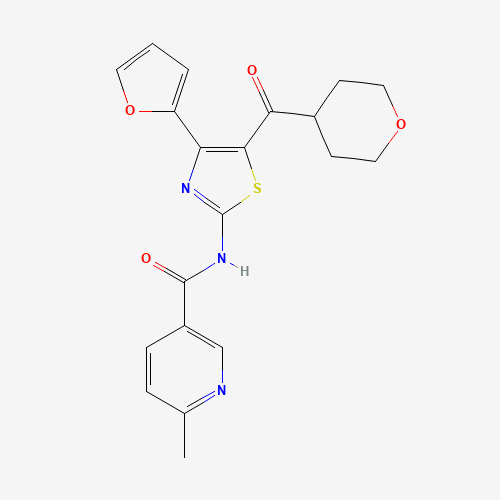
KW-6356 (sipagladenant) is a selective blocker and inverse agonist of the adenosine A2A receptor, made by Kyowa Kirin, the company behind istradefylline, for Parkinson's disease [1][2]. In a 12-week trial in 168 people with early, untreated Parkinson's disease, motor scores improved more than on placebo, but the difference was about 2 points and its confidence interval crossed zero [3]; a 503-patient trial as an add-on to levodopa met its primary endpoint, and has been reported only as a conference abstract [4]. Insomnia was the commonest side effect in healthy volunteers [5]. Kyowa Kirin stopped developing it in 2022 [6].
A potent, long-acting A2A blocker that modestly helped motor symptoms in two Japanese phase 2 trials, one of them published only as an abstract, and kept most healthy volunteers awake; development stopped before phase 3, so it was never approved.
- meta-analysis
- RCT
- trial
- observational
- preclinical / case
- review / patent / other
- retracted
- + About 100 times the affinity of istradefylline for the human A2A receptor, with slow release from it and inverse agonism that istradefylline lacks
- + On its own, motor scores in early, untreated Parkinson's disease improved by 5.4 points at 3 mg a day against 3.1 on placebo over 12 weeks
- + As an add-on to levodopa, both 3 mg and 6 mg a day improved motor scores over placebo in 503 patients and reduced daily off time
- + A half-life of about a day suits once-daily dosing, and blood levels rise in proportion to dose
- + In parkinsonian marmosets it boosted the effect of levodopa without making levodopa's dyskinesia worse
- − The monotherapy trial was exploratory and not powered; neither dose's difference from placebo excluded zero
- − The add-on trial is reported only in a conference abstract, without effect sizes or adverse-event counts
- − Insomnia affected most healthy volunteers at every dose from 1 mg up
- − Two serious cases of rhabdomyolysis, one in a healthy volunteer on 24 mg a day and one in a patient on 3 mg a day, were judged possibly or probably drug-related
- − Development was stopped in 2022, so it was never approved and no phase 3 trial was run
- − All the clinical and animal work comes from Kyowa Kirin and its investigators, almost all of it in Japan
KW-6356 is a non-xanthine blocker of the adenosine A2A receptor [1] from Kyowa Kirin, the company that developed istradefylline [2], the only A2A antagonist to reach the market for Parkinson's disease [3]. Its international nonproprietary name is sipagladenant [2]. Istradefylline is approved in Japan and the United States as an add-on to levodopa for people with "off" episodes [1]. Across nine trials and 2,727 patients it reduced off time, a result with signs of publication bias, but did not significantly change motor scores [7], and it had not shown a significant effect on its own [8]. KW-6356 binds about 100 times more tightly, for longer, and also suppresses the receptor's background activity [1].
Alone, in early Parkinson's disease. A phase 2a trial at 46 sites in Japan randomized 168 people with early, untreated disease to 3 mg, 6 mg or placebo once a day for 12 weeks. Motor scores (MDS-UPDRS Part III) fell by 5.37 points on 3 mg, 4.76 on 6 mg and 3.14 on placebo. The differences from placebo, −2.23 and −1.62 points, had confidence intervals that crossed zero (−4.86 to 0.40 and −4.19 to 0.94); the study was exploratory, had no formal sample-size calculation and analyzed the per-protocol set. Patients' own ratings of daily motor activities (Part II) worsened by 1.0 point on placebo and stayed level on KW-6356, a difference of −1.32 points at 3 mg whose interval just excluded zero. Clinicians rated 47% and 52% improved on 3 and 6 mg against 37% on placebo; quality of life scores barely moved [3].
As an add-on to levodopa. A phase 2b trial randomized 503 Japanese patients already on levodopa to placebo, 3 mg or 6 mg for 24 weeks. According to the conference abstract, both doses improved motor scores more than placebo (p = .006 for 3 mg, p = .049 for 6 mg) and reduced daily off time in patients with wearing-off, and in a post-hoc analysis 6 mg improved a Parkinson's sleep scale (PDSS-2). The abstract gives no effect sizes or adverse-event numbers, and the trial has not been published in full [4].
Discontinued. In July 2022 Kyowa Kirin announced that it had stopped developing KW-6356. Its notice says the phase 2 trials showed efficacy alone and with levodopa, and gives as reasons the regulatory outlook for global development, the difficulty of development and the time it would take to reach the market [6]. A 2023 review notes that it might yet prove useful in cancer, where other A2A antagonists are being tested, but no such trial has been reported [2].
Every study of KW-6356 so far comes from Kyowa Kirin or investigators it paid, and all the patients were Japanese [3][4].
Why A2A. In the striatum, A2A receptors sit on the cell bodies and terminals of the neurons of the indirect pathway, the circuit that holds movement back, and activating them makes those neurons more excitable. Losing dopamine removes the brake that D2 receptors put on the same neurons, so the pathway becomes overactive; blocking A2A receptors is meant to damp it without acting on dopamine receptors at all [1]. A2A receptor numbers also rise as Parkinson's disease progresses, particularly in patients with motor complications [3].
Binding. KW-6356 binds the human A2A receptor with a pKi of 9.93 (about 0.12 nM), and with similar affinity in mouse, rat, dog and marmoset striatum (pKi 9.49–10.00). Its affinity for human A1, A2B and A3 receptors is 270 to 3,500 times lower. At 10 µM it displaced half the binding at the dopamine D5 receptor and less than 30% at every other receptor, transporter and ion channel screened, and it did not inhibit MAO-A, MAO-B or COMT. Once bound it comes off slowly, with a dissociation half-life of about 46 minutes at 25 °C [1]. Its affinity is about 100 times that of istradefylline [1], whose Ki in a 2023 compilation is 36 nM [2].
Insurmountable antagonism and inverse agonism. In human cells that make A2A receptors naturally, istradefylline shifted the response to the agonist CGS21680 to higher concentrations without lowering its ceiling, while pretreatment with KW-6356 at 0.1–1 nM also flattened the maximal response, so that more agonist could not overcome the block. In cells engineered to express the receptor, KW-6356 lowered its baseline activity (pEC50 8.46), which makes it an inverse agonist [1].
Crystal structures explain the difference. KW-6356 makes many more contacts in the binding pocket than istradefylline, whose xanthine core sits much as caffeine's does. Its furan ring reaches the bottom of the pocket and holds two residues, His250 and Trp246, that must move for the receptor to switch on; modeled into the active receptor it clashes with His250, so it can only bind the inactive shape. Its oxane group fills a deep hydrophobic pocket and its methylnicotinamide end holds the loops that form the pocket's lid, which the authors propose keeps it bound and makes its block insurmountable [1]. Its developers proposed that the inverse agonism is why it worked on its own in early disease when istradefylline had not [3].
In parkinsonian marmosets. In marmosets made parkinsonian with MPTP, oral KW-6356 reversed motor disability in a dose-dependent way up to 1 mg/kg, by more than istradefylline did, and repeated doses caused little dyskinesia in animals already primed to show it [8]. At 1 mg/kg, a single dose strengthened the motor effect of every L-DOPA dose tested (2.5–10 mg/kg). In six marmosets primed with L-DOPA to show dyskinesia, KW-6356 alone raised activity with almost no dyskinesia (score 0.5 against 0.17 on vehicle, on a 0–4 scale), and with the optimal L-DOPA dose it left dyskinesia where L-DOPA alone put it (3.67). Taken daily for 21 days with a low L-DOPA dose, it raised that dose's dyskinesia from 0.5 to 2.0, still below the 3.67 of the optimal dose [9].
- Adenosine A2A receptorblocksbinds the human receptor with a pKi of 9.93 (Ki about 0.12 nM), with similar affinity in mouse, rat, dog and marmoset, and leaves it slowly (dissociation half-life about 46 minutes at 25 °C); more agonist cannot fully overcome its block (insurmountable antagonism), and it suppresses the receptor's activity in the absence of agonist (inverse agonism, pEC50 8.46), unlike istradefylline [1]strong
- Adenosine A1, A2B and A3 receptorsblockspKi 7.00 at human A1, 7.49 at A2B and 6.38 at A3 (Ki about 100, 32 and 420 nM), roughly 270 to 3,500 times weaker than at A2A [1]weak
- Other receptors, transporters and dopamine-metabolizing enzymesno bindingat 10 µM, about 80,000 times its A2A Ki, it displaced radioligand by half at the dopamine D5 receptor and by under 30% at the 60-odd other receptors, transporters and channels tested, and barely inhibited MAO-A, MAO-B or COMT (under 5%) [1]weak
- Indirect (striatopallidal) basal ganglia pathwayblocksmoderate
Formulation
how the form changes blood levelsKW-6356 was given by mouth once a day in every human study [3][5].
Single doses. In two phase 1 studies in healthy men, 1 to 60 mg on an empty stomach peaked within about 0.75 to 3 hours, and peak levels and total exposure rose in proportion to dose, from 122 ng/mL after 1 mg to 5,460 ng/mL after 60 mg. Levels fell fast over the first six hours and then slowly, with a terminal half-life of 16 to 30 hours [5].
Daily dosing. Taken after breakfast, it peaked at about 4 hours and reached steady state within a week, at levels about 2 to 2.5 times those after the first dose; on 6 mg a day, peak levels were about 850 to 1,180 ng/mL and troughs about 450 to 650 ng/mL. Japanese and White men had similar KW-6356 levels on 6 mg a day, though Japanese men had more of the metabolite M6 [5].
The metabolite M6. M6 peaks 12 to 24 hours after a dose and is as potent an inverse agonist as KW-6356 in vitro, but its exposure is 4 to 16 times lower, and its developers judged that it adds little to the effect [5]. A population model built from healthy volunteers and Parkinson's patients described KW-6356 and M6 with one compartment each; food changed the rate of absorption, serum albumin the clearance of KW-6356, and body weight its volume of distribution and the clearance of M6, but none made a clinically meaningful difference to exposure [10].
Dosing
as studied or commonly reported; not a recommendationDoses below are what studies used or, where marked, what is commonly reported. None is a recommendation.
Oral
- 3 or 6 mg/day168 people with early, untreated Parkinson's disease in Japan; motor scores improved more than on placebo, numerically more at 3 mgonce daily, in the morning after breakfast · 12 weekshuman study[3]
- 3 or 6 mg/day503 people with Parkinson's disease on levodopa in Japan; both doses improved motor scores over placebo24 weekshuman study[4]
- 1–60 mg36 healthy Japanese men on KW-6356 (6 per dose) and 12 on placebo, phase 1 dose escalation; insomnia in most at every dosesingle dose, after a 10-hour fasthuman study[5]
- 6 mg/dayhealthy Japanese and White men, phase 1; similar blood levels in both groupsonce daily, within 30 minutes after breakfast · 7 dayshuman study[5]
- 24 mg/day6 healthy Japanese men, phase 1; the highest repeated dose tested, with one serious case of rhabdomyolysisonce daily, within 30 minutes after breakfast · 14 dayshuman study[5]
- up to 1 mg/kgMPTP-treated common marmosets, alone; reversed motor disability, more than istradefyllineanimal study[8]
- 1 mg/kgMPTP-treated common marmosets, 6 per study; boosted the effect of every L-DOPA dose without worsening dyskinesia from that dosewith L-DOPA 1.25–10 mg/kg plus benserazide · single doses, and daily for 21 daysanimal study[9]
- Timing and food
- Once daily after breakfast in the repeated-dose studies [3][5]. Food slowed absorption without a meaningful effect on exposure [10]. Insomnia was the commonest side effect in healthy volunteers [5], which is consistent with morning dosing.
- Time to effect
- In the monotherapy trial motor scores were better than on placebo from the first assessment at week 2 onward, though the gap was small throughout [3]. Blood levels reach steady state within a week [5].
- Notes
- The 3 mg dose did numerically better than 6 mg in the monotherapy trial; the investigators note that in a single-dose PET study (unpublished, "data on file") 3 mg occupied up to 80% of brain A2A receptors, about the level generally needed for an effect [3]. In the add-on trial too, the result was stronger at 3 mg (p = .006) than at 6 mg (p = .049) [4]. The 24 mg repeated dose in phase 1 was the highest tolerated single dose (60 mg) divided by the expected accumulation ratio of 2.4 [5].
Pharmacokinetics
what the body does with it| Half-life | Terminal half-life 16.3–29.6 hours (group means) after single doses of 1–60 mg, and 23.5–34.1 hours after a week or two of daily dosing, in healthy men [5]. The paper's abstract gives 18.4–43.1 hours, which matches the table's values for the metabolite M6 rather than for KW-6356. |
|---|---|
| Time to peak | Median 0.75–3 hours after a single dose on an empty stomach, and 4 hours when taken after breakfast with daily dosing; the metabolite M6 peaked 12–24 hours after a single dose [5]. |
| Peak level | Rose in proportion to dose, from 122 ng/mL after 1 mg to 5,460 ng/mL after 60 mg; about 850–1,180 ng/mL at steady state on 6 mg a day [5]. |
| Bioavailability | Not measured (no intravenous study). Apparent oral clearance was 0.27–0.54 L/h [5]. In a pooled population model, food slowed absorption but did not change exposure meaningfully [10]. |
| Steady state | Reached within 7 days of daily dosing, with levels about 2–2.5 times those after the first dose [5]. |
| Metabolism | In human liver cells it formed 11 metabolites, mainly through CYP3A4/5; the main plasma metabolite, M6 (a monohydroxy product), is made by CYP2J2 and CYP3A4/5. M6 is as potent an inverse agonist as KW-6356 in vitro, but its exposure is 4–16 times lower, and its developers judged its contribution small. M6 levels were higher in Japanese than in White men, which the authors linked to CYP3A5 genotype [5]. |
Safety
risks and cautions, not medical adviceHealthy volunteers. Single doses up to 60 mg and 24 mg a day for 14 days were judged well tolerated, and most adverse events were mild or moderate, but most people given KW-6356 had one. Insomnia dominated: after single doses it affected 4 of 6 men at 1 mg, 4 of 6 at 3 mg and all 6 at 10 mg, with none on placebo, and 50%, 83% and 100% at 21, 42 and 60 mg against 33% on placebo; on 6 mg a day for a week, 5 of 6 men had it. The investigators linked it to a wake-promoting effect seen in rats. Fever, feeling hot, sweating and palpitations also occurred. One of six men on 24 mg a day developed rhabdomyolysis, a serious event judged drug-related, and one White man on 6 mg a day stopped because of anxiety and a panic reaction, judged unrelated [5].
Patients. In the 12-week monotherapy trial, 47.3% and 50.0% of patients on 3 and 6 mg had at least one adverse event, against 43.6% on placebo, and drug-related events were about as common as on placebo (34.5%, 27.6% and 29.1%). Constipation was the most frequent (7.3% and 10.3%, against 1.8%), followed by nasopharyngitis, which was equally common on placebo; nausea, sleepiness and insomnia each affected two patients on 6 mg. Three patients on 3 mg had serious events, pneumonia, rhabdomyolysis and a brain hemorrhage, and the investigators could not rule out that the last two were caused by the drug. Five patients on KW-6356 and none on placebo stopped because of adverse events. There were no deaths and no meaningful changes in laboratory tests, vital signs, ECGs, cognitive screening or suicidality ratings [3]. The add-on trial's abstract describes it as well tolerated without giving figures [4]; the phase 1 report says insomnia, nasopharyngitis and constipation were among the common adverse events in both phase 2 trials [5].
Drug interactions. In company laboratory studies, CYP3A4/5 did most of the work of breaking KW-6356 down, and KW-6356 itself inhibited CYP2C8, CYP2B6 and CYP3A4/5, lowered CYP1A2 and tended to induce several other CYP enzymes in human liver cells [5]. The patient trials excluded people taking drugs that act on CYP3A4/5 [3]. A clinical interaction study with midazolam, caffeine and rosuvastatin, probes for CYP3A4/5, CYP1A2 and the BCRP transporter, was completed in 2019 but its results have not been posted [11].
- Insomnia in most healthy volunteers at single doses from 1 to 60 mg and on 6 mg a day, with none to a third on placebo [5]
- Constipation in 7.3% and 10.3% of patients on 3 and 6 mg a day, against 1.8% on placebo [3]
- Fever, feeling hot, sweating and palpitations in healthy volunteers [5]
- Nausea and sleepiness in a few patients on 6 mg a day [3]
- Rhabdomyolysis, serious, in one healthy volunteer on 24 mg a day and one patient on 3 mg a day [3][5]
- A brain hemorrhage in one patient on 3 mg a day, not ruled out as drug-related [3]
- In marmosets given it daily with a low L-DOPA dose, more dyskinesia than that dose caused alone [9]
- Broken down mainly by CYP3A4/5 and itself inhibits CYP2C8, CYP2B6 and CYP3A4/5 in vitro; trials excluded CYP3A4/5-active drugs and the interaction study is unpublished [3][5][11]
- Insomnia was common even at low doses [5]
- Long half-life (about 16–34 hours) and steady state only after about a week [5]
- Never approved, and development has stopped [6]
- The monotherapy trial was exploratory and not powered for a statistical comparison, analyzed the per-protocol set, and neither dose's difference from placebo excluded zero [3]
- The add-on trial is known only from a conference abstract that gives p-values but no effect sizes, off-time figures or adverse-event counts [4]
- Every study was funded or run by Kyowa Kirin; all patients were Japanese, and phase 1 enrolled only men [3][4][5]
- The PET finding that 3 mg occupies up to 80% of A2A receptors, M6's potency and the CYP data are unpublished company data [3][5]
- The phase 1 abstract's half-life range (18.4–43.1 hours) is the metabolite M6's in the paper's own table; KW-6356's is 16.3–29.6 hours [5]
- The population pharmacokinetic paper and the marmoset monotherapy study were read from their abstracts because their full texts are paywalled or behind a bot check
Interactions
documented pairs only, not exhaustive- Caffeinecaution
Kyowa Kirin discovered KW-6356, once called K-056 [5], and ran the first patient trial, the monotherapy study, from October 2016 to December 2017 [3]. It announced the add-on trial's results at the 2022 International Congress of Parkinson's Disease and Movement Disorders [4]. By then it had already stopped development, in July 2022 [6]. The phase 1, laboratory pharmacology and marmoset studies were published in 2023, after that decision [1][5][8][9].
- Is KW-6356 available as a medicine?
- No. Kyowa Kirin stopped developing it in July 2022 after phase 2 [6]. The A2A antagonist that is approved is istradefylline, as an add-on to levodopa [1].
- How does it differ from istradefylline?
- It binds the A2A receptor about 100 times more tightly, comes off it slowly, cannot be fully displaced by agonist, and acts as an inverse agonist [1]. It was tested on its own in early Parkinson's disease as well as with levodopa [3][4].
References
entry last reviewed 2026-10-22- [1]In Vitro Pharmacological Profile of KW-6356, a Novel Adenosine A2A Receptor Antagonist/Inverse Agonist.Ohno Y, Suzuki M, Asada H et al.Mol Pharmacol 2023preclinical · cellPMID 36894319◌ unreviewed
- [2]A2A adenosine receptor agonists, antagonists, inverse agonists and partial agonists.Jacobson KA, Suresh RR, Oliva PInt Rev Neurobiol 2023reviewPMID 37741687◌ unreviewed
- [3]Randomized controlled trial of KW-6356 monotherapy in patients with early untreated Parkinson's disease.Maeda T, Kimura T, Sugiyama K et al.Parkinsonism Relat Disord 2023RCT · humanPMID 37948832◌ unreviewed
- [4]Effect of KW-6356, a novel adenosine A2A receptor antagonist/inverse agonist, on motor and non-motor symptoms in Parkinson's disease patients as an adjunct to levodopa therapy: Results of Phase 2b studyMaeda T, Sugiyama K, Yamada K et al.Mov Disord 37 (Suppl 2) — International Congress of Parkinson's Disease and Movement Disorders abstract 743, not a full peer-reviewed paper 2022RCT · human◌ unreviewed
- [5]Safety, Tolerability, and Pharmacokinetics of the Novel Adenosine A2A Antagonist/Inverse Agonist KW-6356 Following Single and Multiple Oral Administration in Healthy Volunteers.Tayama T, Ishiuchi M, Sugiyama K et al.Clin Pharmacol Drug Dev 2023RCT · humanPMID 36683291◌ unreviewed
- [6]KW-6356 の開発中止について (Discontinuation of the development of KW-6356)Kyowa Kirin Co., Ltd.Kyowa Kirin news release, 15 July 2022 — company statement, not peer reviewed 2022otherin Japanese◌ unreviewed
- [7]Efficacy and safety of istradefylline for Parkinson's disease: A systematic review and meta-analysis.Wang XL, Feng ST, Chen B et al.Neurosci Lett 2022meta-analysis · humanPMID 35149201◌ unreviewed
- [8]Anti-parkinsonian activity of the adenosine A2A receptor antagonist/inverse agonist KW-6356 as monotherapy in MPTP-treated common marmosets.Ohno Y, Okita E, Kawai-Uchida M et al.Eur J Pharmacol 2023preclinical · animalPMID 37146707◌ unreviewed
- [9]The adenosine A2A receptor antagonist/inverse agonist, KW-6356 enhances the anti-parkinsonian activity of L-DOPA with a low risk of dyskinesia in MPTP-treated common marmosets.Ohno Y, Okita E, Kawai-Uchida M et al.J Pharmacol Sci 2023preclinical · animalPMID 37257947◌ unreviewed
- [10]Population Pharmacokinetics of the Novel Adenosine A2A Antagonist/Inverse Agonist KW-6356 and Its Active Metabolite Following Single and Multiple Oral Administration in Healthy Individuals and Patients with Parkinson's Disease.Tayama T, Okada H, Ogawa K et al.Clin Pharmacol Drug Dev 2024clinical trial · humanPMID 38178727◌ unreviewed
- [11]A Drug Interaction Study of KW-6356 With Midazolam, Caffeine, or RosuvastatinKyowa Kirin Co., Ltd.ClinicalTrials.gov registry record NCT03970798 2019other◌ unreviewed