ITPP
also Myo-inositol trispyrophosphate · inositol trispyrophosphate · OXY-111A · Normoxys
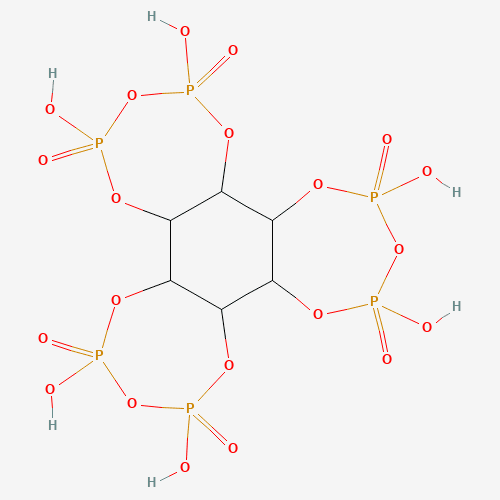
ITPP is a synthetic phosphate derivative of inositol that gets inside red blood cells and makes haemoglobin let go of its oxygen more readily, so more oxygen reaches tissue that is short of it [1]. It was developed as a cancer drug, to relieve tumour hypoxia, and has been through one phase Ib trial in 28 patients that established a maximum tolerated intravenous dose [2]. Its reputation as a performance drug rests on a single 2009 mouse study in which it raised maximal exercise capacity by up to 57% [3]; nothing like that has been tested in people, and anti-doping laboratories screen urine for it [4].
A real drug candidate for tumour and cardiac hypoxia with one small uncontrolled human trial; its endurance reputation comes entirely from mice, at gram-per-kilogram doses, and it is a doping agent.
- meta-analysis
- RCT
- trial
- observational
- preclinical / case
- review / patent / other
- retracted
- + Raises the oxygen tension of hypoxic tissue within hours in rodents
- + Tolerated up to a defined maximum dose in a 28-patient phase Ib trial
- + Improved cardiac function and survival in rodent heart failure and pulmonary hypertension models
- − No human study has measured exercise capacity, or even oxygen affinity, in people
- − The phase Ib trial was single-arm with no efficacy endpoint it could prove
- − Chelates calcium; hypercalcaemia was the dose-limiting toxicity when co-infused with calcium chloride
- − Detectable in urine and treated as a doping agent
Overview
ITPP is myo-inositol with three pyrophosphate bridges, made by Jean-Marie Lehn's group in Strasbourg. Its purpose is narrow: to lower the oxygen affinity of haemoglobin so that red blood cells unload more oxygen where tissue is hypoxic. Inositol hexaphosphate does the same thing but cannot cross the red cell membrane; ITPP can, which is what made it usable as a drug [1].
Most of the work on it is cancer research, on the idea that re-oxygenating a tumour makes it less aggressive and more vulnerable to treatment. In rodents it reversed tumour hypoxia, lowered HIF-1α and VEGF, normalised tumour vessels and roughly doubled survival when it preceded FOLFOX chemotherapy in colorectal liver metastasis [5]. It restricted pancreatic tumour growth and metastasis and improved the response to gemcitabine [6], and raised tumour oxygen tension in six different rodent models [7]. A 2022 review collects this work and argues the same mechanism should apply to ischaemic cardiovascular disease [8]. It also inhibited angiogenesis in chick embryo membranes and slowed implanted glioma [9].
The results are not uniform. In the six-model oxygenation study, ITPP on its own did not slow tumour growth at all, and combining it with radiotherapy helped in only one of the two models tested [7]. In a mouse glioblastoma model, ITPP was ineffective alone and appeared to reduce the benefit of radiotherapy [10]. Other groups found the opposite, with ITPP given before irradiation increasing radiation-induced DNA damage and slowing growth [11].
The reason anyone outside oncology knows about it is a 2009 study in mice. A single injection of 0.5–3 g/kg raised the oxygen tension at which haemoglobin is half saturated by up to 31%, and raised maximal exercise capacity by 57% in normal mice and 63% in mice with severe heart failure. Given in drinking water it still raised exercise capacity by 34% [3]. Later rodent work fits the same picture: eight injections over four weeks after a myocardial infarction halted left ventricular dilation and preserved ejection fraction in rats [12], a single dose restored right ventricular oxygen tension in rats with pulmonary hypertension [13], and five weeks of treatment relieved right ventricular hypoxia and reduced mortality in the same model, though it did nothing to the pulmonary vascular disease itself [14].
Mechanism
Haemoglobin's affinity for oxygen is tuned inside the red blood cell by 2,3-diphosphoglycerate, which binds in a pocket between the two beta chains and stabilises the low-affinity state. ITPP is a synthetic anion that acts at the same site, and it enters the red cell through the band 3 anion transporter: block band 3 with DIDS or NAP-taurine and both the uptake and the shift in the oxygen dissociation curve disappear [1]. Because band 3 is essentially confined to red cells, the compound is delivered where it is needed and largely nowhere else [1]. Phosphorus NMR of 2,3-DPG in intact erythrocytes shows ITPP also lowers intracellular pH, which contributes to oxygen release [15].
The consequence is a right shift of the oxygen–haemoglobin dissociation curve: the same arterial saturation delivers more oxygen to tissue with a low local pO2. In mice the p50 rose by up to 31% [3], and in rodent tumours oxygen tension rose within about two hours of a single injection [7]. How long that lasts depends on the schedule: oxygen-sensing implants in mouse melanoma and mammary tumours showed either a transient or a sustained rise of around 10 mmHg, depending on how many doses were given and how far apart [16].
Over days, a second and slower effect appears. Relieving hypoxia lowers HIF-1α and the VEGF and Lox signalling it drives, which remodels the chaotic tumour vasculature into something closer to normal and improves drug delivery [6]. This vascular normalisation outlasts the treatment by weeks [5], which is the basis for the clinical strategy of giving ITPP first and chemotherapy afterwards [2]. One caution about the simple story: in the six-model oxygenation study, ITPP raised tumour pO2 without changing tumour perfusion, and the authors attribute the early effect to reduced oxygen consumption rather than increased supply [7].
- Haemoglobin (2,3-DPG allosteric site)modulatesstrong
- Band 3 anion transportermodulatesmoderate
Dosing
as studied or commonly reported; not a recommendationDoses below are what studies used or, where marked, what is commonly reported. None is a recommendation.
Intravenous
- 1,866 to 14,500 mg/m² per infusion; the maximum tolerated dose was 12,390 mg/m²28 adults with advanced liver, pancreatic or biliary cancer or colorectal liver metastases; phase Ib dose escalation, then standard chemotherapynine 8-hour infusions over three weeks · 3 weekshuman study[2]
Intraperitoneal (animals)
- 0.5–3 g/kg (human equivalent ≈0.04–0.24 g/kg, or ≈2.4–15 g at 60 kg)
- 1.5 g/kg (human equivalent ≈0.24 g/kg, or ≈15 g at 60 kg)
- 2 g/kg (human equivalent ≈0.32 g/kg, or ≈19 g at 60 kg)
- Form
- The human trial infused it intravenously over eight hours, mixed with calcium chloride at a 1:0.75 molar ratio because ITPP chelates calcium strongly enough to cause hypocalcaemia otherwise [2]. Animal work injects it into the abdomen, or dissolves it in drinking water [3].
- Notes
- No human study has used ITPP for exercise or endurance, and no oral human dose exists. The rodent doses above are grams per kilogram; converted by body-surface-area scaling [17][18] they land near the trial's intravenous doses, which were themselves about 20 g per infusion for an average adult — this is a drug given by the gram, not by the milligram.
Pharmacokinetics
what the body does with it| Half-life | 1.3–3.3 hours in patients across eight dose cohorts, with no dose dependence [2] |
|---|---|
| Time to peak | 6 hours, i.e. during the 8-hour infusion used in the trial [2] |
| Peak level | 47 mg/L at the lowest dose (1,866 mg/m²) rising to 439 mg/L at the highest (14,500 mg/m²) [2] |
| Bioavailability | No human oral data. In mice, ITPP given in drinking water still raised p50 and exercise capacity, so some oral absorption occurs in rodents [3] |
| Steady state | None. Plasma levels were below the detection limit before every infusion, so it does not accumulate between doses [2] |
| Excretion | Excreted in urine, where anti-doping assays detect it down to about 1 ng/mL [4] |
Safety
risks and cautions, not medical adviceThe only human safety data is the phase Ib trial. Twenty-eight patients with advanced abdominal cancers received nine 8-hour infusions over three weeks across eight dose levels. The maximum tolerated dose was 12,390 mg/m² per infusion; dose escalation stopped at 14,500 mg/m² after two patients had significant hypercalcaemia, one of them grade IV. Thirty-two adverse events were judged at least possibly ITPP-related, and they were almost all electrolyte disturbances: hypercalcaemia in 68% of patients, hypomagnesaemia in 18%, hypophosphataemia in 14%. All were asymptomatic and needed little or no treatment. Three older men with existing hypertension had a small rise in blood pressure that resolved after the infusion [2].
The hypercalcaemia is worth understanding, because it is an artefact of how the drug must be given. ITPP is a strong calcium chelator, so calcium chloride was infused with it to prevent hypocalcaemia; the excess calcium is what showed up in the blood [2]. Anyone taking an unregulated product without that adjustment has the opposite problem to worry about.
Nothing is known about repeated or long-term exposure in humans, about what it does in healthy people, or about the consequences of chronically shifting the oxygen dissociation curve. Animal studies report no evident toxicity [5][6], but none of them were designed as toxicology studies.
- Hypercalcaemia, in 68% of patients in the phase Ib trial, and dose-limiting at the top dose; caused by the calcium chloride co-infused to offset ITPP's chelation [2]
- Hypomagnesaemia and hypophosphataemia, mild and asymptomatic [2]
- Small rises in blood pressure in patients with existing hypertension, resolving after the infusion [2]
- Treated as a doping agent; validated urine assays detect it at about 1 ng/mL, and it is compared to the prohibited drug efaproxiral [4]
- Chelates calcium strongly; the clinical protocol co-infuses calcium chloride for that reason [2]
- Not approved anywhere; no oral human data, and product identity and purity are unverified
- The one human trial was single-arm, in 28 patients with advanced cancer, and was designed to find a safe dose rather than to show benefit [2]
- No human study has measured haemoglobin oxygen affinity, p50 or exercise capacity after ITPP; the mechanism is assumed in people, not demonstrated
- The entire endurance claim rests on one mouse study from 2009 [3]
- Tumour results conflict: ITPP alone did not slow growth in several models, and it reduced the benefit of radiotherapy in mouse glioblastoma [7][10]
- Effective doses are grams per kilogram in rodents and roughly 20 g per infusion in the trial; this is not a compound that works at supplement doses [2][3]
Interactions
documented pairs only, not exhaustiveNo human interaction studies exist. Its calcium chelation is the clearest theoretical concern: in the clinical trial it was strong enough that calcium had to be co-infused, and magnesium and phosphate also fell in some patients [2].
In rodents, the point of ITPP is that it changes how other treatments work. It improved the effect of gemcitabine in pancreatic cancer [6] and of FOLFOX in colorectal liver metastasis [5], and enhanced radiotherapy in some models [11] while reducing its benefit in a glioblastoma model [10]. That last result is the reason not to assume the direction of any interaction.
- Anything else that shifts the oxygen dissociation curve adds to the same effect; no combination has been studied
FAQ
- Does ITPP improve endurance in humans?
- Nobody has tested it. The 57% increase people quote is maximal exercise capacity in mice given 0.5–3 g/kg by injection [3]. The only human trial gave it to cancer patients and measured safety, not performance [2].
- Is ITPP safe?
- In 28 cancer patients, intravenous infusions up to 12,390 mg/m² caused mostly asymptomatic electrolyte shifts, chiefly hypercalcaemia from the calcium chloride given alongside it [2]. That is one three-week study; nothing is known about longer use or about healthy people.
- Can ITPP be taken orally?
- There is no human oral data. Mice given it in drinking water did show a raised p50 and better exercise capacity [3], but that says nothing about what an oral dose does in a person.
- Will ITPP show up on a drug test?
- Yes. Anti-doping laboratories have had a validated urine assay since 2014, detecting it down to about 1 ng/mL [4].
References
entry last reviewed 2026-09-20- [1]myo-Inositol trispyrophosphate: a novel allosteric effector of hemoglobin with high permeation selectivity across the red blood cell plasma membrane.Duarte CD, Greferath R, Nicolau C et al.Chembiochem 2010other · cellPMID 21086482◌ unreviewed
- [2]Phase Ib dose-escalation study of the hypoxia-modifier Myo-inositol trispyrophosphate in patients with hepatopancreatobiliary tumors.Schneider MA, Linecker M, Fritsch R et al.Nat Commun 2021clinical trial · humanPMID 34155211◌ unreviewed
- [3]Enhanced exercise capacity in mice with severe heart failure treated with an allosteric effector of hemoglobin, myo-inositol trispyrophosphate.Biolo A, Greferath R, Siwik DA et al.Proc Natl Acad Sci U S A 2009other · animalPMID 19204295◌ unreviewed
- [4]Screening and confirmation of myo-inositol trispyrophosphate (ITPP) in human urine by hydrophilic interaction liquid chromatography high resolution / high accuracy mass spectrometry for doping control purposes.Görgens C, Guddat S, Schänzer W et al.Drug Test Anal 2014other · humanPMID 25070041◌ unreviewed
- [5]Antihypoxic Potentiation of Standard Therapy for Experimental Colorectal Liver Metastasis through Myo-Inositol Trispyrophosphate.Limani P, Linecker M, Kachaylo E et al.Clin Cancer Res 2016other · animalPMID 27489288◌ unreviewed
- [6]Myo-inositol trispyrophosphate-mediated hypoxia reversion controls pancreatic cancer in rodents and enhances gemcitabine efficacy.Raykov Z, Grekova SP, Bour G et al.Int J Cancer 2014other · animalPMID 24214898◌ unreviewed
- [7]Impact of myo-inositol trispyrophosphate (ITPP) on tumour oxygenation and response to irradiation in rodent tumour models.Tran LB, Cao-Pham TT, Jordan BF et al.J Cell Mol Med 2019other · animalPMID 30575283◌ unreviewed
- [8]New potential treatment for cardiovascular disease through modulation of hemoglobin oxygen binding curve: Myo-inositol trispyrophosphate (ITPP), from cancer to cardiovascular disease.Oknińska M, Mackiewicz U, Zajda K et al.Biomed Pharmacother 2022reviewPMID 35988421◌ unreviewed
- [9]Anti-angiogenic properties of myo-inositol trispyrophosphate in ovo and growth reduction of implanted glioma.Sihn G, Walter T, Klein JC et al.FEBS Lett 2007other · animalPMID 17316624◌ unreviewed
- [10]Failure of Inositol Trispyrophosphate to Enhance Highly Effective Radiotherapy of GL261 Glioblastoma in Mice.Iyengar S, Schwartz DAnticancer Res 2017other · animalPMID 28314273◌ unreviewed
- [11]Tumor Oxygenation by Myo-Inositol Trispyrophosphate Enhances Radiation Response.Grgic I, Tschanz F, Borgeaud N et al.Int J Radiat Oncol Biol Phys 2021other · animalPMID 33587991◌ unreviewed
- [12]Treatment of hypoxia-dependent cardiovascular diseases by myo-inositol trispyrophosphate (ITPP)-enhancement of oxygen delivery by red blood cells.Oknińska M, El-Hafny-Rahbi B, Paterek A et al.J Cell Mol Med 2020other · animalPMID 31957267◌ unreviewed
- [13]Right ventricular myocardial oxygen tension is reduced in monocrotaline-induced pulmonary hypertension in the rat and restored by myo-inositol trispyrophosphate.Oknińska M, Zambrowska Z, Zajda K et al.Sci Rep 2021other · animalPMID 34504231◌ unreviewed
- [14]Myo-inositol trispyrophosphate prevents right ventricular failure and improves survival in monocrotaline-induced pulmonary hypertension in the rat.Oknińska M, Paterek A, Grzanka M et al.Br J Pharmacol 2024other · animalPMID 38952183◌ unreviewed
- [15]Modulation of the Oxygenation State and Intracellular pH of Erythrocytes by Inositol-Trispyrophosphate Investigated by 31P NMR Study of 2,3-DPG.Koj S, Niedziela T, Rossowska J et al.J Cell Mol Med 2025other · cellPMID 39828634◌ unreviewed
- [16]Oxygen therapeutic window induced by myo-inositol trispyrophosphate (ITPP)-Local pO2 study in murine tumors.Krzykawska-Serda M, Szczygieł D, Gaweł S et al.PLoS One 2023other · animalPMID 37167239◌ unreviewed
- [17]A simple practice guide for dose conversion between animals and human.Nair AB, Jacob SJ Basic Clin Pharm 2016reviewPMID 27057123◌ unreviewed
- [18]Dose translation from animal to human studies revisited.Reagan-Shaw S, Nihal M, Ahmad NFASEB J 2008reviewPMID 17942826◌ unreviewed