Enclomiphene
also Enclomiphene citrate · trans-Clomiphene · Enclomifene · Androxal · EnCyzix
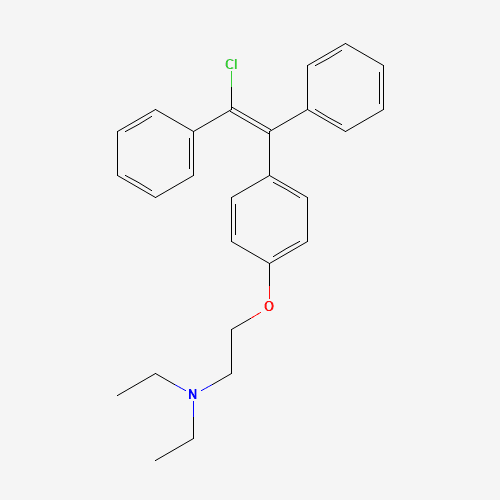
Enclomiphene is the trans isomer of clomiphene, the fertility pill, taken on its own without the longer-lasting cis isomer zuclomiphene [1]. By blocking oestrogen feedback on the brain, it raises LH and FSH and so the body's own testosterone [1]. In phase 2 and 3 trials in men with secondary hypogonadism, 12.5–25 mg a day raised testosterone about as much as testosterone gel while keeping sperm counts normal, which the gel did not [2][3]. Regulators in the US and Europe declined to approve it, and development stopped in 2021 [1][4].
Good randomised evidence that it restores testosterone and preserves sperm in men whose hypogonadism starts in the brain, not the testes. What is missing is evidence that it improves symptoms, and long-term safety data, which is why it was never approved.
- meta-analysis
- RCT
- trial
- observational
- preclinical / case
- review / patent / other
- retracted
- + Raised testosterone about as much as testosterone gel in randomised trials
- + Raises LH and FSH instead of suppressing them
- + Kept sperm counts in the normal range, where testosterone gel lowered them
- + Contains none of the zuclomiphene that builds up with long-term clomiphene
- + Taken by mouth once a day
- − Not approved in the US or Europe; available only through compounding
- − No trial showed better symptoms, which regulators wanted
- − Only works when the testes can still respond (secondary hypogonadism)
- − Raises oestradiol along with testosterone
- − Trials lasted 16 weeks at most
Clomiphene citrate has been approved for women's infertility since 1976 and is widely used off label in men [1]. It is a mix of two mirror-image forms: enclomiphene (trans) and zuclomiphene (cis) [5]. Most of the testosterone-raising effect is attributed to enclomiphene, while zuclomiphene lingers in the body and has different biochemical and toxicological properties [6][7]. Enclomiphene was developed on its own as Androxal to treat men with secondary hypogonadism, low testosterone caused by too little LH from the pituitary [1].
Testosterone. In a 6-week trial in 44 men, 25 mg a day raised morning testosterone to 604 ng/dL against 500 ng/dL on testosterone gel; all three doses tested (6.25, 12.5 and 25 mg) raised average and peak testosterone across the day [8]. Two identical phase 3 trials (ZA-304 and ZA-305) in overweight men aged 18–60 compared 12.5 and 25 mg with testosterone gel and placebo for 16 weeks. Testosterone rose in every active group; LH and FSH rose on enclomiphene and fell on the gel [2]. A 2025 meta-analysis of randomised trials of enclomiphene and clomiphene found testosterone about 274 ng/dL higher than on placebo, and no difference from testosterone gel [3].
Sperm. This is where it differs from testosterone. In the phase 3 trials, sperm concentration stayed in the normal range on enclomiphene but fell markedly on the gel [2]. In a smaller 6-month trial in men coming off testosterone gel, enclomiphene raised sperm counts in all 7 men at 3 months (75–334 million/mL), while the gel failed to do so [5]. The 12-week phase 2 trial found the same pattern [9].
Against clomiphene. In a retrospective study of 66 men switched from clomiphene to enclomiphene, testosterone rose by a median 166 ng/dL on enclomiphene against 98 ng/dL on clomiphene (not significant), oestradiol rose less, and side effects such as lower libido, low energy and mood changes were less common [10]. In another clinic series, both drugs raised testosterone, but only enclomiphene raised LH, FSH and total motile sperm count [11].
Regulatory history. The US FDA declined to approve enclomiphene in 2007 because it did not accept a rise in testosterone, normalised LH or quality-of-life gains as enough for a non-testosterone treatment of hypogonadism; it was willing to reconsider on fertility grounds [1]. The European Medicines Agency assessed it as EnCyzix and did not approve it, the manufacturer stopped development in 2021, and it is now available only through compounding pharmacies. The British Society for Sexual Medicine does not recommend routine use outside specialist settings [4].
Oestradiol made from testosterone tells the hypothalamus and pituitary to cut back LH and FSH. Enclomiphene is a non-steroidal oestrogen receptor antagonist that blocks this feedback, so the pituitary releases more LH, which drives the testes to make testosterone, and more FSH, which supports sperm production [1]. This is the opposite of testosterone therapy, which suppresses LH and FSH and with them sperm production [2]. Because it works through the testes, it only helps men whose testes can still respond [1].
The effect on the hormonal axis persists after the drug has left the blood: testosterone and LH stayed raised over 24 hours despite a half-life of about 7 hours [8]. Oestradiol rises along with testosterone [9], although less than with clomiphene in a retrospective comparison [10].
- Oestrogen receptor (hypothalamus and pituitary)blocksa non-steroidal oestrogen receptor antagonist; removing oestrogen feedback raises LH and FSH [1]strong
- LH and FSHactivatesstrong
- Testosteroneactivatesrose by about 274 ng/dL over placebo in a meta-analysis of enclomiphene and clomiphene trials, similar to testosterone gel [3]strong
- Spermatogenesisactivatesmoderate
Formulation
how the form changes blood levelsEnclomiphene is the (E)- or trans-isomer of clomiphene [1]. The distinction matters for long-term use: after a single dose of clomiphene, zuclomiphene was still measurable three weeks later and its exposure far exceeded enclomiphene's [12], and in men taking 25 mg of clomiphene daily for a median of 26 months, zuclomiphene levels were twenty times higher than enclomiphene [7]. Pure enclomiphene avoids that build-up.
Dosing
as studied or commonly reported; not a recommendationDoses below are what studies used or, where marked, what is commonly reported. None is a recommendation.
Oral
- 12.5 or 25 mg
- 12.5 or 25 mg
- 6.25, 12.5 or 25 mgmen with secondary hypogonadism; 24-hour hormone profiles and pharmacokineticsonce daily · 6 weekshuman study[8]
- 25 mg
- 12.5 or 25 mgmen with infertility or hypogonadism (retrospective, compared with clomiphene 50 mg every other day)once daily · at least 3 monthshuman study[11]
- Form
- Studied as enclomiphene citrate. Clomiphene citrate, the approved fertility drug, is a mixture of enclomiphene and zuclomiphene; enclomiphene is the trans isomer [1][5].
- Timing and food
- Taken once a day; a single morning testosterone level predicted the 24-hour average well enough to guide dose changes [8].
Pharmacokinetics
what the body does with it| Half-life | Serum half-life about 7 hours [8]. |
|---|---|
| Time to peak | Peak serum levels 2–3 hours after an oral dose in men [8]; about 3 hours after 50 mg of clomiphene in women [12]. |
| Peak level | After a single 50 mg dose of clomiphene, enclomiphene peaked at about 15 ng/mL [12]. |
| Steady state | The effect outlasts the drug: testosterone and LH stayed raised across the 24 hours after a dose even though serum enclomiphene fell away within hours, which the authors put down to effects on the hormonal axis rather than accumulation [8]. Testosterone returned to pretreatment levels a month after stopping [5]. |
| Metabolism | Unlike zuclomiphene, enclomiphene does not build up: in women taking clomiphene, zuclomiphene accumulated over successive cycles while enclomiphene was undetectable before each cycle [13]. In men on long-term clomiphene, zuclomiphene outnumbered enclomiphene 20 to 1 in the blood [7]. |
Safety
risks and cautions, not medical adviceIn the phase 3 trials, 21% of men had adverse events possibly related to a study drug, none severe or serious, and enclomiphene did not cause more adverse events than placebo [3]. In a phase 2 dose-finding trial, adverse events occurred in 9–20% of each group; on enclomiphene they included one mild rise in oestradiol and two headaches, and nobody stopped because of side effects [3]. Six weeks of enclomiphene did not change lipids, thyroid hormone, cortisol or bone markers [8].
Long-term safety data exist only for clomiphene, the parent mixture. Among 400 men on clomiphene for up to 7 years, 8% of those treated for more than 3 years reported side effects, most often mood changes, blurred vision and breast tenderness, with no serious adverse events [14]. Another series of 46 men reported none over 3 years, and bone density improved [15]. Whether enclomiphene behaves the same over years is untested.
Interactions
documented pairs only, not exhaustiveEnclomiphene is taken instead of testosterone, not with it, since testosterone suppresses the LH and FSH that enclomiphene raises [2]. No drug interaction studies were found. Clomiphene has been combined with Human chorionic gonadotropin (hCG) in a randomised trial without new safety problems [16].
- Is enclomiphene better than clomiphene?
- It avoids the zuclomiphene that builds up with clomiphene [7], and retrospective comparisons found fewer side effects and a smaller rise in oestradiol [10]. No randomised head-to-head trial was found.
- Does it keep sperm counts up?
- In the randomised trials, sperm concentration stayed in the normal range on enclomiphene and fell on testosterone gel [2].
References
entry last reviewed 2026-09-25- [1]Enclomiphene citrate for the treatment of secondary male hypogonadism.Rodriguez KM, Pastuszak AW, Lipshultz LIExpert Opin Pharmacother 2016reviewPMID 27337642◌ unreviewed
- [2]Oral enclomiphene citrate raises testosterone and preserves sperm counts in obese hypogonadal men, unlike topical testosterone: restoration instead of replacement.Kim ED, McCullough A, Kaminetsky JBJU Int 2016RCT · humanPMID 26496621◌ unreviewed
- [3]Clomiphene or enclomiphene citrate for the treatment of male hypogonadism: a systematic review and meta-analysis of randomized controlled trials.Hohl A, Chavez MP, Pasqualotto E et al.Arch Endocrinol Metab 2025meta-analysis · humanPMID 41066380◌ unreviewed
- [4]British Society of Sexual Medicine: Position Statement for the Potential Use of Enclomiphene in the Treatment of Male Hypogonadism.Foster J, Choo L, Patel A et al.World J Mens Health 2026reviewPMID 41714894◌ unreviewed
- [5]Oral enclomiphene citrate stimulates the endogenous production of testosterone and sperm counts in men with low testosterone: comparison with testosterone gel.Kaminetsky J, Werner M, Fontenot G et al.J Sex Med 2013RCT · humanPMID 23530575◌ unreviewed
- [6]Enclomiphene citrate: A treatment that maintains fertility in men with secondary hypogonadism.Earl JA, Kim EDExpert Rev Endocrinol Metab 2019reviewPMID 31063005◌ unreviewed
- [7]Serum levels of enclomiphene and zuclomiphene in men with hypogonadism on long-term clomiphene citrate treatment.Helo S, Mahon J, Ellen J et al.BJU Int 2017observational · humanPMID 27511863◌ unreviewed
- [8]Testosterone Restoration by Enclomiphene Citrate in Men with Secondary Hypogonadism: Pharmacodynamics and Pharmacokinetics.Wiehle R, Cunningham GR, Pitteloud N et al.BJU Int 2013RCT · humanPMID 23875626◌ unreviewed
- [9]Enclomiphene citrate stimulates testosterone production while preventing oligospermia: a randomized phase II clinical trial comparing topical testosterone.Wiehle RD, Fontenot GK, Wike J et al.Fertil Steril 2014RCT · humanPMID 25044085◌ unreviewed
- [10]Safety and efficacy of enclomiphene and clomiphene for hypogonadal men.Saffati G, Kassab J, Orozco Rendon D et al.Transl Androl Urol 2024observational · humanPMID 39434750◌ unreviewed
- [11]Efficacy of Clomiphene Citrate Versus Enclomiphene Citrate for Male Infertility Treatment: A Retrospective Study.Thomas J, Suarez Arbelaez MC, Narasimman M et al.Cureus 2023observational · humanPMID 37546076◌ unreviewed
- [12]Single-dose pharmacokinetic study of clomiphene citrate isomers in anovular patients with polycystic ovary disease.Ghobadi C, Mirhosseini N, Shiran MR et al.J Clin Pharmacol 2009clinical trial · humanPMID 19033451◌ unreviewed
- [13]Serum concentrations of enclomiphene and zuclomiphene across consecutive cycles of clomiphene citrate therapy in anovulatory infertile women.Young SL, Opsahl MS, Fritz MAFertil Steril 1999observational · humanPMID 10202872◌ unreviewed
- [14]Long-Term Safety and Efficacy of Clomiphene Citrate for the Treatment of Hypogonadism.Krzastek SC, Sharma D, Abdullah N et al.J Urol 2019observational · humanPMID 31216250◌ unreviewed
- [15]Clomiphene citrate is safe and effective for long-term management of hypogonadism.Moskovic DJ, Katz DJ, Akhavan A et al.BJU Int 2012observational · humanPMID 22458540◌ unreviewed
- [16]Clomiphene citrate and human chorionic gonadotropin are both effective in restoring testosterone in hypogonadism: a short-course randomized study.Habous M, Giona S, Tealab A et al.BJU Int 2018RCT · humanPMID 29772111◌ unreviewed