Finasteride
also Propecia · Proscar · MK-906
Finasteride blocks type 2 5α-reductase, the enzyme that turns testosterone into the more potent androgen dihydrotestosterone (DHT) [1]. At 1 mg a day it slows male pattern hair loss and regrows some hair, with benefits that held over 5 years of placebo-controlled trials [1][2]. At 5 mg a day it shrinks an enlarged prostate and halves the risk of urinary retention and surgery [3], and in a trial of 18,882 men it cut prostate cancer diagnoses by about a quarter, while slightly raising the rate of high-grade tumours found [4]. Sexual side effects are more common than on placebo [5], and reports of depression and persistent symptoms after stopping remain contested [6][7].
One of the best-evidenced drugs for male pattern hair loss and for an enlarged prostate. It works for as long as it is taken, carries a small but real increase in sexual side effects, and does not help postmenopausal women with hair loss.
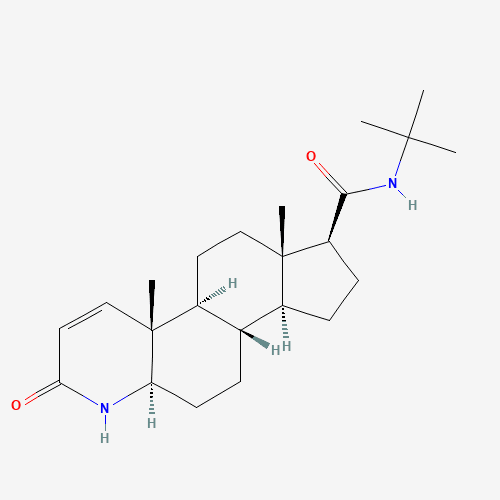
- meta-analysis
- RCT
- trial
- observational
- preclinical / case
- review / patent / other
- retracted
- + Slowed hair loss and increased hair counts over 2 years, with benefit maintained to 5 years
- + Cut the 5-year likelihood of further visible hair loss by 93% relative to placebo
- + Halved the risk of acute urinary retention and prostate surgery in men with an enlarged prostate
- + Lowered prostate cancer diagnoses by about a quarter to a third over 7 years
- + A topical spray regrew hair with a fraction of the blood levels
- − More erectile, libido and ejaculation problems than placebo
- − Depression signals in some large studies
- − Halves PSA, which changes how prostate screening is read
- − Can cause breast enlargement
- − Disrupted genital development in male rat fetuses exposed in pregnancy
- − Benefit stops when treatment stops
Finasteride is used at 5 mg a day for an enlarged prostate and at 1 mg a day for male pattern hair loss [2][3]. Both conditions depend on DHT, the androgen that 5α-reductase makes from testosterone.
Hair loss. In two 1-year trials of 1,553 men aged 18–41, with a year of blinded extension, 1 mg a day increased hair counts in a 5 cm² area of the crown by 107 hairs over placebo at 1 year and 138 at 2 years, from a baseline of 876; men on placebo kept losing hair [1]. Over 5 years the improvement held, while placebo-treated men lost 239 hairs (26% of density) and 75% were rated as worse on photographs [2][8]. Finasteride cut the 5-year likelihood of further visible hair loss by 93% [9]. In a network meta-analysis of 23 studies, 0.5 mg dutasteride grew more hair than 1 mg finasteride at 24 weeks (7 more hairs/cm²), and 5 mg oral minoxidil gave more thick hairs than 1 mg finasteride [10]. A 2017 meta-analysis confirmed 1 mg finasteride beats placebo [11].
Topical finasteride. In a 24-week phase 3 trial of 458 men, a daily 0.25% spray increased hair count by 20.2 hairs against 6.7 on placebo, similar to oral finasteride. Peak blood levels were more than 100 times lower, and serum DHT fell 34.5% rather than 55.6% [12].
Women. In 137 postmenopausal women, 1 mg a day for a year did not increase hair growth or slow thinning [13].
Enlarged prostate. In the PLESS trial of 3,040 men with urinary symptoms, 5 mg a day for 4 years reduced the need for surgery from 10% to 5% and acute urinary retention from 7% to 3%, and shrank the prostate [3]. In the MTOPS trial of 3,047 men, it cut the risk of overall clinical progression by 34%, and by 66% combined with doxazosin [14]. A Cochrane review found it improves symptoms over more than a year, but less than the alpha-blockers doxazosin or terazosin [15].
Prostate cancer. In the Prostate Cancer Prevention Trial, 18,882 men aged 55 or over took 5 mg or placebo for 7 years. Prostate cancer was found in 18.4% vs 24.4% (a 24.8% reduction), but Gleason 7–10 tumours were found in 6.4% vs 5.1% [4]. Later analyses found finasteride shrinks the prostate and makes PSA and biopsy better at finding high-grade cancer, which accounts for at least part of that excess [16][17]. With up to 18 years of follow-up, overall survival was the same (78.0% vs 78.2% at 15 years) [18], and deaths from prostate cancer were 42 vs 56, a 25% reduction that was not statistically significant [19].
5α-reductase converts testosterone into DHT, which binds the androgen receptor more strongly. Finasteride inhibits the type 2 enzyme, lowering DHT in the scalp and in the blood [1]. In a 6-week dose-ranging study, scalp DHT fell by 57–69% on doses of 0.05–5 mg (13% on placebo) and serum DHT by 50–72%; doses as low as 0.2 mg a day gave near-maximal suppression [20]. Pattern hair loss is caused by androgen-dependent shrinking of scalp hair follicles, with scalp DHT implicated as a cause, so lowering it slows the process [1].
The prostate depends on DHT for growth, so 5 mg a day shrinks it and roughly halves PSA [3][21]. The effect on DHT outlasts the drug: a single dose suppresses serum DHT for up to 4 days [22].
- Type 2 5α-reductaseblocksdecreases serum and scalp DHT by blocking the conversion of testosterone to DHT [1]strong
- DHT in scalp and serumblocks1 mg a day lowered scalp DHT by 64% and serum DHT by 71%; doses from 0.2 mg gave near-maximal suppression [20]strong
- Prostate volume and PSAblocksstrong
Formulation
how the form changes blood levelsThe topical spray was developed to act on the scalp with less systemic exposure. In its phase 3 trial, plasma finasteride peaked at over 100 times lower concentrations than with the 1 mg tablet, and serum DHT fell by about a third rather than by half, with a similar hair response [12]. Different 5 mg tablet formulations were bioequivalent in healthy volunteers [23].
Dosing
as studied or commonly reported; not a recommendationDoses below are what studies used or, where marked, what is commonly reported. None is a recommendation.
Oral
- 1 mg
- 0.01–5 mgmen with male pattern hair loss; dose-ranging study of scalp and serum DHTonce daily · 42 dayshuman study[20]
- 5 mgmen with an enlarged prostate and moderate to severe urinary symptoms (3,040 men)once daily · 4 yearshuman study[3]
- 5 mgmen aged 55 and over with normal PSA; prostate cancer prevention (18,882 men)once daily · 7 yearshuman study[4]
- 1 mgpostmenopausal women with pattern hair loss; no benefit over placeboonce daily · 1 yearhuman study[13]
Topical
- 0.25% solution, 50–200 µL (1–4 sprays)men with male pattern hair loss (phase 3, against placebo and oral 1 mg)once daily · 24 weekshuman study[12]
- Form
- Tablets of 1 mg for hair loss and 5 mg for the prostate [1][3]. A topical spray of 0.25% finasteride produced peak blood levels more than 100 times lower than the oral tablet [12].
- Timing and food
- Food slows absorption without changing the total absorbed, so it can be taken with or without meals [22].
Pharmacokinetics
what the body does with it| Half-life | Terminal half-life 4.7–7.1 hours, longer in older men; no dose change is needed for age or kidney disease [22]. |
|---|---|
| Onset | A single dose suppresses serum DHT for up to 4 days, much longer than the half-life would suggest [22]. |
| Bioavailability | Well absorbed by mouth; food slows absorption but does not reduce the total amount absorbed [22]. |
| Steady state | Slow accumulation occurs with repeated daily doses despite the short half-life [22]. |
| Metabolism | Extensively metabolised in the liver to essentially inactive metabolites [22]. |
| Excretion | Metabolites are eliminated in bile and urine; with kidney disease more leaves in the faeces [22]. |
Safety
risks and cautions, not medical adviceSexual effects. In a meta-analysis of 15 placebo-controlled hair-loss trials, finasteride 1 mg raised the risk of sexual dysfunction by about two-thirds (relative risk 1.66) [5]. The Cochrane BPH review found more ejaculation disorders, erectile dysfunction and low libido at 5 mg [15]. In the Prostate Cancer Prevention Trial, the extra sexual dysfunction was small and shrank over time [24]. At 1 mg a day for 48 weeks, young men's sperm counts, motility and morphology did not change [21].
Mood. A WHO pharmacovigilance study found a signal for suicidality and psychological adverse events, mainly in men under 45 taking it for hair loss, and noted that reports rose after 2012, which may reflect stimulated reporting [6]. In a cohort of 93,197 older men, 5α-reductase inhibitors did not raise suicide risk, but self-harm was higher in the first 18 months and depression was higher throughout [25]. A Swedish cohort of 2.2 million men found higher depression (HR 1.61) but not suicide [26], and long-term follow-up of the prevention trial found a 10% higher rate of depression claims [27]. Some men report sexual, mental and physical symptoms that persist after stopping ("post-finasteride syndrome"); its existence and cause are debated [7].
Other. 5α-reductase inhibitors more than tripled the risk of breast enlargement in men treated for BPH, with no increase in male breast cancer; the risk was higher with dutasteride [28]. Because finasteride lowers PSA, results need adjusting when screening for prostate cancer [4][17]. In pregnant rats, finasteride caused hypospadias and other genital malformations in male offspring when given in late gestation [29].
Interactions
documented pairs only, not exhaustiveFinasteride has been combined with doxazosin for an enlarged prostate, with a larger effect than either alone [14]. No interaction studies with compounds on this site were found.
- How much hair does finasteride regrow?
- In the pivotal trials, about 107 more hairs than placebo in a 5 cm² area of the crown after 1 year and 138 after 2 years, from a baseline of 876 [1].
- Does topical finasteride avoid the side effects?
- It gives much lower blood levels and a smaller drop in serum DHT, and adverse events were similar to placebo over 24 weeks [12]. Longer trials were not found.
- Does finasteride cause prostate cancer?
- The evidence says no. It lowered prostate cancer diagnoses and did not change survival over 18 years, and the small excess of high-grade tumours is at least partly explained by better detection in smaller prostates, though the trial pathologists could not rule out a true effect [16][18].
- Does it affect fertility?
- At 1 mg a day for 48 weeks, sperm counts and quality did not change in young men [21].
References
entry last reviewed 2026-09-25- [1]Finasteride in the treatment of men with androgenetic alopecia. Finasteride Male Pattern Hair Loss Study Group.Kaufman KD, Olsen EA, Whiting D et al.J Am Acad Dermatol 1998RCT · humanPMID 9777765◌ unreviewed
- [2]Long-term (5-year) multinational experience with finasteride 1 mg in the treatment of men with androgenetic alopecia.Finasteride Male Pattern Hair Loss Study GroupEur J Dermatol 2002RCT · humanPMID 11809594◌ unreviewed
- [3]The effect of finasteride on the risk of acute urinary retention and the need for surgical treatment among men with benign prostatic hyperplasia. Finasteride Long-Term Efficacy and Safety Study Group.McConnell JD, Bruskewitz R, Walsh P et al.N Engl J Med 1998RCT · humanPMID 9475762◌ unreviewed
- [4]The influence of finasteride on the development of prostate cancer.Thompson IM, Goodman PJ, Tangen CM et al.N Engl J Med 2003RCT · humanPMID 12824459◌ unreviewed
- [5]Adverse Sexual Effects of Treatment with Finasteride or Dutasteride for Male Androgenetic Alopecia: A Systematic Review and Meta-analysis.Lee S, Lee YB, Choe SJ et al.Acta Derm Venereol 2019meta-analysis · humanPMID 30206635◌ unreviewed
- [6]Investigation of Suicidality and Psychological Adverse Events in Patients Treated With Finasteride.Nguyen DD, Marchese M, Cone EB et al.JAMA Dermatol 2021observational · humanPMID 33175100◌ unreviewed
- [7]Post-finasteride syndrome: a surmountable challenge for clinicians.Traish AMFertil Steril 2020reviewPMID 32033719◌ unreviewed
- [8]Progression of hair loss in men with androgenetic alopecia (male pattern hair loss): long-term (5-year) controlled observational data in placebo-treated patients.Kaufman KD, Girman CJ, Round EM et al.Eur J Dermatol 2008RCT · humanPMID 18573713◌ unreviewed
- [9]Long-term treatment with finasteride 1 mg decreases the likelihood of developing further visible hair loss in men with androgenetic alopecia (male pattern hair loss).Kaufman KD, Rotonda J, Shah AK et al.Eur J Dermatol 2008RCT · humanPMID 18573712◌ unreviewed
- [10]Relative Efficacy of Minoxidil and the 5-α Reductase Inhibitors in Androgenetic Alopecia Treatment of Male Patients: A Network Meta-analysis.Gupta AK, Venkataraman M, Talukder M et al.JAMA Dermatol 2022meta-analysis · humanPMID 35107565◌ unreviewed
- [11]The effectiveness of treatments for androgenetic alopecia: A systematic review and meta-analysis.Adil A, Godwin MJ Am Acad Dermatol 2017meta-analysis · humanPMID 28396101◌ unreviewed
- [12]Efficacy and safety of topical finasteride spray solution for male androgenetic alopecia: a phase III, randomized, controlled clinical trial.Piraccini BM, Blume-Peytavi U, Scarci F et al.J Eur Acad Dermatol Venereol 2022RCT · humanPMID 34634163◌ unreviewed
- [13]Lack of efficacy of finasteride in postmenopausal women with androgenetic alopecia.Price VH, Roberts JL, Hordinsky M et al.J Am Acad Dermatol 2000RCT · humanPMID 11050579◌ unreviewed
- [14]The long-term effect of doxazosin, finasteride, and combination therapy on the clinical progression of benign prostatic hyperplasia.McConnell JD, Roehrborn CG, Bautista OM et al.N Engl J Med 2003RCT · humanPMID 14681504◌ unreviewed
- [15]Finasteride for benign prostatic hyperplasia.Tacklind J, Fink HA, Macdonald R et al.Cochrane Database Syst Rev 2010meta-analysis · humanPMID 20927745◌ unreviewed
- [16]Finasteride and high-grade prostate cancer in the Prostate Cancer Prevention Trial.Lucia MS, Epstein JI, Goodman PJ et al.J Natl Cancer Inst 2007RCT · humanPMID 17848673◌ unreviewed
- [17]Effect of finasteride on the sensitivity of PSA for detecting prostate cancer.Thompson IM, Chi C, Ankerst DP et al.J Natl Cancer Inst 2006RCT · humanPMID 16912265◌ unreviewed
- [18]Long-term survival of participants in the prostate cancer prevention trial.Thompson IM, Goodman PJ, Tangen CM et al.N Engl J Med 2013RCT · humanPMID 23944298◌ unreviewed
- [19]Long-Term Effects of Finasteride on Prostate Cancer Mortality.Goodman PJ, Tangen CM, Darke AK et al.N Engl J Med 2019RCT · humanPMID 30673548◌ unreviewed
- [20]The effects of finasteride on scalp skin and serum androgen levels in men with androgenetic alopecia.Drake L, Hordinsky M, Fiedler V et al.J Am Acad Dermatol 1999RCT · humanPMID 10495374◌ unreviewed
- [21]Chronic treatment with finasteride daily does not affect spermatogenesis or semen production in young men.Overstreet JW, Fuh VL, Gould J et al.J Urol 1999RCT · humanPMID 10492183◌ unreviewed
- [22]Clinical pharmacokinetics and pharmacodynamics of finasteride.Steiner JFClin Pharmacokinet 1996reviewPMID 8846625◌ unreviewed
- [23]Bioequivalence study of two different coated tablet formulations of finasteride in healthy volunteers.Almeida A, Almeida S, Filipe A et al.Arzneimittelforschung 2005RCT · humanPMID 15901045◌ unreviewed
- [24]Longitudinal analysis of sexual function reported by men in the Prostate Cancer Prevention Trial.Moinpour CM, Darke AK, Donaldson GW et al.J Natl Cancer Inst 2007RCT · humanPMID 17596576◌ unreviewed
- [25]Association of Suicidality and Depression With 5α-Reductase Inhibitors.Welk B, McArthur E, Ordon M et al.JAMA Intern Med 2017observational · humanPMID 28319231◌ unreviewed
- [26]Association of 5α-Reductase Inhibitors With Dementia, Depression, and Suicide.Garcia-Argibay M, Hiyoshi A, Fall K et al.JAMA Netw Open 2022observational · humanPMID 36547981◌ unreviewed
- [27]Long-term Consequences of Finasteride vs Placebo in the Prostate Cancer Prevention Trial.Unger JM, Till C, Thompson IM et al.J Natl Cancer Inst 2016RCT · humanPMID 27565902◌ unreviewed
- [28]Risk of gynecomastia and breast cancer associated with the use of 5-alpha reductase inhibitors for benign prostatic hyperplasia.Hagberg KW, Divan HA, Fang SC et al.Clin Epidemiol 2017observational · humanPMID 28228662◌ unreviewed
- [29]Critical developmental periods for effects on male rat genitalia induced by finasteride, a 5 alpha-reductase inhibitor.Clark RL, Anderson CA, Prahalada S et al.Toxicol Appl Pharmacol 1993preclinical · animalPMID 8385814◌ unreviewed