N-Acetyl-L-Tyrosine
also NALT · N-Acetyltyrosine · Acetyl tyrosine · Acetyl-L-tyrosine
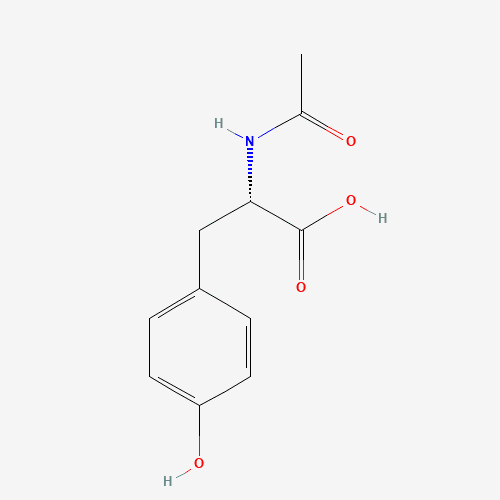
N-acetyl-L-tyrosine (NALT) is a water-soluble acetylated derivative of L-tyrosine. Human evidence is almost entirely intravenous nutrition research, where 35–60% was recovered unchanged in urine and plasma tyrosine often did not rise [1][2][3][4]. There are no cited human oral trials showing that NALT improves cognition, stress performance or energy.
Easier to formulate, but not demonstrated to be a better tyrosine source—and unsupported as an oral cognitive supplement.
- meta-analysis
- RCT
- trial
- observational
- preclinical / case
- review / patent / other
- retracted
- + More soluble than free L-tyrosine, which is useful in liquid and parenteral formulations
- + Some of an intravenous dose is retained in adults receiving parenteral nutrition
- − Large fractions of intravenous doses are excreted unchanged
- − Failed to raise plasma tyrosine in several human infusion studies
- − No direct human oral cognitive-efficacy evidence in the cited literature
Overview
NALT is L-tyrosine with an acetyl group attached to its amino group. That modification improves solubility and makes the compound convenient for liquid products and parenteral nutrition, where free tyrosine is difficult to formulate. The practical formulation advantage is real; the claim that NALT efficiently turns back into tyrosine in people is much shakier.
In 11 healthy volunteers given 5 g intravenously over four hours, plasma tyrosine rose only 25%, 56% of the NALT appeared unchanged in urine within four hours, and the authors found no clear usefulness as a tyrosine precursor [1]. Another experiment found that plasma tyrosine did not rise in either healthy people or dialysis patients and that healthy controls excreted about 60% unchanged [2]. The same failure to raise tyrosine occurred in people with hepatic failure [4].
A routine parenteral-nutrition study was less negative: 13 adults excreted about 35% unchanged, leaving enough aromatic amino acid from NALT plus phenylalanine to meet estimated needs [3]. That does not show superiority to free tyrosine or efficacy for cognition. No human oral efficacy study was found for this entry.
Mechanism
NALT must be deacetylated to release free L-tyrosine before it can contribute to catecholamine synthesis. Human balance studies suggest that this step is inefficient: clearance is low, urinary loss is high, and plasma tyrosine often does not increase [1][2][4].
The oral evidence is even thinner. In a mouse comparison of several tyrosine prodrugs, NALT was the least effective at raising brain tyrosine [5]. That animal result cannot quantify oral availability in humans, but it gives no support to claims of enhanced brain delivery.
Formulation
how the form changes blood levelsNALT contains 181.19 g of tyrosine moiety per 223.22 g of compound, so an equal milligram dose contains about 19% less tyrosine even before metabolic losses. Its value is solubility, not demonstrated potency. Intravenous human studies show that a substantial fraction remains acetylated and is excreted [1][3].
Dosing
as studied or commonly reported; not a recommendationDoses below are what studies used or, where marked, what is commonly reported. None is a recommendation.
Intravenous
- 5 g11 healthy volunteers; plasma tyrosine rose only 25% and 56% of NALT was excreted unchanged within 4 hoursinfused over 4 hourshuman study[1]
- dose not reported in the abstract13 adults receiving Aminosyn II; approximately 35% of administered NALT was excreted unchangedcontinuous parenteral nutritionhuman study[3]
Oral
- 300–700 mggeneral supplement use; no human oral efficacy trial supports this rangeonce dailycommonly reported, not from trials
- Form
- The acetyl group raises water solubility, which is why NALT has been used in parenteral amino-acid solutions. By molecular weight, NALT is about 81% tyrosine before allowing for incomplete deacetylation.
- Notes
- No human oral dose has been shown to improve cognition or stress performance. The human study rows are intravenous nutrition studies, not supplement trials.
Pharmacokinetics
what the body does with it| Bioavailability | Oral human bioavailability has not been established. In mice, oral NALT was the least effective of the tyrosine prodrugs tested [5]. |
|---|---|
| Metabolism | Conversion to free tyrosine appears limited in humans: plasma tyrosine did not rise in normal, dialysis or hepatic-failure participants in several intravenous studies [2][4]. |
| Excretion | About 56% of a 5 g intravenous infusion was recovered unchanged within 4 hours in healthy volunteers [1]; roughly 60% was excreted in another healthy control group [2], and about 35% during routine adult parenteral nutrition [3]. |
Safety
risks and cautions, not medical adviceThe small infusion studies were designed around metabolism and nutrient retention, not long-term safety or oral supplement use. They document exposure in healthy volunteers, dialysis patients, people with hepatic failure and adults receiving parenteral nutrition [1][2][3][4], but they do not establish chronic oral safety.
Renal handling matters because unchanged NALT is a major urinary product. Clearance was lower in dialysis patients [2] and in people with hepatic failure [4], even though neither group showed a useful rise in plasma tyrosine.
- Clearance was reduced in dialysis patients, while conversion to tyrosine remained poor [2].
- Do not convert a study dose of L-tyrosine into an equal milligram dose of NALT; the molecules differ in mass and NALT is incompletely deacetylated.
Interactions
documented pairs only, not exhaustiveNo direct interaction studies were found. NALT should not be assumed to escape the cautions relevant to tyrosine merely because its conversion is incomplete, and its high renal loss makes advanced kidney disease a distinct uncertainty [2].
FAQ
- Is NALT more bioavailable than L-tyrosine?
- That has not been shown in humans. Intravenous studies found substantial unchanged urinary loss, and a mouse comparison ranked NALT as the least effective tyrosine prodrug tested [1][5].
- Does NALT improve focus or energy?
- There is no direct human oral efficacy trial in the cited evidence set. Evidence from L-tyrosine should not be transferred automatically to NALT.
- Why is NALT used in products?
- Its main practical advantage is solubility. That helps formulation, particularly in amino-acid solutions, but does not prove better delivery of tyrosine to the blood or brain [3].
References
entry last reviewed 2026-09-21- [1]N-acetyl-L-tyrosine and N-acetyl-L-cysteine as tyrosine and cysteine precursors during intravenous infusion in humans.Magnusson I, Ekman L, Wångdahl M et al.Metabolism 1989clinical trial · humanPMID 2507878◌ unreviewed
- [2]Utilization of tyrosine dipeptides and acetyltyrosine in normal and uremic humans.Druml W, Lochs H, Roth E et al.Am J Physiol 1991clinical trial · humanPMID 1996632◌ unreviewed
- [3]N-acetyl-L-tyrosine as a tyrosine source in adult parenteral nutrition.Hoffer LJ, Sher K, Saboohi F et al.JPEN J Parenter Enteral Nutr 2003observational · humanPMID 14621123◌ unreviewed
- [4]Utilization of tyrosine-containing dipeptides and N-acetyl-tyrosine in hepatic failure.Druml W, Hübl W, Roth E et al.Hepatology 1995RCT · humanPMID 7705801◌ unreviewed
- [5]Brain tyrosine increases after treating with prodrugs: comparison with tyrosine.Topall G, Laborit HJ Pharm Pharmacol 1989preclinical · animalPMID 2576051◌ unreviewed