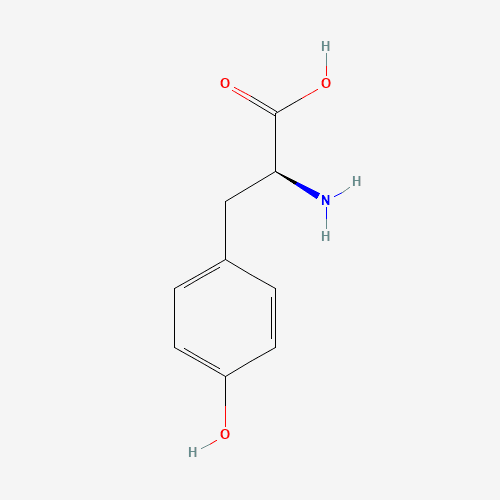
L-Tyrosine
also Tyrosine · (S)-Tyrosine · p-Tyrosine · L-p-Tyrosine · 4-Hydroxy-L-phenylalanine
L-tyrosine is a dietary amino acid and catecholamine precursor, not a reliably demonstrated everyday nootropic. Small crossover trials suggest that large acute doses can preserve selected attention, working-memory or psychomotor outcomes during sleep loss, cold, noise or demanding multitasking [1][2][3][4], but reviews judge the evidence heterogeneous and too weak for a firm recommendation [5][6]. Results in unstressed adults are mixed and baseline-dependent [7][8][9]. A meta-analysis found no endurance benefit [10], although one later 12-person cycling experiment was positive [11]. Four weeks at up to 4 g/day produced no dose-related safety signal in 30 healthy men, but that does not establish long-term or clinical-population safety [12].
A plausible, context-specific buffer against acute stress-related cognitive decline—not a general enhancer. Effects vary by task, baseline performance and dose, while the strongest-looking studies remain small.
- meta-analysis
- RCT
- trial
- observational
- preclinical / case
- review / patent / other
- retracted
- + Preserved selected working-memory, vigilance or psychomotor outcomes in small trials of sleep loss, cold, noise and multitasking
- + Improved demanding 2-back performance in one 22-woman crossover trial, but not the easier 1-back condition
- + Up to 4 g/day for four weeks produced no dose-related safety signal in one 30-man crossover study
- − No overall endurance benefit in a meta-analysis of eight studies
- − No antidepressant effect in a four-week trial
- − Some studies found no average benefit or worse performance at higher doses, higher baseline ability or high cognitive load
Overview
Tyrosine is a protein-building amino acid found in ordinary food and made in the body from phenylalanine. It is also the starting material for dopamine and noradrenaline, which led researchers to test whether an extra supply could preserve performance when stress increases catecholamine turnover [13].
The most consistent rationale is prevention of a stress-induced decrement, not enhancement above a normal baseline. Small studies reported benefits during loud noise, one night awake, cold exposure, demanding multitasking and combat training [1][2][3][14][15]. Even within those experiments the benefit was selective: some tasks improved and others did not. A preregistered 2024 active-shooter simulation likewise found fewer missed Stroop responses after 2 g, but no reduction in subjective stress, cortisol or alpha-amylase responses [16].
Evidence synthesis remains cautious. A 2015 rapid assessment found ten randomized and four controlled trials and issued only a weak recommendation for cognitive performance under stress [5]. A 2020 systematic review found eight newer studies involving 160 participants; varied doses, tasks and stressors plus unclear allocation and blinding in parts of the literature prevented a firm recommendation [6]. One trial included in that review was later retracted, further weakening the apparent evidence base [17].
Findings in well-rested laboratory volunteers are mixed. Two grams improved demanding 2-back accuracy in 22 young women and inhibitory control in another small crossover trial [7][18]. Other work found no average working-memory benefit, with improvement among low baseline performers and impairment among high performers [8]. In 70 volunteers, 2 g worsened the improvement in cognitive-flexibility reaction time under high load [9]. These results fit a moderator-sensitive effect, not a dependable boost.
Clinical and athletic claims are weaker. Tyrosine did not treat major depression, narcolepsy or cocaine withdrawal in small controlled trials [19][20][21]. In phenylketonuria it raises blood tyrosine, but a Cochrane review found no demonstrated patient-important benefit [22]. An eight-study exercise meta-analysis found essentially no endurance effect [10]. A later 12-cyclist experiment reported about 16% longer time to exhaustion after mental fatigue, but is preliminary and does not overturn the larger null estimate [11].
Mechanism
Tyrosine is converted by tyrosine hydroxylase to L-DOPA and then to dopamine; dopamine can in turn become noradrenaline. Tyrosine hydroxylase is rate-limiting and subject to feedback regulation. The working model is therefore not that tyrosine indiscriminately raises brain dopamine, but that additional precursor may matter when sustained stress has increased catecholamine turnover [13][23].
Entry into the brain is competitive. Tyrosine shares a large neutral amino-acid transporter with phenylalanine, tryptophan, leucine, isoleucine and valine; human work also shows competition with L-DOPA. Plasma concentration alone therefore cannot establish brain exposure or neurotransmitter synthesis [13][24].
The dose-response appears nonlinear. In adults aged 60–75, 100, 150 and 200 mg/kg produced progressively larger plasma rises, but working memory became worse as dose increased—especially in participants whose plasma level rose most strongly [25]. A separate 2 g trial found the same direction of moderation by baseline ability—benefit in low performers and impairment in high performers [8]. These findings fit an inverted-U model in which catecholamine-dependent performance has an optimum rather than improving without limit.
- Large neutral amino-acid transportmodulatesmoderate
- Catecholamine synthesisactivatesmoderate
- Stress-sensitive cognitive performancemodulatesweak
Formulation
how the form changes blood levelsFree L-tyrosine is the form used in the cognition trials. N-acetyl-L-tyrosine (NALT) is more soluble, but human intravenous studies found that much of it was excreted unchanged and that it raised plasma tyrosine poorly [26][27][28]. Acetylation therefore does not establish that NALT is a more efficient oral tyrosine source.
Dosing
as studied or commonly reported; not a recommendationDoses below are what studies used or, where marked, what is commonly reported. None is a recommendation.
Oral
- 100 mg/kg16 healthy young adults exposed to 90 dB noise; improved two stress-sensitive cognitive taskssingle dosehuman study[14]
- 150 mg/kg
- 300 mg/kg total19 men during two 90-minute cold-water immersions; improved selected working-memory measurestwo 150 mg/kg doseshuman study[29]
- 2 g21 cadets during a combat-training course; better memory and tracking than an isocaloric drinkonce daily · 5 dayshuman study[15]
- 100 mg/kg/day
- 100–200 mg/kg17 adults aged 60–75; higher doses produced larger plasma rises but worse load-dependent working memorysingle dosehuman study[25]
- 2 g
- 2 g28 of 80 randomized participants received tyrosine; fewer missed Stroop responses, without reducing subjective or biomarker stress responsessingle dose before a simulated active-shooter scenariohuman study[16]
- 1–4 g/day30 healthy men in a crossover safety study; no dose-related change in laboratory tests, blood pressure or adverse-event frequencydaily · 4 weeks per dose periodhuman study[12]
- 300 mg/kg12 recreational male cyclists; time to exhaustion improved by about 16%, a preliminary result published after the null exercise meta-analysissingle dose after a 60-minute Stroop taskhuman study[11]
- 12 g/dayAntarctic personnel; season-specific mood and thyroid-axis findings that do not generalize to routine usedaily · approximately 3–4.5 monthshuman study[30]
- 500–2,000 mggeneral supplement useonce daily or before a demanding taskcommonly reported, not from trials
- Form
- Usually sold as free-form L-tyrosine powder or capsules. N-acetyl-L-tyrosine is a distinct, more soluble derivative and should not be treated as dose-equivalent [26][27].
- Timing and food
- Most acute trials dosed 45–120 minutes before testing and often used an overnight fast. Protein supplies competing large neutral amino acids, but those laboratory protocols should not be generalized into a clinical rule [7][25][31].
- Notes
- The studies used very different regimens. A 150–300 mg/kg acute dose is about 10.5–21 g for a 70 kg adult—far above many supplement labels. These are research doses, not recommendations. The 4 g/day safety result is bounded to four weeks in healthy men [12].
Pharmacokinetics
what the body does with it| Onset | Acute cognition studies usually started testing 45–120 minutes after dosing. During one sleep-deprivation trial, the measured benefit lasted about 3 hours [1][7][31]. |
|---|---|
| Time to peak | Plasma tyrosine commonly rose strongly by 1–2 hours after 2 g or 100–150 mg/kg. In older adults it remained elevated across the 90–240 minute sampling window [25][31]. |
| Metabolism | Tyrosine is hydroxylated to L-DOPA and then decarboxylated to dopamine; dopamine is a precursor to noradrenaline. Plasma exposure is only an indirect marker: larger plasma rises tracked with worse, not better, working memory in one older-adult study [25]. |
| Excretion | N-acetyl-L-tyrosine was substantially excreted unchanged in small intravenous nutrition studies, whereas free L-tyrosine more effectively raised circulating tyrosine [26][27][28]. |
Safety
risks and cautions, not medical adviceThe strongest dedicated safety study randomized 30 healthy men to four of five daily doses—placebo, 1, 2, 3 or 4 g—for four weeks per period. It found no dose-related changes in clinical chemistry, blood counts, blood pressure, heart rate or adverse-event frequency. Eighteen mild or moderate events were distributed without a dose trend; none was serious [12]. This supports short-term tolerability up to 4 g/day in healthy men, not a universal upper limit or evidence about longer use, women, pregnancy or medical conditions.
Acute high-dose studies also reported few problems, but their samples were small. No adverse events were reported in the 17-person crossover study that gave older adults up to 200 mg/kg [25]. Thirteen people with mild hypertension received 7.5 g/day for two weeks without a blood-pressure, heart-rate or adverse-event signal [32]. Neither study could detect uncommon harms.
High doses can be counterproductive rather than simply ineffective. Working memory declined as dose rose in older adults [25], and 2 g worsened flexibility under high cognitive demand in another study [9]. Tyrosine can also change endocrine measurements at unusually high intakes. Twelve grams daily during prolonged Antarctic residence produced season-dependent mood and thyroid-axis effects [30]. People with thyroid disease or taking medicines that alter catecholamine metabolism were commonly excluded, so routine supplement trials do not establish safety for those groups [25].
- Acute research doses reached 300 mg/kg—about 21 g for a 70 kg adult; trial reporting is not a dosing recommendation [29].
- Thyroid disease and medicines affecting tyrosine or catecholamine action were commonly exclusion criteria; high-dose Antarctic data also show thyroid-axis effects [25][30].
- L-DOPA competes with tyrosine for brain uptake, and evidence with monoamine oxidase inhibitors is limited to mechanistic concern plus a single case report [24][33].
- Most positive cognition studies were small, acute, task-specific and conducted under unusual stressors; the reviews could not make a firm recommendation [5][6].
- One cognition trial included in the 2020 systematic review was retracted in 2022 [6][17].
- Several modern studies enrolled only women or only men, and many did not measure central catecholamine synthesis [7][31].
- The endurance meta-analysis found no benefit and rated the evidence moderate quality; the positive 2026 cycling study had only 12 men [10][11].
- The four-week safety study included 30 healthy men and did not test more than 4 g/day or longer exposure [12].
Interactions
documented pairs only, not exhaustiveL-DOPA and tyrosine compete for human brain uptake, so large supplemental tyrosine doses may alter precursor delivery even though the clinical size of that interaction is not defined [24]. Separate dosing is sometimes advised in practice, but this page does not convert a transport study into a treatment rule.
Monoamine oxidase inhibitors raise a theoretical concern because tyrosine feeds catecholamine synthesis. A single 2024 case report described tolerated parenteral tyrosine during transdermal selegiline, but one case cannot prove compatibility [33]. Thyroid medicines and catecholamine-active drugs were excluded from several trials. Medication users should therefore seek individualized advice rather than infer safety from tyrosine's presence in food.
FAQ
- Does L-tyrosine improve focus on an ordinary day?
- That is not established. Results in well-rested adults range from task-specific benefit to no average effect or worse performance, while reviews consider the evidence too heterogeneous for a firm recommendation [6][7][8][9].
- Is more L-tyrosine better?
- No. In older adults, higher doses raised plasma tyrosine more but worsened load-dependent working memory; another study found benefit in low baseline performers and impairment in high performers [8][25].
- Does it improve exercise endurance?
- Not reliably. A meta-analysis of eight studies found essentially no difference from placebo. A later 12-person cycling trial was positive after induced mental fatigue, but needs replication [10][11].
- Is daily L-tyrosine known to be safe?
- Only within narrow limits. Up to 4 g/day for four weeks caused no dose-related safety signal in 30 healthy men, but longer use, higher doses and broader populations were not tested [12].
References
entry last reviewed 2026-09-21- [1]The effects of tyrosine on cognitive performance during extended wakefulness.Neri DF, Wiegmann D, Stanny RR et al.Aviat Space Environ Med 1995RCT · humanPMID 7794222◌ unreviewed
- [2]Tyrosine reverses a cold-induced working memory deficit in humans.Shurtleff D, Thomas JR, Schrot J et al.Pharmacol Biochem Behav 1994clinical trial · humanPMID 8029265◌ unreviewed
- [3]Tyrosine improves working memory in a multitasking environment.Thomas JR, Lockwood PA, Singh A et al.Pharmacol Biochem Behav 1999clinical trial · humanPMID 10548261◌ unreviewed
- [4]Dietary tyrosine benefits cognitive and psychomotor performance during body cooling.O'Brien C, Mahoney C, Tharion WJ et al.Physiol Behav 2007clinical trial · humanPMID 17078981◌ unreviewed
- [5]Tyrosine for Mitigating Stress and Enhancing Performance in Healthy Adult Humans, a Rapid Evidence Assessment of the Literature.Attipoe S, Zeno SA, Lee C et al.Mil Med 2015reviewPMID 26126245◌ unreviewed
- [6]A Systematic Review of the Effect of Dietary Supplements on Cognitive Performance in Healthy Young Adults and Military Personnel.Pomeroy DE, Tooley KL, Probert B et al.Nutrients 2020meta-analysis · humanPMID 32093203◌ unreviewed
- [7]Working memory reloaded: tyrosine repletes updating in the N-back task.Colzato LS, Jongkees BJ, Sellaro R et al.Front Behav Neurosci 2013RCT · humanPMID 24379768◌ unreviewed
- [8]Baseline-dependent effect of dopamine's precursor L-tyrosine on working memory gating but not updating.Jongkees BJCogn Affect Behav Neurosci 2020RCT · humanPMID 32133585◌ unreviewed
- [9]Tyrosine negatively affects flexible-like behaviour under cognitively demanding conditions.Robson A, Lim LW, Aquili LJ Affect Disord 2020RCT · humanPMID 31521870◌ unreviewed
- [10]The effect of tyrosine supplementation on whole-body endurance performance in physically active population: A systematic review and meta-analysis including GRADE qualification.Solon-Júnior LJF, Boullosa Alvarez DA, Martinez Gonzalez B et al.J Sports Sci 2023meta-analysis · humanPMID 38290812◌ unreviewed
- [11]Effects of L-Tyrosine Ingestion on Endurance Performance in Mentally Fatigued Cyclists.Solon-Júnior LJF, Boullosa D, Dias CV et al.Eur J Sport Sci 2026RCT · humanPMID 41818465◌ unreviewed
- [12]Evaluation of the Safety and Tolerability of L-Tyrosine Supplementation in Healthy Adult Men: A Randomized Crossover Trial.Matsumoto H, Miura N, Naito M et al.Nutrients 2026RCT · humanPMID 42356406◌ unreviewed
- [13]Effect of tyrosine supplementation on clinical and healthy populations under stress or cognitive demands--A review.Jongkees BJ, Hommel B, Kühn S et al.J Psychiatr Res 2015reviewPMID 26424423◌ unreviewed
- [14]Effect of tyrosine on cognitive function and blood pressure under stress.Deijen JB, Orlebeke JFBrain Res Bull 1994RCT · humanPMID 8293316◌ unreviewed
- [15]Tyrosine improves cognitive performance and reduces blood pressure in cadets after one week of a combat training course.Deijen JB, Wientjes CJ, Vullinghs HF et al.Brain Res Bull 1999RCT · humanPMID 10230711◌ unreviewed
- [16]Impact of L-theanine and L-tyrosine on markers of stress and cognitive performance in response to a virtual reality based active shooter training drill.McAllister MJ, Martaindale MH, Dillard CC et al.Stress 2024RCT · humanPMID 38975711◌ unreviewed
- [17]RETRACTION NOTICE to "l-Tyrosine administration modulates the effect of transcranial direct current stimulation on working memory in healthy humans" by Bryant J. Jongkees, Roberta Sellaro, Christian Beste, Michael A. Nitsche, Simone Kühn, Lorenza S. Colzato. [Cortex 90 (2017): 103-114].Cortex 2022otherPMID 35659065◌ unreviewed
- [18]Eating to stop: tyrosine supplementation enhances inhibitory control but not response execution.Colzato LS, Jongkees BJ, Sellaro R et al.Neuropsychologia 2014RCT · humanPMID 24433977◌ unreviewed
- [19]Tyrosine for depression: a double-blind trial.Gelenberg AJ, Wojcik JD, Falk WE et al.J Affect Disord 1990RCT · humanPMID 2142699◌ unreviewed
- [20]Treatment of narcolepsy with L-tyrosine: double-blind placebo-controlled trial.Elwes RD, Crewes H, Chesterman LP et al.Lancet 1989RCT · humanPMID 2572797◌ unreviewed
- [21]A double-blind amino acids, L-tryptophan and L-tyrosine, and placebo study with cocaine-dependent subjects in an inpatient chemical dependency treatment center.Chadwick MJ, Gregory DL, Wendling GAm J Drug Alcohol Abuse 1990RCT · humanPMID 2288326◌ unreviewed
- [22]Tyrosine supplementation for phenylketonuria.Remmington T, Smith SCochrane Database Syst Rev 2021meta-analysis · humanPMID 33427303◌ unreviewed
- [23]The Role of Tryptophan and Tyrosine in Executive Function and Reward Processing.Aquili LInt J Tryptophan Res 2020reviewPMID 33149600◌ unreviewed
- [24]L-dopa competes with tyrosine and tryptophan for human brain uptake.Riederer PNutr Metab 1980other · humanPMID 7219901◌ unreviewed
- [25]Dose-Dependent Effects of Oral Tyrosine Administration on Plasma Tyrosine Levels and Cognition in Aging.van de Rest O, Bloemendaal M, de Heus R et al.Nutrients 2017RCT · humanPMID 29168741◌ unreviewed
- [26]N-acetyl-L-tyrosine and N-acetyl-L-cysteine as tyrosine and cysteine precursors during intravenous infusion in humans.Magnusson I, Ekman L, Wångdahl M et al.Metabolism 1989clinical trial · humanPMID 2507878◌ unreviewed
- [27]Utilization of tyrosine dipeptides and acetyltyrosine in normal and uremic humans.Druml W, Lochs H, Roth E et al.Am J Physiol 1991clinical trial · humanPMID 1996632◌ unreviewed
- [28]Utilization of tyrosine-containing dipeptides and N-acetyl-tyrosine in hepatic failure.Druml W, Hübl W, Roth E et al.Hepatology 1995RCT · humanPMID 7705801◌ unreviewed
- [29]Tyrosine supplementation mitigates working memory decrements during cold exposure.Mahoney CR, Castellani J, Kramer FM et al.Physiol Behav 2007clinical trial · humanPMID 17585971◌ unreviewed
- [30]Psychoneuroendocrine effects of combined thyroxine and triiodothyronine versus tyrosine during prolonged Antarctic residence.Palinkas LA, Reedy KR, Smith M et al.Int J Circumpolar Health 2007RCT · humanPMID 18274206◌ unreviewed
- [31]The catecholamine precursor Tyrosine reduces autonomic arousal and decreases decision thresholds in reinforcement learning and temporal discounting.Mathar D, Erfanian Abdoust M, Marrenbach T et al.PLoS Comput Biol 2022RCT · humanPMID 36548401◌ unreviewed
- [32]Chronic dietary tyrosine supplements do not affect mild essential hypertension.Sole MJ, Benedict CR, Myers MG et al.Hypertension 1985RCT · humanPMID 3891616◌ unreviewed
- [33]Concomitant use of monoamine oxidase inhibitor and tyrosine in parenteral nutrition.Bharani T, Mogensen KM, Rosen JH et al.Eur J Clin Nutr 2024case report · humanPMID 38057413◌ unreviewed