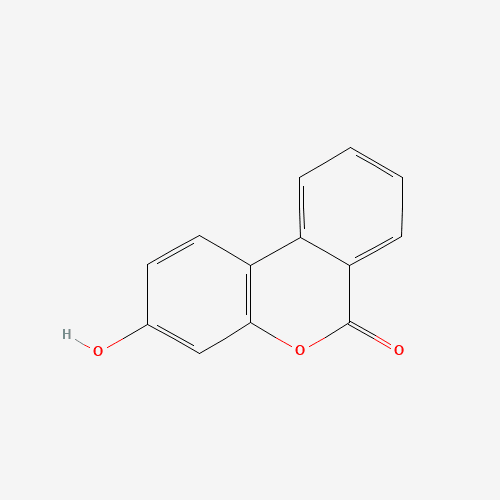
Urolithin B
also UroB · 3-hydroxy-6H-benzo[c]chromen-6-one
Urolithin B is a gut microbial metabolite of dietary ellagitannins, studied for muscle growth and protection against muscle wasting. It increased muscle size and reduced denervation-induced atrophy in mice [1]. A 2026 study found distinct effects on gene expression in cultured human muscle cells, but did not test a supplement in people [2]. Its muscle evidence remains preclinical; it is not interchangeable with Urolithin A.
A plausible muscle-growth mechanism in cells and mice, with no established human dose or clinical muscle-building benefit.
- meta-analysis
- RCT
- trial
- observational
- preclinical / case
- review / patent / other
- retracted
- + Increased muscle protein synthesis and reduced protein breakdown in mouse experiments
- + Reduced denervation-induced wasting in several mouse muscles
- + Human muscle-cell research now distinguishes its effects from urolithin A
- − No trial of purified urolithin B in people identified in the literature reviewed here
- − The foundational muscle experiment used implanted pumps, not oral supplements
- − Reduced testis weight in treated male mice warrants follow-up
- − Human pharmacokinetics and long-term safety remain unestablished
Urolithin B belongs to the family of metabolites made when intestinal microbes process ellagitannins and ellagic acid from food. Whether it appears after a meal varies between people: in a small pomegranate feeding study, urinary urolithin B-glucuronide was detected in only a subset of volunteers [3]. It differs from Urolithin A by one hydroxyl group, and the two compounds produce different responses in muscle cells [1][2].
The muscle-growth evidence starts with mice. In the 2017 study, six male mice per group received vehicle or 10 µg/day through implanted pumps for 28 days. Urolithin B increased the weight of the tibialis anterior, soleus and quadriceps; tibialis anterior fiber cross-sectional area was 11.9% larger. The experiment measured muscle size and protein synthesis, not improvements in human strength or exercise performance [1].
A separate experiment in female mice used the same daily infusion after sciatic nerve section. After seven days, loss of muscle mass was reduced in several muscles, but the gastrocnemius did not benefit. Muscle size in the uninjured limb did not increase over that short treatment period [1].
Human cells are a useful next step, but not a clinical trial. The 2026 study grew myotubes from postmortem muscle samples from nine donors aged 55–96. After 24 hours at 5 µM, urolithin B altered 339 genes, compared with 1,918 for urolithin A. The patterns differed: B more strongly implicated lipid metabolism and muscle-related processes, while A more strongly implicated mitochondrial pathways. These were exploratory molecular findings; no participant took either compound as part of this experiment [2].
Protein synthesis and breakdown. At 15 µM in C2C12 mouse myotubes, urolithin B increased protein synthesis and reduced protein degradation. mTORC1-related phosphorylation increased, AMPK phosphorylation decreased, and expression of the atrophy-associated ubiquitin ligases MuRF1 and MAFbx fell. The measured autophagy markers were unchanged, so this result does not establish the mitophagy mechanism commonly associated with urolithin A [1].
Androgen-receptor dependence is not proof of a selective androgen drug. Both receptor knockdown and bicalutamide prevented the myotube growth response. The experiments support a role for androgen-receptor signaling, but do not establish a binding affinity or selective action in muscle over other organs. Plasma testosterone did not increase in the male mouse experiment; in denervated females it fell at day 3 and was unchanged at day 7 [1].
Hormone-related activity is broader than the muscle pathway. Urolithin B inhibited aromatase in enzyme and breast cancer-cell experiments [4]. A separate MCF-7 study found both estrogenic and antiestrogenic activity under different assay conditions, with weaker estrogen-receptor binding than urolithin A. These cell findings do not establish a treatment for high estradiol or a clinical testosterone-boosting effect [5].
Inflammation is context-dependent. In activated microglia, urolithin B reduced inflammatory mediators and oxidative stress, suppressed NF-κB signaling and increased Nrf2-associated antioxidant defenses. AMPK phosphorylation rose in those cells, in contrast to the muscle model; it should not be described as a universal AMPK inhibitor or activator [1][6]. The human muscle-cell study also found mixed responses: in RNA sequencing, B lowered PTGS1 but increased IL17B, and lowered NQO1 while A increased it. Those expression changes do not by themselves demonstrate either clinical benefit or toxicity [2].
- AromataseblocksInhibited aromatase in enzyme preparations and aromatase-expressing breast cancer cells, with significant cell-assay inhibition at 2.35 and 4.7 µM. Clinical estrogen lowering has not been established [4].weak
- Androgen receptor-dependent signalingmodulatesAndrogen-receptor knockdown and bicalutamide blocked the growth response in mouse myotubes. This demonstrates receptor dependence in that model, not direct binding or tissue selectivity [1].moderate
- mTORC1 / AMPK signalingmodulatesIn mouse myotubes, mTORC1 signaling increased while AMPK phosphorylation fell; rapamycin prevented the mTORC1 response. Akt phosphorylation did not increase [1].moderate
- Ubiquitin–proteasome pathwayblocksReduced FoxO-related atrophy gene expression and protein degradation in mouse myotubes; the autophagy markers measured in the same experiment were unchanged [1].moderate
- NF-κB / Nrf2 signalingmodulatesweak
Dosing
as studied or commonly reported; not a recommendationDoses below are what studies used or, where marked, what is commonly reported. None is a recommendation.No peer-reviewed human dosing data. The doses below come from animal studies or company filings; animal doses do not translate directly to people.
Subcutaneous injection
- 10 µg/day per mouseadult male C57BL/6J mice; muscle mass and protein synthesiscontinuous infusion through an implanted mini-osmotic pump · 28 daysanimal study[1]
- 10 µg/day per mousefemale C57BL/6J mice after sciatic nerve section; atrophy signaling at day 3 and muscle loss at day 7continuous infusion through an implanted mini-osmotic pump · 3 or 7 daysanimal study[1]
- Form
- The foundational muscle experiments used urolithin B dissolved in DMSO and delivered by a subcutaneous pump. This is an experimental animal formulation, not evidence for an oral supplement formulation [1].
- Timing and food
- The mouse studies used continuous delivery; they do not establish meal timing or once-daily dosing in people [1].
- Time to effect
- Muscle hypertrophy was assessed after 28 days in male mice, and protection against denervation-induced atrophy after 7 days in female mice. These are study observation times, not a prediction of when a person would notice an effect [1].
- Notes
- No human dose of purified urolithin B has been studied in the literature reviewed here. Human food studies measure urolithin formation after pomegranate or walnuts; they do not supply a dose for this compound. The 2026 human muscle-cell study used 5 µM for 24 hours, with selected validation experiments at 1–10 µM; a concentration in a culture dish cannot be converted directly into an oral milligram dose [2][3].
Pharmacokinetics
what the body does with it| Half-life | No elimination half-life for directly administered urolithin B in humans was established in the literature reviewed here. |
|---|---|
| Onset | No clinical onset has been established; the muscle-cell experiments measured responses after 24 hours [1][2]. |
| Time to peak | No human time to peak for a purified urolithin B dose was established in the literature reviewed here. |
| Peak level | The mouse muscle paper reported a plasma concentration of 1.3 µM in a preliminary experiment using continuous delivery of 10 µg/day. This was not an oral-dose Cmax or a human measurement [1]. |
| Bioavailability | Human studies detect metabolites following dietary ellagitannin intake, but that does not establish the absolute oral bioavailability of purified urolithin B. The pomegranate study measured mixed dietary metabolites rather than administering urolithin B itself [3]. |
| Steady state | No steady-state concentration or accumulation estimate for human supplementation was established in the literature reviewed here. |
| Metabolism | Dietary exposure produces conjugated metabolites, including urolithin B-glucuronide in urine. These should be distinguished from the unconjugated compound added directly to cell cultures [2][3]. |
| Excretion | In 18 volunteers given pomegranate juice concentrate, urolithin B-glucuronide was detected in urine from 3 participants on the study day and 5 on the following day. This demonstrates variable dietary production and urinary excretion, not a 48-hour half-life for a urolithin B supplement [3]. |
Safety
risks and cautions, not medical adviceA human adverse-event rate and a safe supplementation range cannot be estimated from the studies cited here. Dietary formation and detection of urolithin metabolites are evidence of exposure, not a safety trial of purified urolithin B [3].
A reproductive-organ signal should not be omitted. Male mice receiving 10 µg/day for 28 days had reduced testis weight alongside the muscle effects. The paper did not establish fertility impairment or test a human risk, and plasma testosterone was unchanged, but the organ-weight finding warrants follow-up [1]. Its estrogen-receptor and aromatase activity also makes an assumption of hormonal neutrality unwarranted [4][5].
A narrow negative toxicity result is available: in a 2026 experiment, the tested urolithins, including B, did not cause rat red-blood-cell lysis at concentrations up to 200 µM over four hours. That assay does not establish chronic, reproductive or whole-body safety [7].
- Reduced testis weight in male mice receiving 10 µg/day by subcutaneous pump for 28 days; human relevance and effects on fertility were not established [1].
- No trial administering purified urolithin B to people was identified; the human muscle study treated cultured cells from nine donors [2].
- The main muscle-growth experiment used continuous subcutaneous delivery in mice, leaving oral efficacy and dosing unresolved [1].
- The denervation experiment did not protect the gastrocnemius, and short treatment did not enlarge the uninjured muscles in females [1].
- Several authors of the foundational muscle study disclosed a urolithin B patent application; one reported a nutrition-company shareholding [1].
- In the 2026 human-cell validation experiments, the apparent reduction in STC2 did not reach statistical significance [2].
Interactions
documented pairs only, not exhaustiveNo clinical drug-interaction study of purified urolithin B was identified in this review. Bicalutamide blocked its muscle-cell growth response, and rapamycin blocked the mTORC1 response; these are laboratory observations, not measured interactions in treated patients [1].
Cell experiments found effects on CYP1A1 and conjugating enzymes, but oral supplementation in rats did not reproduce CYP1A1 induction in the colon. This mismatch argues against turning the cell findings into a broad clinical CYP interaction warning [8].
Urolithin A's antiplatelet activity should not be assigned to B. In the 2026 ex vivo human-blood study, B did not inhibit arachidonic-acid-triggered aggregation at 80 µM; activity appeared only at the higher 160 µM concentration. None of the tested urolithins changed the coagulation times measured at 50 µM. These results neither establish an antiplatelet benefit nor prove that combinations with anticoagulants are safe [7].
- Is urolithin B the same as urolithin A?
- No. They differ by one hydroxyl group and showed distinct effects in both mouse and human muscle-cell experiments. Results for one should not be assumed for the other [1][2].
- Does it raise testosterone?
- The main mouse muscle study found no increase in male plasma testosterone. In denervated female mice, testosterone fell at day 3 and was unchanged at day 7. Androgen-receptor-dependent muscle-cell effects are not the same as raising circulating testosterone [1].
- Is there a studied human dose?
- No trial dose of purified urolithin B in people was identified. The dosing rows report mouse pump experiments, while the 2026 human study used isolated cells in culture [1][2].
- Can pomegranate supply a predictable amount?
- No fixed urolithin B dose can be inferred from the feeding study: after the same pomegranate intervention, only some volunteers had detectable urinary urolithin B-glucuronide [3].
References
entry last reviewed 2026-10-30- [1]Urolithin B, a newly identified regulator of skeletal muscle mass.Rodriguez J, Pierre N, Naslain D et al.J Cachexia Sarcopenia Muscle 2017preclinical · animalPMID 28251839◌ unreviewed
- [2]Exploring the Impact of Urolithins A and B on Muscle Health: A Transcriptomic Analysis in Human Myotubes.Henrotin Y, Florin A, Sanchez C et al.J Cachexia Sarcopenia Muscle 2026preclinical · cellPMID 42773997◌ unreviewed
- [3]Pomegranate juice ellagitannin metabolites are present in human plasma and some persist in urine for up to 48 hours.Seeram NP, Henning SM, Zhang Y et al.J Nutr 2006clinical trial · humanPMID 16988113◌ unreviewed
- [4]Pomegranate ellagitannin-derived compounds exhibit antiproliferative and antiaromatase activity in breast cancer cells in vitro.Adams LS, Zhang Y, Seeram NP et al.Cancer Prev Res (Phila) 2010preclinical · cellPMID 20051378◌ unreviewed
- [5]Urolithins, ellagic acid-derived metabolites produced by human colonic microflora, exhibit estrogenic and antiestrogenic activities.Larrosa M, González-Sarrías A, García-Conesa MT et al.J Agric Food Chem 2006preclinical · cellPMID 16506809◌ unreviewed
- [6]Anti-inflammatory and antioxidant mechanisms of urolithin B in activated microglia.Lee G, Park JS, Lee EJ et al.Phytomedicine 2019preclinical · animalPMID 30668443◌ unreviewed
- [7]Urolithin A has antiplatelet effects in contrast to its glucuronide, urolithin B, and isourolithin A.Soloviova A, Hrubša M, García CJ et al.Front Cardiovasc Med 2026preclinical · cellPMID 42812264◌ unreviewed
- [8]Dissimilar in vitro and in vivo effects of ellagic acid and its microbiota-derived metabolites, urolithins, on the cytochrome P450 1A1.González-Sarrías A, Azorín-Ortuño M, Yáñez-Gascón MJ et al.J Agric Food Chem 2009preclinical · animalPMID 19469472◌ unreviewed