Paraxanthine
also 1,7-Dimethylxanthine · 1,7-DMX · PXN · Enfinity
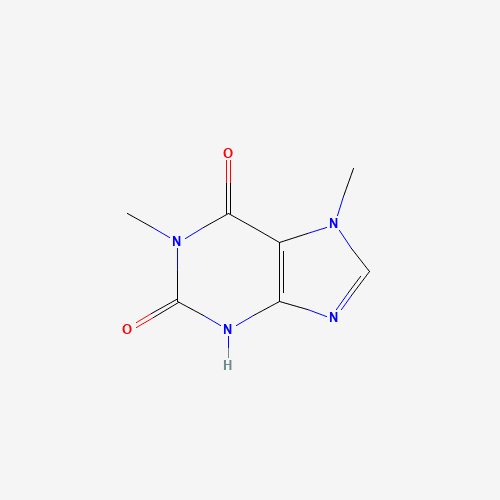
Paraxanthine (1,7-dimethylxanthine) is what most caffeine turns into in the body: about 80% of a caffeine dose is converted to it [1]. Like caffeine it blocks adenosine receptors, and at 4 mg/kg it raised diastolic blood pressure and adrenaline in people about as much as the same dose of caffeine [2]. It is now sold on its own as a supplement. Small crossover trials funded by the ingredient's sponsor report better scores on some attention, memory and reaction-time tests after 50 to 200 mg, though their main statistical tests were not significant [3][4].
Caffeine's main metabolite and a caffeine-like stimulant in its own right; the case that it is a cleaner or stronger caffeine rests on small sponsor-funded trials and animal studies.
- meta-analysis
- RCT
- trial
- observational
- preclinical / case
- review / patent / other
- retracted
- + Caffeine-like stimulant effects with a shorter half-life (about 3 hours against 4)
- + Held up attention and reaction time over six hours in small trials
- + Well tolerated at 50 to 300 mg in short trials
- − Human evidence is a handful of small, short trials, most funded by the ingredient's sponsor
- − Still a stimulant; raised diastolic blood pressure and adrenaline as much as caffeine at 4 mg/kg
- − Did not improve running or rowing performance on its own
Paraxanthine is 1,7-dimethylxanthine, the compound caffeine mostly becomes in the body. In people taking caffeine regularly, about 80% of it was converted to paraxanthine, against about 11% to theobromine and 4% to theophylline [1]. Tea and coffee drinkers carry about 2 mg/L of it in their blood across the day [5], and with regular caffeine use, serum paraxanthine averages two thirds of the caffeine level [2]. Anyone who drinks coffee is already exposed to it. It is now also made synthetically and sold as a supplement ingredient, enfinity [6], which its sponsor's trials describe as a nootropic alternative to caffeine [7].
Until 2021, only two human studies had given paraxanthine on its own [3]: a pharmacokinetic study in six men [5] and an NIH-funded crossover study in 12 coffee drinkers that measured its stimulant effects [2]. Since then the ingredient's sponsor has funded a run of small crossover trials, and its principals, who hold patent applications on paraxanthine, are co-authors [3][4][7][8].
Cognition. In 13 healthy adults, a single 200 mg dose was followed by fewer card-sorting errors at six hours, faster short-term memory responses and better-held vigilance than placebo [3]. A dose comparison in 12 adults (50, 100 and 200 mg, each then taken daily for a week) reported benefits at every dose, most consistently at 100 and 200 mg [4]. In both trials the main repeated-measures test, a treatment-by-time interaction, was not significant for any cognitive test; the reported benefits come from comparing each condition's change from baseline [3][4]. In 12 trained runners given 200 mg before a 10-km treadmill run, paraxanthine did not beat placebo on card sorting. It did give faster reaction times than placebo after the run, and fewer perseverative errors than 200 mg of caffeine. Adding caffeine to paraxanthine brought no further benefit [7].
Exercise. Paraxanthine alone has not improved performance in people. Run times did not differ between paraxanthine, caffeine, both or placebo [7]. In 14 male university rowers, 200 mg before an evening 2000-m ergometer trial did not clearly improve time or power; only paraxanthine plus 200 mg of caffeine beat placebo, by about 3 seconds [9]. The muscle results come from mice, where four weeks of dosing increased grip strength by 17%, treadmill distance by 39% and calf muscle mass [10].
Metabolism. In 21 adults, 200 mg raised resting energy expenditure above placebo at every time point over three hours, and it blunted the rise in hunger seen after placebo. Free fatty acids rose only after 300 mg, and glycerol, a marker of fat breakdown, did not change at any dose [8]. A 1990 study pointed the same way. It gave 10 men intravenous caffeine (4 mg/kg of lean mass), with no placebo arm. Over three hours, as caffeine fell and paraxanthine rose, free fatty acids rose with it (r = 0.93 against paraxanthine), while glycerol again did not change. The authors read this as a possible lipolytic role for paraxanthine and noted that a correlation does not show cause [11].
Paraxanthine is an adenosine receptor antagonist, like caffeine. In rat brain it displaced A1 receptor binding at 40 to 65 µM, against 90 to 110 µM for caffeine, and blocked A2 receptor signaling in the striatum at about half caffeine's concentration [12]. Its stimulant effect in rats counteracted an A1 agonist more efficiently than an A2A agonist, as caffeine's does [13].
In people the effects look like caffeine's. Twelve regular coffee drinkers took capsules of caffeine and of paraxanthine, each after 3 days off caffeine. At 4 mg/kg (seven people), paraxanthine raised diastolic blood pressure, plasma adrenaline and free fatty acids about as much as the same dose of caffeine. At 2 mg/kg (five people) caffeine had the larger effect: paraxanthine raised diastolic pressure but did not significantly raise adrenaline or free fatty acids. Neither drug significantly changed heart rate or cortisol, and the authors report the systolic rises as not statistically significant. Placebo was always given the day before the active dose. The authors suggest that caffeine, being less polar, reaches its sites of action more readily at low doses [2].
It also does something caffeine does not. In rats injected with 30 mg/kg, paraxanthine produced stronger locomotor activation than caffeine, theophylline or theobromine. It raised cGMP and extracellular dopamine (by about 50%) in the striatum, which caffeine at the same dose did not. Blocking nitric oxide synthesis reduced both its locomotor and its dopamine effects, and rats trained to recognize caffeine generalized poorly to paraxanthine. The authors attribute the difference to inhibition of a cGMP-preferring phosphodiesterase (PDE9), which strengthens nitric oxide signaling [13].
Other effects come from cells and rodents:
- In cultures of embryonic rat midbrain, 800 µM paraxanthine increased the number of surviving dopamine neurons by 169%, against 40% for caffeine at the same concentration, and the rescued neurons still released dopamine. The effect ran through ryanodine receptor calcium channels (the blocker dantrolene abolished it), not adenosine receptors or cAMP. The authors note that this concentration is probably severalfold above what can be reached in the brain [14].
- In mice, 10 or 30 mg/kg given before the toxin MPTP reduced the loss of striatal dopamine, as caffeine did [15].
- In mouse hippocampal slices and cultured cells it increased cysteine uptake through the EAAC1 transporter and raised glutathione, which the other caffeine metabolites tested did not [16].
- In young and aged rats, 10 days of oral dosing improved water-maze learning and raised brain BDNF more than the same dose of caffeine [17].
- In narcoleptic and normal mice, oral paraxanthine (6.25 to 100 mg/kg) promoted wakefulness in step with the dose. Given in the resting (light) period it was stronger and longer lasting than equimolar caffeine, and 100 mg/kg roughly matched 200 mg/kg of Modafinil. Given in the active (dark) period, caffeine's effect was the more robust, lasting over 12 hours. Both methylxanthines, unlike modafinil, reduced the narcolepsy-specific jumps from waking straight into REM sleep. The top caffeine dose dropped body temperature by more than 5 °C for over 6 hours; paraxanthine did not. Caffeine raised anxiety-like behavior on two tests, while paraxanthine had no effect on one and only a marginal one (p = 0.06) on the other [18].
- In rats with blocked bile ducts, paraxanthine given by mouth reduced liver injury, collagen deposition and fibrosis signaling [19].
The neuron and narcolepsy studies were funded in part by the drug company Pierre Fabre, which supplied the paraxanthine and whose researchers co-authored both; the narcolepsy paper discloses a patent application on paraxanthine's therapeutic uses [14][18].
- Adenosine A1 / A2 receptorsblocksabout twice caffeine's potency at A1 and striatal A2 receptors in rat brain [12]; the shared basis of its caffeine-like stimulationstrong
- cGMP-preferring phosphodiesterase (PDE9)blocksin rat striatum it raised cGMP where caffeine did not, and a PDE9 inhibitor added nothing to its locomotor effect [13]unclear
- Ryanodine receptorsactivatesat 800 µM, protected cultured dopamine neurons by raising cytosolic calcium through these channels; the authors judge that concentration out of reach in the brain [14]unclear
- Striatal dopamine (via nitric oxide)activatesraised extracellular dopamine about 50% in rat striatum, which caffeine did not; blocking nitric oxide synthesis reduced it [13]moderate
- Sympathetic nervous systemactivatesraised plasma adrenaline, diastolic blood pressure and free fatty acids in people at 4 mg/kg; at 2 mg/kg only diastolic pressure rose significantly [2]moderate
- EAAC1 cysteine transporteractivatesraised cysteine uptake and glutathione in mouse hippocampal slices and cultured cells [16]weak
Dosing
as studied or commonly reported; not a recommendationDoses below are what studies used or, where marked, what is commonly reported. None is a recommendation.
Oral
- 200 mgcognition, short-term memory and sustained attention over 6 hours in healthy adultssingle dosehuman study[3]
- 50–200 mgcognition and side effects in healthy young adults (dose comparison)once daily · 7 dayshuman study[4]
- 200 mg, alone or with 200 mg caffeine
- 200 mg, alone or with 200 mg caffeine2000-m rowing performance and that night's sleep in male university rowerssingle dose 45 minutes before an evening time trialhuman study[9]
- 100–300 mg
- 2–4 mg/kgblood pressure, adrenaline and free fatty acids in regular coffee drinkers after 3 days without caffeinesingle dosehuman study[2]
- 250 mg
- 20.5 mg/kg (human equivalent ≈1.67 mg/kg)
- 2.57–10.28 mg/kg (human equivalent ≈0.41–1.66 mg/kg)
- Form
- The sponsor's trials used enfinity [3], a synthetic paraxanthine of more than 99% purity [6]. The ingredient has self-affirmed GRAS status for use in food and beverages in the US [4].
- Timing and food
- In the rowing trial, 200 mg taken around 7 pm did not significantly worsen that night's subjective sleep, while 200 mg each of paraxanthine and caffeine did [9].
Pharmacokinetics
what the body does with it| Half-life | 3.1 hours on average after 250 mg by mouth in six healthy men, against 4.1 hours for caffeine in the same men [5]. |
|---|---|
| Onset | Resting energy expenditure rose within 30 minutes of 200 mg [8]; in the cognition trials, reaction-time differences appeared from the first hour [3]. |
| Time to peak | About 2 to 3 hours: plasma paraxanthine peaked 120 minutes after 4 mg/kg and 180 minutes after 2 mg/kg by mouth [2]. |
| Peak level | 5.6 mg/L (about 31 µmol/L) after 4 mg/kg and 2.8 mg/L after 2 mg/kg by mouth [2]. |
| Bioavailability | Not measured; the one human pharmacokinetic study assumed complete absorption, as for the other methylxanthines [5]. |
| Metabolism | Cleared at about the same rate as caffeine (2.2 against 2.1 mL/min/kg) and two to three times faster than theophylline or theobromine [5]. The liver enzyme CYP1A2 removes its 7-methyl group [21], CYP2A6 oxidizes it to 1,7-dimethyluric acid [22], and a ring-opened uracil derivative is another major route [5]. |
Safety
risks and cautions, not medical adviceHuman safety data come from the short trials. Single doses of 50 to 300 mg, and 50 to 200 mg a day for a week, did not change blood counts or metabolic panels in any clinically meaningful way, and side effects were no more common than with placebo [4][7][8]. After 300 mg a few blood values (glucose, calcium, bilirubin, basophils) shifted significantly but stayed within normal ranges, and one participant reported dizziness, a racing heart, lightheadedness, nervousness and shortness of breath, all minor and gone within a day [8]. In the 10-km run trial, caffeine raised ratings of racing heart, shortness of breath and nervousness, and paraxanthine did not [7]. It is still a stimulant: at 4 mg/kg it raised diastolic blood pressure and adrenaline as much as caffeine [2].
Two industry-sponsored toxicology batteries in rats found no mutagenicity or genotoxicity. The oral LD50 was 1,601 mg/kg for the enfinity ingredient [6] and 829 mg/kg for another maker's product [23]. In 90-day studies no adverse effects were seen at the highest doses tested, 300 mg/kg a day [6] and 185 mg/kg a day [23]. In the second study, two rats given 185 mg/kg of caffeine died and none on paraxanthine did, so its no-adverse-effect level was set at 185 mg/kg against 150 mg/kg for caffeine. Rats on paraxanthine showed brief hyperactivity and hyperreflexia after each dose [23].
- Raised diastolic blood pressure and plasma adrenaline at 4 mg/kg, and diastolic pressure at 2 mg/kg [2]
- Minor dizziness, racing heart, nervousness and shortness of breath in one participant after 300 mg [8]
- Brief hyperactivity and hyperreflexia after each dose in rats given 100 to 185 mg/kg a day [23]
- The recent human trials enrolled 12 to 21 people each, and four of the five were funded by the ingredient's sponsor [3][4][7][8]
- The two cognition trials found no significant treatment-by-time interaction in their main analyses; the reported benefits rest on change-from-baseline comparisons [3][4]
- Paraxanthine alone did not improve 10-km run times or 2000-m rowing performance [7][9]
- Claims that it is stronger, longer-lasting or less anxiety-provoking than caffeine come mostly from rats and mice [13][17][18]. Even there, its longer wake promotion held only for dosing in the resting period [18]
- In people, caffeine was the more potent of the two at 2 mg/kg [2]
- The neuroprotection in culture needed 800 µM, which its authors judge out of reach in the brain [14]
- Sleep data are a single trial's subjective ratings, without actigraphy or polysomnography [9]
- The longest human dosing reported is seven days [4], so tolerance and withdrawal with regular use are unmeasured; the 1995 study's authors expected paraxanthine to share in caffeine's [2]
Interactions
documented pairs only, not exhaustiveParaxanthine is cleared mainly by CYP1A2, the same liver enzyme that clears caffeine, with CYP2A6 handling a second route [21][22]. The CYP1A2 inhibitor fluvoxamine stretches caffeine's half-life from about 5 hours to 56 [24]. A similar slowing of paraxanthine is an inference from the shared enzyme, not a measured result.
Taking it with caffeine adds to the dose, because caffeine itself is mostly converted to paraxanthine [1]. In the rowing trial only the combination improved performance, and only the combination significantly worsened that night's sleep and the next day's sleepiness [9]. In the running trial, adding caffeine brought no cognitive benefit over paraxanthine alone, and reaction times after the run were slower with the combination [7].
- Caffeinecaution
- any stimulantcautionRaises blood pressure and adrenaline like caffeine [2]; other stimulants add to that cardiovascular and sleep load
- Is paraxanthine just caffeine?
- It is caffeine's main metabolite, with one fewer methyl group [1][5]. Taken on its own at 4 mg/kg it raised blood pressure, adrenaline and free fatty acids much as caffeine did, though it was weaker than caffeine at 2 mg/kg [2]. In rats it also raised striatal dopamine through a nitric oxide route that caffeine did not [13].
- How long does it last?
- Blood levels peaked 2 to 3 hours after a dose by mouth [2], and the half-life averaged 3.1 hours in six healthy men, about an hour shorter than caffeine's in the same men [5].
- Does it disturb sleep less than caffeine?
- In one trial of 14 rowers dosed in the evening, 200 mg of paraxanthine did not significantly worsen subjective sleep, while paraxanthine plus caffeine did. Sleep was not measured objectively [9].
References
entry last reviewed 2026-10-22- [1]Quantitative assessment of caffeine partial clearances in man.Lelo A, Miners JO, Robson RA et al.Br J Clin Pharmacol 1986clinical trial · humanPMID 3756066◌ unreviewed
- [2]Sympathomimetic effects of paraxanthine and caffeine in humans.Benowitz NL, Jacob P, Mayan H et al.Clin Pharmacol Ther 1995clinical trial · humanPMID 8529334◌ unreviewed
- [3]Acute Paraxanthine Ingestion Improves Cognition and Short-Term Memory and Helps Sustain Attention in a Double-Blind, Placebo-Controlled, Crossover Trial.Yoo C, Xing D, Gonzalez D et al.Nutrients 2021RCT · humanPMID 34836235◌ unreviewed
- [4]Dose-Response of Paraxanthine on Cognitive Function: A Double Blind, Placebo Controlled, Crossover Trial.Xing D, Yoo C, Gonzalez D et al.Nutrients 2021RCT · humanPMID 34960030◌ unreviewed
- [5]Comparative pharmacokinetics of caffeine and its primary demethylated metabolites paraxanthine, theobromine and theophylline in man.Lelo A, Birkett DJ, Robson RA et al.Br J Clin Pharmacol 1986clinical trial · humanPMID 3756065◌ unreviewed
- [6]An assessment of mutagenicity, genotoxicity, acute-, subacute and subchronic oral toxicity of paraxanthine (1,7-dimethylxanthine).Purpura M, Jäger R, Falk MFood Chem Toxicol 2021preclinical · animalPMID 34597720◌ unreviewed
- [7]Paraxanthine provides greater improvement in cognitive function than caffeine after performing a 10-km run.Yoo C, Xing D, Gonzalez DE et al.J Int Soc Sports Nutr 2024RCT · humanPMID 38725238◌ unreviewed
- [8]A Dose-Response Study to Examine Paraxanthine's Impact on Energy Expenditure, Hunger, Appetite, and Lipolysis.Gross KN, Allen LE, Hagele AM et al.J Diet Suppl 2024RCT · humanPMID 38745415◌ unreviewed
- [9]Comparative effects of caffeine and paraxanthine on rowing performance and sleep quality: a randomized crossover study.Bingol Diedhiou A, Yildirim UC, Ozdenk S et al.J Int Soc Sports Nutr 2026RCT · humanPMID 41918248◌ unreviewed
- [10]Paraxanthine Supplementation Increases Muscle Mass, Strength, and Endurance in Mice.Jäger R, Purpura M, Wells SD et al.Nutrients 2022preclinical · animalPMID 35215543◌ unreviewed
- [11]Effect of paraxanthine on FFA mobilization after intravenous caffeine administration in humans.Hetzler RK, Knowlton RG, Somani SM et al.J Appl Physiol (1985) 1990clinical trial · humanPMID 2312486◌ unreviewed
- [12]Subclasses of adenosine receptors in the central nervous system: interaction with caffeine and related methylxanthines.Daly JW, Butts-Lamb P, Padgett WCell Mol Neurobiol 1983preclinical · cellPMID 6309393◌ unreviewed
- [13]Psychostimulant pharmacological profile of paraxanthine, the main metabolite of caffeine in humans.Orrú M, Guitart X, Karcz-Kubicha M et al.Neuropharmacology 2013preclinical · animalPMID 23261866◌ unreviewed
- [14]Paraxanthine, the primary metabolite of caffeine, provides protection against dopaminergic cell death via stimulation of ryanodine receptor channels.Guerreiro S, Toulorge D, Hirsch E et al.Mol Pharmacol 2008preclinical · cellPMID 18621927◌ unreviewed
- [15]Neuroprotection by caffeine: time course and role of its metabolites in the MPTP model of Parkinson's disease.Xu K, Xu YH, Chen JF et al.Neuroscience 2010preclinical · animalPMID 20167258◌ unreviewed
- [16]A purine derivative, paraxanthine, promotes cysteine uptake for glutathione synthesis.Matsumura N, Kinoshita C, Bhadhprasit W et al.J Pharmacol Sci 2023preclinical · cellPMID 36522121◌ unreviewed
- [17]Paraxanthine enhances memory and neuroplasticity more than caffeine in rats.Jäger R, Abou Sawan S, Orrú M et al.Exp Brain Res 2024preclinical · animalPMID 39617850◌ unreviewed
- [18]Effects of paraxanthine and caffeine on sleep, locomotor activity, and body temperature in orexin/ataxin-3 transgenic narcoleptic mice.Okuro M, Fujiki N, Kotorii N et al.Sleep 2010preclinical · animalPMID 20614853◌ unreviewed
- [19]Oral application of 1,7-dimethylxanthine (paraxanthine) attenuates the formation of experimental cholestatic liver fibrosis.Klemmer I, Yagi S, Gressner OAHepatol Res 2011preclinical · animalPMID 22032678◌ unreviewed
- [20]A simple practice guide for dose conversion between animals and human.Nair AB, Jacob SJ Basic Clin Pharm 2016reviewPMID 27057123◌ unreviewed
- [21]Biotransformation of caffeine, paraxanthine, theobromine and theophylline by cDNA-expressed human CYP1A2 and CYP2E1.Gu L, Gonzalez FJ, Kalow W et al.Pharmacogenetics 1992preclinical · cellPMID 1302044◌ unreviewed
- [22]Cyp2a6 is a principal enzyme involved in hydroxylation of 1,7-dimethylxanthine, a main caffeine metabolite, in humans.Kimura M, Yamazaki H, Fujieda M et al.Drug Metab Dispos 2005preclinical · cellPMID 15980104◌ unreviewed
- [23]Paraxanthine safety and comparison to caffeine.Szlapinski SK, Charrette A, Guthrie N et al.Front Toxicol 2023preclinical · animalPMID 36818692◌ unreviewed
- [24]Fluvoxamine impairs single-dose caffeine clearance without altering caffeine pharmacodynamics.Culm-Merdek KE, von Moltke LL, Harmatz JS et al.Br J Clin Pharmacol 2005RCT · humanPMID 16236038◌ unreviewed