ISRIB
also trans-ISRIB · ISRIB (trans-isomer) · Integrated stress response inhibitor
ISRIB is an experimental small molecule that activates eIF2B, a protein-synthesis regulator, and counters part of the integrated stress response [1][2]. Short courses improved memory in aged and brain-injured mice, sometimes weeks after treatment ended, but Alzheimer's-model results are mixed [3][4][5][6]. A 2025 review found no published human trials of ISRIB; self-reported use does not establish a clinical benefit or a safe dose [7].
Compelling memory and recovery findings in some mouse models, but inconsistent across diseases and without a tested human dose or demonstrated human benefit.
- meta-analysis
- RCT
- trial
- observational
- preclinical / case
- review / patent / other
- retracted
- + Directly binds eIF2B and can restore protein synthesis suppressed by the integrated stress response
- + Three injections improved learning in aged mice, with benefits on a different memory task more than two weeks later
- + Brief treatment weeks after brain injury improved mouse memory and normalized abnormal dendritic spine turnover
- + Preserved neurons in prion-infected mice without the pancreatic injury seen with direct PERK inhibition
- − No published controlled human efficacy or safety trial in the clinical review cited here
- − Failed to improve memory in some Alzheimer's models; improved learning without retention in others
- − Increased mortality in one mouse background at 5 mg/kg daily, and substantial weight loss ended treatment in a prion model
- − Poor solubility and mouse pharmacokinetics leave human oral exposure uncertain
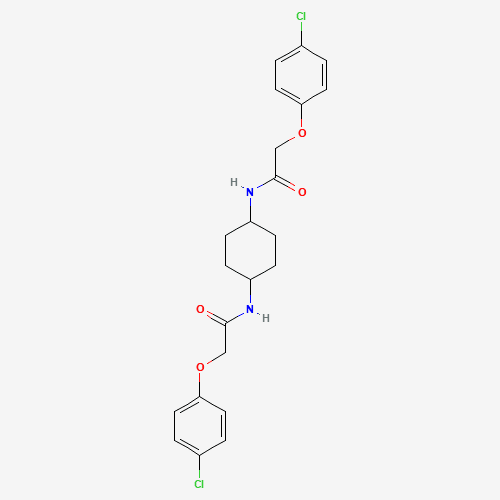
ISRIB stands for integrated stress response inhibitor. It emerged from a screen for compounds that prevented stress-induced ATF4 production, and its first report showed enhanced long-term memory in mice and rats. The experiments used trans-ISRIB, the more active isomer of a symmetric molecule built around a cyclohexane ring with two glycolamide arms [8].
Healthy and aged mice. In the original weak-training water maze, mice given 0.25 mg/kg after training reached the platform faster and remembered its location better than controls. A separate 2.5 mg/kg experiment improved contextual fear memory at 24 hours but not at 1 hour, pointing to memory consolidation rather than an immediate performance boost [8]. In approximately 19-month-old mice, three 2.5 mg/kg injections improved spatial learning and later performance on a different working-memory task, assessed 18–21 days after the last injection. Young mice did not benefit under the same training conditions. The study also found changes in neuronal excitability and dendritic spines; it did not establish permanent reversal of aging [3].
Traumatic brain injury. A 2017 study began treatment 27 days after focal injury or 14 days after concussive injury. Three or four injections improved the respective spatial and working-memory tasks, and focal-injury mice retained the learned location a week after training without further dosing [9]. A later concussive-injury study used four injections on days 14–17 and found improved object recognition on day 18 and again on day 53. It also normalized abnormal cortical spine turnover. These results concern mouse injury models, not a demonstrated treatment for human concussion [4].
Alzheimer's models give conflicting answers. The differences matter more than a count of positive papers.
| Model | Findings | Reference |
|---|---|---|
| hAPP-J20 mice | No spatial learning or memory benefit at 0.25 or 2.5 mg/kg; the model did not show the expected baseline rise in eIF2α phosphorylation | [5] |
| APPSwe and PS19 mice | No cognitive benefit in APPSwe; modest improvement in PS19 learning, but not retention or neuropathology, with increased hippocampal phosphorylated tau | [10] |
| APP/PS1 mice | Restored synaptic plasticity, contextual fear memory and spatial learning; did not rescue water-maze probe retention or reduce total Aβ42 | [6] |
| Amyloid-β-treated rats | Improved water-maze performance and normalized excessive synaptic long-term depression | [11] |
| 3xTg-AD mice | Two weeks of treatment improved maze probe performance and brain glucose uptake, with restored membrane GLUT1/GLUT3 expression | [12] |
Prion disease. In infected mice treated after synapse loss had begun, ISRIB partly restored brain protein synthesis and preserved neurons without reducing prion accumulation. The mean endpoint was delayed from 84 to 96 days after infection. However, treated animals reached the humane endpoint through 20% weight loss, despite remaining protected from the usual neurological signs; this was not an uncomplicated survival benefit [13].
Human evidence. A 2025 ALS review found no published ISRIB trials. It described an online spreadsheet of 42 self-users, with subjective reports and no standardized functional, respiratory or laboratory measurements. Those reports cannot establish efficacy [7]. A paper describing an assay for trans-ISRIB in human plasma is analytical-method validation, not evidence of a human treatment trial [14].
Cells use the integrated stress response to alter protein production under stress. Several stress-sensing kinases converge on phosphorylation of eIF2α. Phosphorylated eIF2 inhibits eIF2B, the exchange factor that recycles eIF2 for translation initiation. This suppresses much ordinary protein synthesis while favoring translation of selected stress-response proteins, including ATF4 [2][8].
ISRIB binds eIF2B directly. Structural work placed it in a pocket at the interface between eIF2B subcomplexes, helping stabilize the active ten-subunit complex. Subsequent biochemical work showed allosteric opposition between ISRIB and phosphorylated eIF2: they bind separate sites but favor different eIF2B conformations. ISRIB can therefore make eIF2B less sensitive to the inhibitory signal, rather than simply preventing that signal from being generated [1][2]. It did not directly block PERK activation or eIF2α phosphorylation in the discovery experiments [8].
The effect has limits. Cell experiments found that sufficiently high eIF2α phosphorylation overcame ISRIB, even when the concentration was raised. Its activity therefore depends on the intensity of stress and the state of the translation machinery, rather than switching the entire response off at every stress level [15]. This helps explain why an effect in one disease model cannot be assumed in another; some negative Alzheimer's studies found little evidence of the elevated baseline stress signaling the treatment was intended to counter [5][10].
- eIF2B (allosteric site)activatesstrong
- ATF4 translation and stress-suppressed protein synthesismodulatesreduces the preferential translation of the stress-response transcription factor ATF4 while restoring broader protein synthesis; the original trans-isomer had an IC50 of 5 nM in an ATF4 reporter assay [8]strong
- Hippocampal synaptic plasticitymodulatesmoderate
- Cortical dendritic spine turnovermodulatesnormalized the excess formation of short-lived spines after concussive injury in mice, without increasing total spine density; this accompanied improved object recognition but does not establish that the spine change caused the memory benefit [4]moderate
Formulation
how the form changes blood levelsTrans-ISRIB inhibited the original cellular ATF4 reporter at 5 nM, compared with 600 nM for the cis-isomer. The founding investigators used the trans form for subsequent experiments [8].
Poor solubility complicates exposure. In a mouse study, increasing the injected dose from 2.5 to 5 mg/kg did not increase measured plasma or brain concentrations. The authors identified solubility as a possible explanation and a barrier to development. Rodent injection results do not demonstrate that an oral product reaches equivalent concentrations [13].
Dosing
as studied or commonly reported; not a recommendationDoses below are what studies used or, where marked, what is commonly reported. None is a recommendation.No peer-reviewed human dosing data. The doses below come from animal studies or company filings; animal doses do not translate directly to people.
Oral
- 25–200 mgreported community use; no established human efficacy or safetyper dosecommonly reported, not from trials
Intraperitoneal (animals)
- 0.25 mg/kghealthy mice in a weak-training water-maze protocolimmediately after each daily training session · 5 daysanimal study[8]
- 2.5 mg/kghealthy mice in contextual fear conditioning; improved 24-hour but not 1-hour memorysingle dose immediately after traininganimal study[8]
- 2.5 mg/kgapproximately 19-month-old mice with age-related memory impairmentonce daily for three injections, before the first training day and after training on the next two days · 3 daysanimal study[3]
- 2.5 mg/kgmice with focal traumatic brain injury; treatment began before water-maze trainingonce daily on days 27–29 after injury · 3 daysanimal study[9]
- 2.5 mg/kg
- 0.25 mg/kgprion-infected mice; neuronal protection but treatment ended with substantial weight lossonce daily from 7 weeks after prion inoculation until the humane endpointanimal study[13]
- 0.25 mg/kg10–13-month-old APP/PS1 mice; improved learning and contextual fear memory, but not water-maze probe retentiononce daily · 2 weeks before behavioral testinganimal study[6]
- 0.25 mg/kgrats given intracerebroventricular amyloid-β oligomers; training began two weeks after amyloid administrationimmediately after the last water-maze trial each day · 5 daysanimal study[11]
- 5 mg/kgAPPSwe mice and nontransgenic littermates; an adverse-outcome regimen, not a successful treatmentonce daily; regimen stopped after increased mortality · 8 daysanimal study[10]
- Form
- The active trans-isomer is the form used in the foundational experiments; cis-ISRIB was about 120 times less potent in the original ATF4 assay [8]. Animal injection formulations do not establish a human oral formulation [13].
- Timing and food
- Timing depended on the experiment: immediately after learning in the original memory study, or brief courses beginning weeks after traumatic injury. Neither defines a human schedule [8][9].
- Time to effect
- Mouse studies measured improved memory the next day after training and, in injured mice, weeks after a short course. These are experimental testing intervals rather than an established onset in people [4][8].
- Notes
- No human dose has been studied in a published clinical trial in the 2025 clinical review [7]. The community row is a reported practice range, not a tested dose. All study rows here are animal experiments; neither their mg/kg amounts nor their injection routes establish a human dose.
Pharmacokinetics
what the body does with it| Half-life | Approximately 8 hours in mouse plasma after a single 5 mg/kg intraperitoneal dose; this is not a human half-life [8]. |
|---|---|
| Peak level | The cited mouse exposure study sampled at 8 and 24 hours rather than defining the peak. Increasing the intraperitoneal dose from 2.5 to 5 mg/kg did not increase exposure, which the authors suggested could reflect poor solubility [13]. |
| Bioavailability | Crosses into mouse brain after intraperitoneal administration. At 0.25 mg/kg, one study measured plasma concentrations of 345.3 ng/mL and brain concentrations of 186.9 ng/g at 8 hours; at 24 hours these were 9.9 ng/mL and 16 ng/g. These sampled concentrations do not establish an oral bioavailability or a peak concentration [13]. |
Safety
risks and cautions, not medical adviceHuman safety remains uncharacterized by controlled ISRIB trials in the 2025 review. The ALS self-use reports mentioned mild constipation and headache, but cannot provide reliable adverse-event rates or establish causality [7].
The animal findings depend on the model and regimen. Daily 0.25 mg/kg preserved pancreatic tissue and glucose control in prion-infected mice, unlike the direct PERK inhibitor used as a comparator. Nevertheless, the ISRIB-treated animals lost enough weight to require euthanasia; the cause was unresolved [13]. In a different study, 5 mg/kg daily increased mortality in APPSwe mice and their nontransgenic littermates within eight days. The same dose was much better tolerated in another mouse background, so neither result defines a universal safety threshold [10].
The stress response can also protect cells. In the discovery experiments, ISRIB increased cell death during persistent experimentally induced endoplasmic-reticulum stress. That is a measured laboratory liability, not evidence that routine human use has a known toxicity rate [8]. The increased hippocampal phosphorylated tau in treated PS19 mice is another reason to retain the negative findings alongside positive memory results [10].
- Increased mortality with daily 5 mg/kg in APPSwe mice and nontransgenic littermates; treatment was stopped after eight days [10].
- Twenty-percent weight loss required euthanasia in treated prion-infected mice despite neurological protection [13].
- Increased hippocampal phosphorylated tau relative to total tau in PS19 mice [10].
- Increased apoptosis in cultured cells exposed to sustained endoplasmic-reticulum stress [8].
- No published human trial in the 2025 clinical review; informal self-reports cannot establish a clinical effect [7].
- Benefits vary across models and across tasks within a study; improved maze acquisition did not consistently translate into retention [5][6][10].
- Most dosing evidence here uses intraperitoneal injections in rodents, and solubility limits straightforward exposure comparisons [8][13].
- The 2025 glucose-metabolism experiment had 8–9 mice per behavioral group and 5 per imaging group; it does not establish disease modification in people [12].
- Has ISRIB been shown to improve human memory?
- No published human efficacy trial was found in the 2025 clinical review. The memory findings summarized here are from animal experiments [3][7][8].
- Does a short course permanently reverse brain aging or injury?
- That has not been established. Benefits persisted for weeks after brief treatment in aged or injured mice, but the studies assessed particular tasks over finite follow-up periods [3][4].
- Is ISRIB a PERK inhibitor?
- Its direct target is eIF2B. It counters downstream consequences of stress-induced eIF2α phosphorylation rather than directly inhibiting PERK [1][8].
- Is ISRIB the same compound as DNL343 or fosigotifator?
- No. These are distinct investigational compounds targeting the same broader pathway; their human trials are not human trials of ISRIB [7].
References
entry last reviewed 2026-10-23- [1]Structure of the nucleotide exchange factor eIF2B reveals mechanism of memory-enhancing molecule.Tsai JC, Miller-Vedam LE, Anand AA et al.Science 2018preclinicalPMID 29599213◌ unreviewed
- [2]ISRIB Blunts the Integrated Stress Response by Allosterically Antagonising the Inhibitory Effect of Phosphorylated eIF2 on eIF2B.Zyryanova AF, Kashiwagi K, Rato C et al.Mol Cell 2021preclinical · cellPMID 33220178◌ unreviewed
- [3]Small molecule cognitive enhancer reverses age-related memory decline in mice.Krukowski K, Nolan A, Frias ES et al.Elife 2020preclinical · animalPMID 33258451◌ unreviewed
- [4]Aberrant cortical spine dynamics after concussive injury are reversed by integrated stress response inhibition.Frias ES, Hoseini MS, Krukowski K et al.Proc Natl Acad Sci U S A 2022preclinical · animalPMID 36227915◌ unreviewed
- [5]A small molecule targeting protein translation does not rescue spatial learning and memory deficits in the hAPP-J20 mouse model of Alzheimer's disease.Johnson EC, Kang JPeerJ 2016preclinical · animalPMID 27781164◌ unreviewed
- [6]Correction of eIF2-dependent defects in brain protein synthesis, synaptic plasticity, and memory in mouse models of Alzheimer's disease.Oliveira MM, Lourenco MV, Longo F et al.Sci Signal 2021preclinical · animalPMID 33531382◌ unreviewed
- [7]ALSUntangled #80: ISRIB (Integrated stress response InhiBitor).Mascias Cadavid J, Mena Bravo A, Barkhaus P et al.Amyotroph Lateral Scler Frontotemporal Degener 2025reviewPMID 40762148◌ unreviewed
- [8]Pharmacological brake-release of mRNA translation enhances cognitive memory.Sidrauski C, Acosta-Alvear D, Khoutorsky A et al.Elife 2013preclinical · animalPMID 23741617◌ unreviewed
- [9]Inhibition of the integrated stress response reverses cognitive deficits after traumatic brain injury.Chou A, Krukowski K, Jopson T et al.Proc Natl Acad Sci U S A 2017preclinical · animalPMID 28696288◌ unreviewed
- [10]Role of Endoplasmic Reticulum Stress in Learning and Memory Impairment and Alzheimer's Disease-Like Neuropathology in the PS19 and APPSwe Mouse Models of Tauopathy and Amyloidosis.Briggs DI, Defensor E, Memar Ardestani P et al.eNeuro 2017preclinical · animalPMID 28721361◌ unreviewed
- [11]Inhibition of the ISR abrogates mGluR5-dependent long-term depression and spatial memory deficits in a rat model of Alzheimer's disease.Hu Z, Yu P, Zhang Y et al.Transl Psychiatry 2022preclinical · animalPMID 35260557◌ unreviewed
- [12]Restoring glucose metabolism in Alzheimer's disease by targeting integrated stress response.Sun H, Guo S, Jin H et al.Neurotherapeutics 2025preclinical · animalPMID 40480904◌ unreviewed
- [13]Partial restoration of protein synthesis rates by the small molecule ISRIB prevents neurodegeneration without pancreatic toxicity.Halliday M, Radford H, Sekine Y et al.Cell Death Dis 2015preclinical · animalPMID 25741597◌ unreviewed
- [14]Development and validation of a UHPLC-MS/MS method for the quantitative analysis of trans-ISRIB in human plasma.He W, Patil AS, Xu YJ Chromatogr B Analyt Technol Biomed Life Sci 2025otherPMID 39837018◌ unreviewed
- [15]Small molecule ISRIB suppresses the integrated stress response within a defined window of activation.Rabouw HH, Langereis MA, Anand AA et al.Proc Natl Acad Sci U S A 2019preclinical · cellPMID 30674674◌ unreviewed