Aticaprant
also JNJ-67953964 · CERC-501 · LY2456302 · LY-2456302 · Opra Kappa
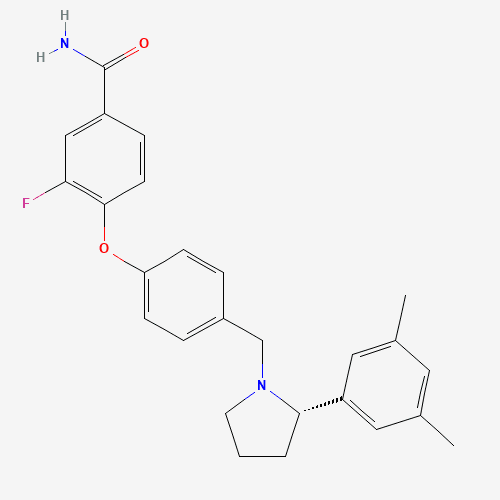
Aticaprant is an oral, short-acting antagonist of the kappa-opioid receptor, the receptor for dynorphin, developed for anhedonia and depression [1][2]. In an 8-week trial in people with anhedonia it raised reward-related activity in the ventral striatum and modestly lowered anhedonia scores [3], and added to an SSRI or SNRI it lowered depression scores by 2–3 points more than placebo in a 6-week phase 2 trial [2]. Johnson & Johnson then stopped its phase 3 program in March 2025 for insufficient efficacy, without publishing the data [4].
A clean, well-tolerated kappa-opioid blocker that moved a brain reward signal and gave a small add-on antidepressant effect in phase 2, but did not show enough benefit in phase 3 and is not approved anywhere.
- meta-analysis
- RCT
- trial
- observational
- preclinical / case
- review / patent / other
- retracted
- + Raised ventral striatal activation during reward anticipation and lowered anhedonia scores over 8 weeks in a placebo-controlled trial
- + Added to an SSRI or SNRI, improved depression scores more than placebo, with the larger effect in people with more anhedonia
- + Near-saturates brain kappa receptors at 10 mg while leaving mu-opioid receptors largely unblocked
- + Short-acting, unlike older kappa antagonists whose blockade lasts weeks
- + Side effects in trials were mostly mild; itching was the most distinctive
- − Johnson & Johnson's phase 3 program was stopped for insufficient efficacy
- − The phase 2 effect was small (2.1 points on the MADRS in the primary analysis) and tested at a lenient significance level
- − Self-rated anhedonia did not improve more than placebo in the phase 2 trial
- − Did not change smoking behavior, craving or withdrawal in a laboratory trial in smokers
- − Itching, rash, headache and diarrhea were more common than on placebo
- − Not approved anywhere; no long-term data have been published
Aticaprant was made by Eli Lilly as LY2456302 and has since been known as CERC-501 and JNJ-67953964 [5]. It blocks the kappa-opioid receptor, the receptor for the stress-released peptide dynorphin, with about 30-fold selectivity over the mu receptor [6]. Older kappa blockers such as nor-BNI and JDTic act for weeks after one dose; a dose of aticaprant no longer blocked the receptor a week later in rats, which made it practical to test as a daily medicine [1][7].
Anhedonia. The NIMH-funded FAST-MAS trial gave 89 adults with anhedonia (a SHAPS score of 20 or more) and depression, bipolar depression or an anxiety disorder 10 mg a day or placebo for 8 weeks. The primary outcome was a brain measure: ventral striatal activation while anticipating a monetary reward rose more on aticaprant (effect size 0.58). Anhedonia scores on the SHAPS fell more than on placebo (Hedges' g 0.44), but the planned analysis of reward learning on the Probabilistic Reward Task was negative, and depression and anxiety ratings did not change [3]. Trial-level modeling of the reward task found faster learning from reward on aticaprant, with reward sensitivity unchanged [8].
Depression. In Janssen's phase 2 trial, 169 adults still moderately to severely depressed on an SSRI or SNRI took 10 mg or placebo on top of it for 6 weeks. In the prespecified primary population (people who had not improved during a placebo lead-in), MADRS scores fell 2.1 points more on aticaprant (effect size 0.23); across everyone randomized the difference was 3.1 points (0.36). The study set its significance level at a one-sided 0.20 and did not adjust for multiple comparisons. Among people with above-median anhedonia the difference was 5.1 points, against 1.9 points below the median. Self-rated anhedonia on the SHAPS did not improve more than placebo, and remission rates (31% against 22%) were not significantly different [2]. A review judged the 2.1-point difference perhaps not clinically significant [9]. Phase 3 trials (VENTURA) followed; in March 2025 Johnson & Johnson ended the program for insufficient efficacy, saying full results would be presented later [4].
Addiction. In a laboratory trial, 8 days of 15 mg did not delay smoking after 18 hours of abstinence (16.5 against 17.7 minutes), change the number of cigarettes smoked, or ease craving, withdrawal or mood [10]. Four days of 10 mg in people in early abstinence from cocaine changed neither cocaine craving nor depression scores, in a deliberately low-stress inpatient setting [7]. Animal work was more positive: it reduced escalated alcohol drinking and stress-triggered relapse in rats [11], and eased nicotine withdrawal in mice [12].
Chronic stress raises dynorphin, and dynorphin acting on kappa receptors suppresses dopamine release from the ventral tegmental area during reward processing and serotonin release from the dorsal raphe; this is thought to contribute to anhedonia and low mood. Blocking the receptor is meant to let that release return to normal. Because reuptake-inhibiting antidepressants only act on transmitter that has been released, the developers proposed that the two mechanisms complement each other [2].
Aticaprant binds the human kappa receptor with a Ki of 0.81 nM, against 24 nM at mu and 155 nM at delta [6]. In a broad receptor screen it had no appreciable affinity for monoamine, muscarinic or adrenergic receptors, ion channels, transporters or the benzodiazepine site. In rats, oral doses occupied central kappa receptors with an ED50 of 0.33 mg/kg, over 90% at 10 mg/kg, with no mu or delta occupancy up to 30 mg/kg; kappa occupancy fell below 50% within 48 hours, and a dose no longer blocked a kappa agonist one week later, while nor-BNI still did [1]. In people, PET showed 94% kappa occupancy 2.5 hours after 10 mg and 72% at 24 hours [13]. Mu blockade, measured as reversal of fentanyl's pupil constriction, appeared only at 25 and 60 mg [6].
In animals. In the mouse forced swim test, 10 mg/kg by mouth cut immobility about as much as 15 mg/kg of imipramine, while naltrexone had no effect. A 3 mg/kg dose that did nothing alone, combined with an inactive dose of imipramine or citalopram, produced a strong effect, more than the sum of the two [1]. In alcohol-preferring rats, 3 mg/kg cut free-access drinking as much as 10 mg/kg of naltrexone, mainly by trimming large drinking bouts, and 10 mg/kg kept working over 4 days of dosing while naltrexone lost its effect after the first day [1]. In male mice given 4 weeks of chronic mild stress, 11 daily doses reversed the loss of sucrose preference and nest building and the changes in the forced swim and hot plate tests, effects that lasted through a recovery period; it did not reverse stress effects in the light-dark and social interaction tests [5]. In rats it reversed alcohol-withdrawal anxiety, suppressed escalated but not basal alcohol self-administration, and blocked stress-induced but not cue-induced relapse to alcohol seeking [11]. In mice it reduced relapse-like drinking, and a dose below the effective one did so when combined with a low dose of naltrexone [14].
In people. Besides the ventral striatal fMRI effect [3], an individualized brain-mapping analysis of FAST-MAS found changes in the size of frontoparietal and orbitofrontal-limbic network regions after 8 weeks [15]. An exploratory analysis split FAST-MAS participants into two anhedonia subgroups; the less severe one tended to respond more on brain and behavioral measures, and the more severe one on self-report [16].
- Kappa-opioid receptorblocksstrong
- Mu-opioid receptorblocksweak
- Delta-opioid receptorblocksKi 155 nM, about 190 times weaker than at kappa [6]weak
- Ventral striatum reward responseactivates8 weeks of 10 mg a day raised fMRI ventral striatal activation while people anticipated a monetary reward, against placebo (effect size 0.58) [3]moderate
- HPA axis (ACTH and cortisol)activatesin phase 1, cortisol rose 2–8 hours after a first dose of 10 or 35 mg but not after 14 days, with no clinically significant change in cortisol, ACTH, prolactin or LH [17]; 10 mg a day modestly raised ACTH and cortisol around peak drug levels in a later study, which the authors put down to a small amount of mu blockade [7]weak
Dosing
as studied or commonly reported; not a recommendationDoses below are what studies used or, where marked, what is commonly reported. None is a recommendation.
Oral
- 10 mg169 adults with major depression responding inadequately to an SSRI or SNRI, added to it; double-blind phase 2 trialonce daily, fasting, before breakfast · 6 weeks, after a placebo lead-in of up to 3 weekshuman study[2]
- 10 mg89 adults with anhedonia and a mood or anxiety disorder, double-blind proof-of-mechanism trial (FAST-MAS)once daily · 8 weekshuman study[3]
- 10 mg40 healthy volunteers and 30 people with current or past cocaine dependence, inpatient open-label studyonce daily, in the morning · 4 dayshuman study[7]
- 15 mg71 adult daily smokers not trying to quit, double-blind crossover laboratory trialonce daily · 8 days per crossover periodhuman study[10]
- 2–60 mg21 healthy adults, phase 1 single-ascending-dose crossover studysingle doses, at least 7 days apart, after an overnight fasthuman study[17]
- 2, 10 or 35 mg28 healthy adults on drug (9 on placebo), phase 1 multiple-ascending-dose study; the 10 mg group also took alcohol on day 14once daily, in the morning after an overnight fast · 14 dayshuman study[17]
- 0.5–25 mg
- 4, 10, 25 and 60 mghealthy volunteers, test of mu-receptor blockade by pupil sizesingle doses, each before intravenous fentanylhuman study[6]
- 1–10 mg/kg (human equivalent ≈0.08–0.81 mg/kg)
- 1–10 mg/kg (human equivalent ≈0.16–1.6 mg/kg)
- 1–10 mg/kg (human equivalent ≈0.08–0.81 mg/kg)
- 3–10 mg/kg (human equivalent ≈0.48–1.6 mg/kg)
Intraperitoneal (animals)
- 10 mg/kg (human equivalent ≈0.81 mg/kg)
- 0.1–3 mg/kg (human equivalent ≈0.008–0.24 mg/kg)
- Form
- An investigational oral drug, given in trials as capsules or tablets [3][6]; no marketed product exists [4].
- Timing and food
- In the phase 2 depression trial it was taken once a day, fasting, before breakfast [2]. In the phase 1 studies it was given in the morning after an overnight fast of at least 8 hours [17], with no food for 4 hours afterward in the fentanyl study [6].
- Time to effect
- In the phase 2 trial the difference from placebo on the MADRS was present from week 1 and grew over the 6 weeks [2]. The anhedonia trial measured its outcomes after 8 weeks [3].
- Notes
- These are trial doses, not advice. The 10 mg dose was chosen because it nearly saturates brain kappa receptors [13] while staying below the 25–60 mg range at which mu-opioid blockade appears [6]; the phase 3 VENTURA-2 trial also tested 10 mg [9]. Phase 1 stopped at 60 mg as a single dose and 35 mg repeated, not because of side effects but to keep peak plasma levels (median at most 180 ng/mL) 30-fold below the level that caused no convulsions in rabbits [17].
Pharmacokinetics
what the body does with it| Half-life | About 30–40 hours in people: single-dose means ranged from 21 to 39 hours across 2–60 mg, and after 14 days it was 28 hours at 2 mg and 40 hours at 35 mg; the authors judged the shorter 2 mg figures unreliable because levels were near the detection limit [17]. In rats and mice it is only 2–4 hours [1]. |
|---|---|
| Onset | Brain kappa receptors were 94% occupied 2.5 hours after 10 mg, and 72% were still occupied at 24 hours. Half of maximal occupancy needed a plasma level of only about 0.6–0.8 ng/mL [13]. |
| Time to peak | Absorbed quickly, with median peak plasma levels 1.5–2.4 hours after a single dose and 2–3 hours with daily dosing [17]; in the PET study peaks came at about 2.5 hours [13]. |
| Peak level | After a single 10 mg dose the geometric mean peak was 27.6 ng/mL, and 129 ng/mL after 60 mg. At steady state, 10 mg a day peaked at 34.4 ng/mL and 35 mg a day at 81.0 ng/mL [17]. After 8 days of 15 mg a day, the level 2 hours after the last dose averaged 45.2 ng/mL [10]. |
| Bioavailability | Absolute oral bioavailability was 25% in rats, and only 0.3–0.6% of the drug in rodent plasma was unbound [1]. In people, exposure rose roughly in proportion to dose from 2 to 60 mg [17]. |
| Steady state | Reached after 6–8 days of once-daily dosing, with exposure (AUC) about 1.8–2.1 times that of the first dose [17]. |
| Metabolism | Its metabolic pathway had not been fully worked out at the time of the phase 1 studies [17]. |
| Excretion | Apparent oral clearance was 27–44 L/h with no sign of dose dependence, and the apparent volume of distribution was large, 1,300–2,400 L [17]. |
Safety
risks and cautions, not medical adviceIn the phase 2 depression trial, 47% on aticaprant and 36% on placebo had an adverse event, nearly all mild or moderate. Headache (12% against 7%), diarrhea (8% against 2%), nasopharyngitis (6% against 2%) and pruritus (6% against 0%) were the most common. One person in each group stopped because of an adverse event, suicidal ideation was similar in the two groups (5% and 4%), and adverse events suggestive of abuse potential occurred in 2.4% of each group. Weight, laboratory tests, vital signs and ECGs did not change meaningfully [2].
In the 8-week anhedonia trial there were no serious adverse events. More-than-mild pruritus (11% against 2%), worsening depression (7% against 0%) and rash (7% against 0%) were more common than on placebo [3]. In the cocaine study, about 60% had a mild side effect over 4 days; itching, usually of the hands and feet, lasted under 30 minutes, and one healthy volunteer left the study with an itchy rash that resolved with hydrocortisone and an antihistamine [7]. In smokers, adverse events were as frequent on aticaprant as on placebo (52% and 54%) [10].
In phase 1, single doses up to 60 mg and 14 days of up to 35 mg caused no serious adverse events. Side effects of repeated dosing were all mild; dyspepsia (5 events in 4 people), headache and itching were the most common, and the itching was generalized and confined to 3 of 9 people on 35 mg. One volunteer had an asymptomatic 5-beat run of ventricular tachycardia about 8 hours after a single 25 mg dose, picked up on telemetry and judged drug-related; 24 hours of further monitoring were clear, and there were no other meaningful ECG changes, including no QTc prolongation. Dosing was capped to keep plasma levels 30-fold below the no-effect level for convulsions in a rabbit toxicology study, and no convulsions occurred in people [17]. An earlier kappa antagonist, JDTic, had its phase 1 trial suspended over runs of ventricular tachycardia [7].
In rats it did not impair balance on the rotarod at 10 or 30 mg/kg, did not change dopamine levels in the nucleus accumbens at 3–30 mg/kg (one index of abuse potential), and did not disrupt prepulse inhibition on its own [1]. In stopping the phase 3 program, Johnson & Johnson said the data showed no new safety signals [4].
- Investigational only; its developer stopped phase 3 and it is not approved for any use [4]
- From about 25 mg it begins to block mu-opioid receptors, so higher doses may blunt opioid drugs [6]
- One volunteer had an asymptomatic 5-beat run of ventricular tachycardia after a single 25 mg dose in phase 1 [17]
- Doses above 60 mg once or 35 mg a day have not been given to people, because of convulsions seen at high exposure in rabbits [17]
- Johnson & Johnson stopped phase 3 for insufficient efficacy and has not published the results [4]
- The positive phase 2 result used a one-sided significance level of 0.20 with no correction for multiple comparisons, and the primary difference was 2.1 MADRS points [2]
- Self-rated anhedonia did not improve more than placebo in the phase 2 trial [2]
- FAST-MAS was designed around a brain-imaging outcome; its planned reward-learning analysis was negative and depression and anxiety ratings did not change [3]
- A laboratory smoking trial was negative on every outcome [10]
- The alcohol, nicotine and chronic-stress findings come from rodents [5][11][12]
- The longest published exposure is 8 weeks [3]
Interactions
documented pairs only, not exhaustiveIn the phase 2 trial it was taken on top of SSRIs and SNRIs for 6 weeks without a safety signal [2]. In phase 1, a social dose of alcohol (0.6–0.7 g/kg) taken at steady state on 10 mg did not change aticaprant levels; alcohol exposure rose slightly (22% by one AUC measure), which the authors did not consider clinically significant. Aticaprant neither impaired reaction time, vigilance, tracking or balance on its own nor worsened alcohol's effect on them [17]. In rats it did not change alcohol's lowering of body temperature [1]. At 25 and 60 mg it partly blocked fentanyl's effect on pupil size, while 4–10 mg had little or no effect [6].
- any monoamine reuptake inhibitorcompatibleTaken on top of an SSRI or SNRI for 6 weeks in the phase 2 trial without a safety signal [2]
Lilly published its preclinical profile in 2014 [1]. Its first-in-human study ran from December 2008 to May 2009 and the repeated-dose study from 2010 to 2011 [17]; with the PET study, they set 10 mg as the dose to test [13]. As CERC-501 it was studied in smokers [10], and as JNJ-67953964 it was the drug in FAST-MAS, the first full application of the NIMH "fast-fail" approach, which asks whether a drug engages a brain circuit before testing it on symptoms [3]. Janssen's phase 2 trial ran from 2018 to 2020 [2]. After phase 3 was stopped in 2025, Johnson & Johnson said it would look for other uses [4].
- Is aticaprant approved?
- No. Johnson & Johnson stopped its phase 3 depression program in March 2025 for insufficient efficacy [4].
- Does it work for anhedonia?
- In the 8-week FAST-MAS trial it raised a brain reward signal and modestly lowered anhedonia scores [3], but in the phase 2 depression trial self-rated anhedonia did not improve more than placebo [2].
- What dose was studied?
- Trials used 10 mg once a day, which nearly saturates brain kappa receptors [2][13]; at 25 mg and above it starts to block mu-opioid receptors too [6].
- Is it an opioid?
- It blocks opioid receptors rather than activating them. Adverse events suggestive of abuse potential were as common as on placebo in the phase 2 trial [2].
References
entry last reviewed 2026-10-22- [1]LY2456302 is a novel, potent, orally-bioavailable small molecule kappa-selective antagonist with activity in animal models predictive of efficacy in mood and addictive disorders.Rorick-Kehn LM, Witkin JM, Statnick MA et al.Neuropharmacology 2014preclinical · animalPMID 24071566◌ unreviewed
- [2]Efficacy and safety of aticaprant, a kappa receptor antagonist, adjunctive to oral SSRI/SNRI antidepressant in major depressive disorder: results of a phase 2 randomized, double-blind, placebo-controlled study.Schmidt ME, Kezic I, Popova V et al.Neuropsychopharmacology 2024RCT · humanPMID 38649428◌ unreviewed
- [3]A randomized proof-of-mechanism trial applying the 'fast-fail' approach to evaluating κ-opioid antagonism as a treatment for anhedonia.Krystal AD, Pizzagalli DA, Smoski M et al.Nat Med 2020RCT · humanPMID 32231295◌ unreviewed
- [4]Johnson & Johnson Statement on VENTURA ProgramJohnson & JohnsonJohnson & Johnson press release, 6 March 2025 — company statement, not peer reviewed 2025other · human◌ unreviewed
- [5]The kappa opioid receptor antagonist aticaprant reverses behavioral effects from unpredictable chronic mild stress in male mice.Jacobson ML, Wulf HA, Browne CA et al.Psychopharmacology (Berl) 2020preclinical · animalPMID 32894343◌ unreviewed
- [6]Determining pharmacological selectivity of the kappa opioid receptor antagonist LY2456302 using pupillometry as a translational biomarker in rat and human.Rorick-Kehn LM, Witcher JW, Lowe SL et al.Int J Neuropsychopharmacol 2014clinical trial · humanPMID 25637376◌ unreviewed
- [7]Repeated Administration of Opra Kappa (LY2456302), a Novel, Short-Acting, Selective KOP-r Antagonist, in Persons with and without Cocaine Dependence.Reed B, Butelman ER, Fry RS et al.Neuropsychopharmacology 2018clinical trial · humanPMID 28857070◌ unreviewed
- [8]Selective kappa-opioid antagonism ameliorates anhedonic behavior: evidence from the Fast-fail Trial in Mood and Anxiety Spectrum Disorders (FAST-MAS).Pizzagalli DA, Smoski M, Ang YS et al.Neuropsychopharmacology 2020RCT · humanPMID 32544925◌ unreviewed
- [9]Aticaprant: (a κ-opioid receptor antagonist) for major depressive disorder.Hampsey E, Jelen L, Young AHExpert Opin Emerg Drugs 2024reviewPMID 38682267◌ unreviewed
- [10]A randomized, double-blind, placebo-controlled study of the kappa opioid receptor antagonist, CERC-501, in a human laboratory model of smoking behavior.Jones JD, Babalonis S, Marcus R et al.Addict Biol 2020RCT · humanPMID 31240842◌ unreviewed
- [11]Preclinical evaluation of the kappa-opioid receptor antagonist CERC-501 as a candidate therapeutic for alcohol use disorders.Domi E, Barbier E, Augier E et al.Neuropsychopharmacology 2018preclinical · animalPMID 29463912◌ unreviewed
- [12]Effects of orally-bioavailable short-acting kappa opioid receptor-selective antagonist LY2456302 on nicotine withdrawal in mice.Jackson KJ, Jackson A, Carroll FI et al.Neuropharmacology 2015preclinical · animalPMID 26044637◌ unreviewed
- [13]Receptor Occupancy of the κ-Opioid Antagonist LY2456302 Measured with Positron Emission Tomography and the Novel Radiotracer 11C-LY2795050.Naganawa M, Dickinson GL, Zheng MQ et al.J Pharmacol Exp Ther 2016clinical trial · humanPMID 26628406◌ unreviewed
- [14]Aticaprant (Clinically Developed Kappa-Opioid Receptor Antagonist) Combined With Naltrexone Prevents Alcohol "Relapse" Drinking.Zhou Y, Zhou DC, Kreek MJJ Pharm Pharmacol (Los Angel) 2022preclinical · animalPMID 35832748◌ unreviewed
- [15]Selective KOR antagonist alters functional patch sizes in individualized brain system: results from the Fast-fail Trial in Mood and Anxiety Spectrum Disorders (FAST-MAS).Fung H, Potash RM, Krystal A et al.Neuropsychopharmacology 2025RCT · humanPMID 40360690◌ unreviewed
- [16]Using latent profile analyses to classify subjects with anhedonia based on reward-related measures obtained in the FAST-MAS study.Darrow SM, Pizzagalli DA, Smoski M et al.J Affect Disord 2023other · humanPMID 37467805◌ unreviewed
- [17]Safety, tolerability, and pharmacokinetic evaluation of single- and multiple-ascending doses of a novel kappa opioid receptor antagonist LY2456302 and drug interaction with ethanol in healthy subjects.Lowe SL, Wong CJ, Witcher J et al.J Clin Pharmacol 2014RCT · humanPMID 24619932◌ unreviewed
- [18]A simple practice guide for dose conversion between animals and human.Nair AB, Jacob SJ Basic Clin Pharm 2016reviewPMID 27057123◌ unreviewed