AOD-9604
also AOD 9604 · AOD9604 · Tyr-somatostatin (177-191) · Somatostatin (177-191), Tyr- · Somatostatin (177-191), tyrosyl-
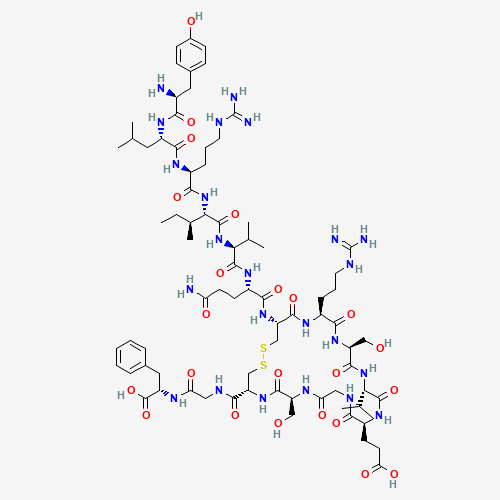
AOD-9604 is a synthetic copy of the last fifteen amino acids of growth hormone, with a tyrosine stuck on the front. The idea, worked out at Monash University in the 1990s, is that this is the part of growth hormone that burns fat, separated from the parts that raise IGF-1 and blood sugar. In obese mice it reduced weight gain and fat mass, raised fat oxidation and energy expenditure, and did so without touching IGF-1 [1][2]. It was developed for obesity by Metabolic Pharmaceuticals and abandoned. No trial of AOD-9604 in humans for weight, fat or anything else appears in the published literature — the human evidence for it is adipose tissue in a dish [1].
A clean preclinical story about separating growth hormone's fat-burning fragment from the rest of the hormone, which went through commercial development for obesity and produced no published human results.
- meta-analysis
- RCT
- trial
- observational
- preclinical / case
- review / patent / other
- retracted
- + Reduced body weight gain and fat mass in obese mice over 14-30 days
- + Raised lipolysis and lowered lipogenesis in fat tissue, including human fat tissue in vitro
- + Does not raise IGF-1 or act on the growth hormone receptor's growth pathway
- − No published human trial of any kind
- − Every efficacy result is in rodents or isolated fat cells
- − The commercial obesity programme was discontinued without published phase 3 results
- − Prohibited in sport
Overview
Growth hormone does two quite different things: it drives growth through IGF-1, and it mobilises fat. Work at Monash University in the 1980s and 1990s localised the metabolic activity to the C-terminal end of the molecule, and showed that a synthetic peptide of residues 177-191 reproduced the antilipogenic effect [3] and reduced weight gain and fat mass in obese mice [4]. AOD-9604 is that fragment (in the 176-191 numbering, with a tyrosine added at the N terminus) developed as a drug candidate.
What it does in animals. Thirty days of oral dosing in ob/ob mice slowed weight gain from day 16 onwards without changing food intake, cut lipogenic activity and raised lipolytic activity in fat tissue, and raised energy expenditure and fat oxidation acutely [1]. Fourteen days by injection reduced body weight and body fat in obese mice, alongside a rise in beta-3 adrenergic receptor expression [2].
How it might work. The obvious guess was the beta-3 adrenergic receptor, the main lipolytic receptor on fat cells, whose expression both growth hormone and AOD-9604 restore in obese mice. But in beta-3 knockout mice, chronic treatment no longer reduced weight or increased lipolysis, while an acute dose still raised energy expenditure and fat oxidation — so the effect is not exerted directly through that receptor [2]. A parallel study in Zucker fatty rats mapped the same molecular and cellular actions on lipid metabolism [5]. An earlier study found the fragment altered glucose transport in rat fat cells [6], and the closely related C-terminal sequences have a hyperglycaemic action of their own [7].
Human evidence. There is none in the published literature. The only human material ever exposed to it in these papers is isolated adipose tissue, where it increased lipolysis in a dish [1]. AOD-9604 was taken into commercial development for obesity by Metabolic Pharmaceuticals and appears in mid-2000s reviews of obesity drugs in clinical development [8], but no trial results were published, and the programme did not produce an approved drug. A 2026 review of peptides used for physique purposes lists it among compounds with no supporting human trial data [9].
It has since been tried for cartilage: injected into the knee joints of rabbits with induced osteoarthritis, alone or with hyaluronic acid, it improved cartilage scores and shortened lameness [10]. Again, rabbits.
Mechanism
The rationale is separation of function. The growth-promoting effects of growth hormone run through the growth hormone receptor and IGF-1; the lipolytic effects were mapped to a distinct C-terminal domain [3]. A peptide of that domain should therefore mobilise fat without raising IGF-1, without the insulin resistance, and without the growth signalling that makes growth hormone itself unattractive as a weight-loss drug.
In animals that separation holds up. What is missing is the receptor: after 30 years there is still no identified binding site that explains the effect, and the beta-3 knockout work rules out the most obvious candidate as a direct mechanism [2]. Without a receptor and without human data, the mechanism remains a description of what happens in mouse fat rather than an explanation.
- Lipolysis in adipose tissueactivatesmoderate
- Beta-3 adrenergic receptor expressionactivatesrestored suppressed beta-3 receptor RNA in obese mice towards lean levels; in beta-3 knockout mice the weight and lipolysis effects were lost, although acute energy expenditure still rose, so the action is not directly through that receptor [2]moderate
- Energy expenditure and fat oxidationactivatesrose acutely in obese mice given the related fragment orally [1]weak
- IGF-1no bindingthe fragment carries growth hormone's metabolic activity without its growth-promoting signalling, which is the entire rationale for the molecule [3]weak
Formulation
how the form changes blood levelsAOD-9604 is a 16-residue peptide: growth hormone residues 177-191 (176-191 in the other numbering convention) with an N-terminal tyrosine, and the same disulfide-closed loop the parent hormone has [3]. It has been given by mouth and by injection in animals [1]. Detection methods for it exist in doping control [11].
Dosing
as studied or commonly reported; not a recommendationDoses below are what studies used or, where marked, what is commonly reported. None is a recommendation.No peer-reviewed human dosing data. The doses below come from animal studies or company filings; animal doses do not translate directly to people.
Oral
- not stated in a form usable here
Intraperitoneal (animals)
- not stated in a form usable here
Intramuscular injection
- 0.25 mg per kneecollagenase-induced knee osteoarthritis in rabbits, injected into the jointweekly · 4-7 weeksanimal study[10]
- Notes
- No human dose has been studied. The published doses are rodent and rabbit doses reported per animal rather than per kilogram, so they cannot be converted to a human equivalent. Anything quoted as an AOD-9604 dose for people comes from community practice, not from a trial.
Pharmacokinetics
what the body does with it| Metabolism | No human pharmacokinetic study of AOD-9604 was found for this entry. The related fragment was active in mice when given by mouth as well as by injection [1] |
|---|
Safety
risks and cautions, not medical adviceThere is no published human safety data for AOD-9604 — no trial, no pharmacokinetics, no adverse event reporting. The animal studies report no toxicity, but they were not designed as safety studies [1][2].
One thing worth noting from the older literature: synthetic peptides related to growth hormone's C-terminal sequence have a hyperglycaemic action of their own in animals [7], and the fragment changes glucose transport in rat fat cells [6]. Whether that matters in people is unknown, because nobody has looked. A 2026 review groups AOD-9604 with the peptides sold for physique purposes whose composition and dosing in unregulated supply is itself a risk [9].
- None documented in humans, because no human study has been published
Interactions
documented pairs only, not exhaustiveNo human interaction data exist. In rabbits, combining intra-articular AOD-9604 with hyaluronic acid worked better than either alone for cartilage scores [10]. No interactions with other compounds on this site have been documented.
FAQ
- Has AOD-9604 been tested in people?
- Not in any published trial. The only human tissue it has been tested on is isolated fat in a dish [1].
- Is it the same as HGH fragment 176-191?
- Essentially, yes — AOD-9604 is that fragment with a tyrosine added at the front [3].
- Does it raise IGF-1?
- It is not supposed to, and does not in animals; that separation is the whole point of the molecule [3].
References
entry last reviewed 2026-09-19- [1]Effects of oral administration of a synthetic fragment of human growth hormone on lipid metabolism.Heffernan MA, Jiang WJ, Thorburn AW et al.Am J Physiol Endocrinol Metab 2000other · animalPMID 10950816◌ unreviewed
- [2]The effects of human GH and its lipolytic fragment (AOD9604) on lipid metabolism following chronic treatment in obese mice and beta(3)-AR knock-out mice.Heffernan M, Summers RJ, Thorburn A et al.Endocrinology 2001other · animalPMID 11713213◌ unreviewed
- [3]Antilipogenic action of synthetic C-terminal sequence 177-191 of human growth hormone.Wu Z, Ng FMBiochem Mol Biol Int 1993other · animalPMID 8358331◌ unreviewed
- [4]Reduction of cumulative body weight gain and adipose tissue mass in obese mice: response to chronic treatment with synthetic hGH 177-191 peptide.Natera SH, Jiang WJ, Ng FMBiochem Mol Biol Int 1994other · animalPMID 7987248◌ unreviewed
- [5]Molecular and cellular actions of a structural domain of human growth hormone (AOD9401) on lipid metabolism in Zucker fatty rats.Ng FM, Jiang WJ, Gianello R et al.J Mol Endocrinol 2000other · animalPMID 11116208◌ unreviewed
- [6]Effect of an antilipogenic fragment of human growth hormone on glucose transport in rat adipocytes.Wijaya E, Ng FMBiochem Mol Biol Int 1993other · animalPMID 8118430◌ unreviewed
- [7]The mechanism of the hyperglycaemic action of synthetic peptides related to the C-terminal sequence of human growth hormone.Ma GY, Macaulay SL, Maggs JA et al.Biochim Biophys Acta 1982other · animalPMID 6810951◌ unreviewed
- [8]Obesity drugs in clinical development.Halford JCCurr Opin Investig Drugs 2006reviewPMID 16625817◌ unreviewed
- [9]The emerging landscape of performance-enhancing peptides modulating GH-IGF1 axis: bridging the gap between clinical evidence and patient self-administration.Dominikowski A, Rękoś Z, Olejarz M et al.Front Endocrinol (Lausanne) 2026reviewPMID 42395176◌ unreviewed
- [10]Effect of Intra-articular Injection of AOD9604 with or without Hyaluronic Acid in Rabbit Osteoarthritis Model.Kwon DR, Park GYAnn Clin Lab Sci 2015other · animalPMID 26275694◌ unreviewed
- [11]Analytical approaches for the detection of emerging therapeutics and non-approved drugs in human doping controls.Thevis M, Schänzer WJ Pharm Biomed Anal 2014reviewPMID 24906629◌ unreviewed